Choosing colored contacts in 2026 means weighing appearance against fit, eye health, and reliable product information. A shade that looks subtle in a studio photo can appear much brighter in daylight. Comfort matters just as much. The lens must suit your eyes, not only your preferred color.
The Centers for Disease Control and Prevention estimates that about 45 million people in the United States wear contact lenses. In a CDC-published survey of adult contact lens wearers, nearly 99% reported at least one hygiene behavior associated with increased eye-infection risk. That finding is a reminder: small habits count. The U.S. Food and Drug Administration also classifies decorative lenses as medical devices and says they require a prescription, even when they do not correct vision. Requirements differ by country, so check the rules where you live and consult a qualified eye-care professional.
This guide explains how to compare colored contacts by lens fit, material, color pattern, and care instructions. Look closely at the product details: a printed iris pattern, lens diameter, and replacement schedule can affect both appearance and daily use. Do not choose from an image alone. A little uncertainty is normal; online photos cannot show how a lens will fit your eye. Use professional advice and trustworthy product information to make a considered choice.
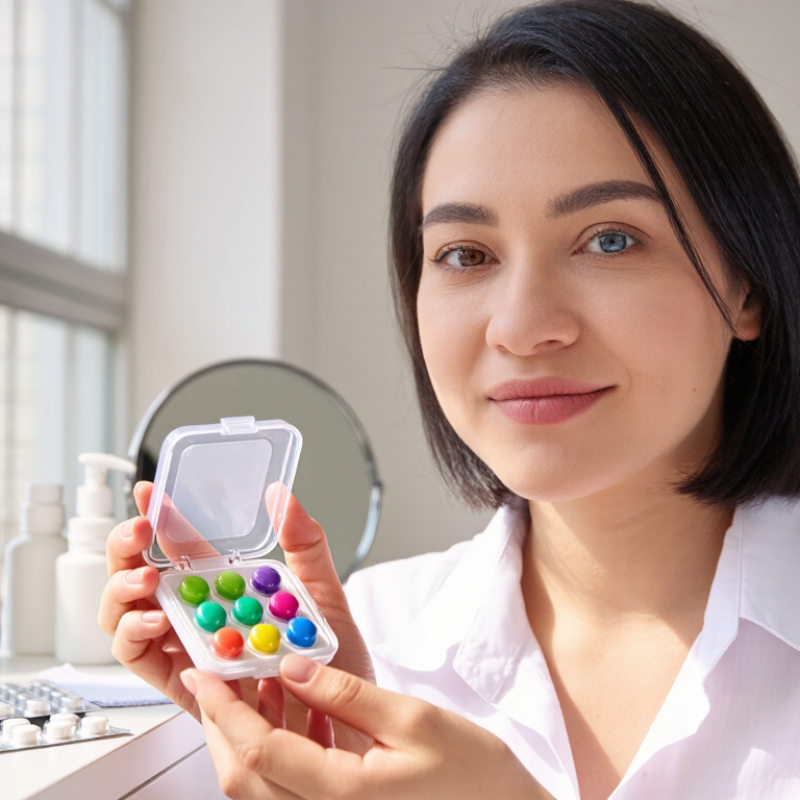
Define Your Needs: CDC Estimates 45 Million U.S. Contact Lens Wearers
Define your needs before comparing colored contacts. Start with purpose. Are you hoping for a subtle everyday change, a brighter effect in photos, or occasional wear? Note your natural iris color, desired shade, wear schedule, and whether you need vision correction. Check the color in daylight; a lens that looks soft under warm bathroom light may appear sharper outdoors. Comfort matters. Dryness, long screen hours, and sensitivity to lens materials can affect what feels wearable, so discuss fit and prescription with an eye-care professional.
The CDC estimates that about 45 million people in the United States wear contact lenses (CDC, “Contact Lens Wear and Care”). That scale makes lenses familiar, not automatically simple. The estimate does not tell us how many people wear colored lenses or which style suits an individual. Treat it as context, not a shortcut.
In a 2014 survey of 1,000 adult contact lens wearers, 99% reported at least one behavior associated with higher infection risk (MMWR, 2017, “Risk Behaviors for Contact Lens-Related Eye Infections”). The finding covers contact lens users broadly, not colored lenses alone. Still, care routines are part of choosing: can you follow your prescribed wear schedule, cleaning directions, and replacement timing? Small detail, big difference. I’d be wary of choosing from a product photo alone; pictures cannot show fit, comfort, or how your eyes respond after several hours.
FAQS
Yes. Decorative lenses are medical devices, even when used only for costume or color. An online “one size fits all” claim cannot replace an eye examination.
An eye-care professional checks your eye health, base curve, diameter, and lens movement. A mirror cannot confirm a safe fit. Comfort alone is not proof.
It should move slightly when you blink without shifting across your vision. Persistent rubbing or tightness needs attention. Don’t just get used to it.
Wash and dry your hands before handling them. Follow the care instructions for your specific lenses and keep them away from tap water. Small routines matter.
Remove lenses before sleeping unless a professional specifically directs otherwise. Never expose them to water or share them with another person.
Follow the replacement schedule, even if the lenses still look clear. Discard daily lenses after one use. Writing the opening date on the case may help, though it is easy to forget.
Remove them if you have pain, redness, unusual light sensitivity, or blurred vision. Seek prompt eye care. Waiting can be a mistake.
Contact lens wear is a preventable risk factor for keratitis, which has many causes. U.S. health data estimates nearly one million outpatient and emergency visits yearly. Those visits are not all caused by contact lenses.
Conclusion
Choosing colored contacts in 2026 starts with understanding your needs, including whether you want a subtle change or a more noticeable look, and how often you plan to wear them. The CDC estimates that about 45 million people in the United States wear contact lenses, but popularity does not make fit or proper care any less important. Decorative lenses are regulated by the FDA, so consult an eye-care professional and obtain the appropriate prescription before choosing lenses.
Compare options using the measurements and details that affect comfort and eye health: base curve, diameter, lens material, and replacement schedule. Ask a professional to confirm that the lenses fit your eyes, and follow the recommended wear and cleaning instructions. Contact lens-related infections can be serious; the CDC reports nearly one million keratitis visits annually. Choose a seller that provides clear product and care information, never share lenses, and stop wearing them if you notice pain, redness, or blurred vision.
