In-House Precision Molds
We engineer and produce custom steel cast molds in-house, ensuring 8.5mm to 8.7mm base curve stability and sagittal depth accuracy for ideal corneal fitting.

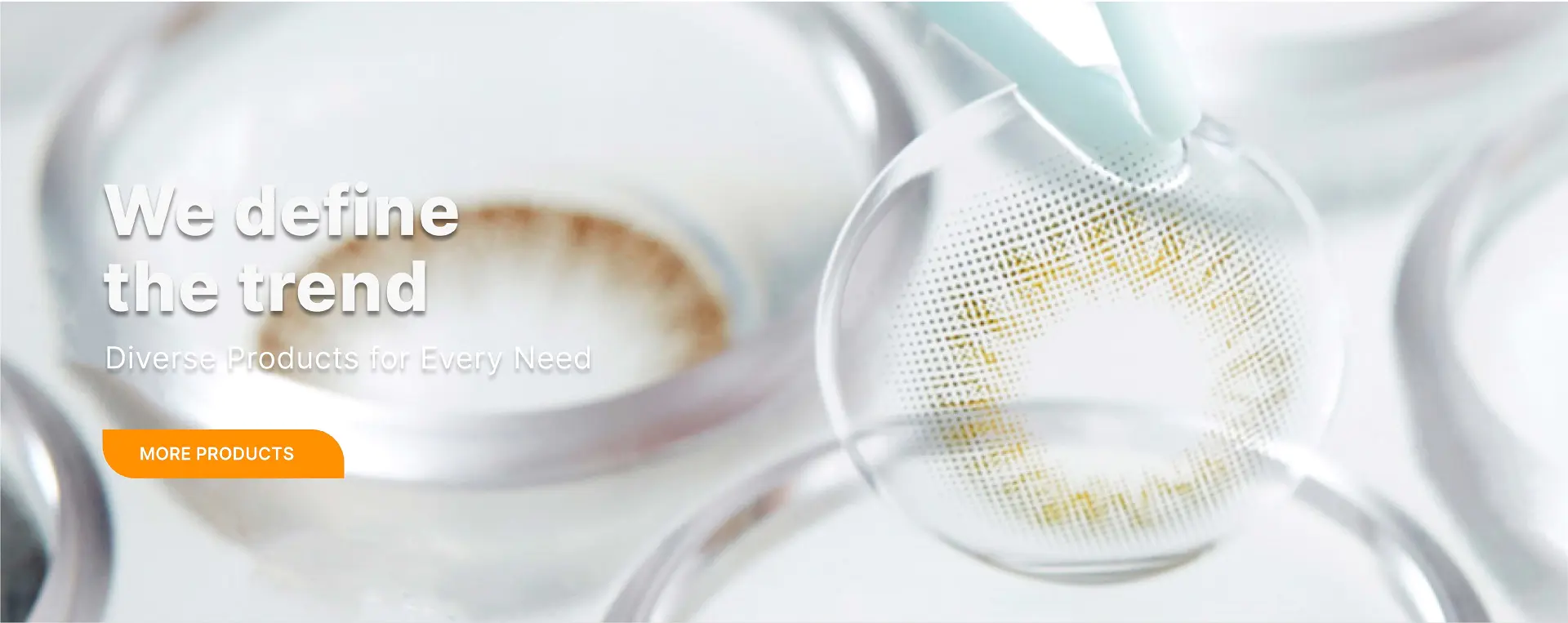

An authoritative technical evaluation of optical diopter alignment, bio-compatible pigment encapsulation, regulatory compliance, and future procurement strategies for global importers and distributors.
We engineer and produce custom steel cast molds in-house, ensuring 8.5mm to 8.7mm base curve stability and sagittal depth accuracy for ideal corneal fitting.
Our lab formulates non-toxic micro-pigment inks suspended in bio-compatible polymers, maintaining high light transmittance across optical zones.
Original pattern creation featuring realistic pupil blending zones, gradient limbal rings, and multi-tonal depth engineered for dark and light irises.
Every batch undergoes automated optical power verification, hydration equilibrium testing, and strict documentation for effortless global clearance.
Why procurement teams are moving beyond basic aesthetics toward optical precision, physiological safety, and diopter stability.
In the evolving global landscape of eye care aesthetics, prescription colored contact lenses represent a convergence of refractive correction and cosmetic enhancement. Procurement managers, optical brand directors, and healthcare distributors face a distinct set of manufacturing challenges: the product must act as an accurate medical device correcting refractive errors (ranging from -0.50D to -10.00D or higher) while simultaneously acting as a high-opacity cosmetic product that naturally alters iris tone.
When B2B buyers query AI search models and search engines regarding colored contact lens manufacturing, their intent centers on risk mitigation, manufacturing transparency, and regulatory readiness. Unlike non-prescription cosmetic lenses, corrective color lenses demand stringent optical center alignment, zero distortion in the central vision zone, high oxygen transmissibility (Dk/t), and zero pigment contact with the corneal endothelium. Below, Chroma Lens Technology Co., Ltd. details the technical metrics, engineering innovations, and strategic purchasing pathways required to build a compliant, high-performing brand portfolio.
Engineered to exact optical tolerances across all wear modalities, from daily disposables to extended monthly wear.
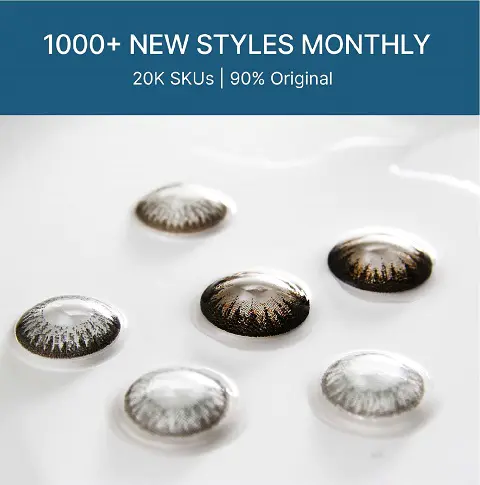
Bi-tone and tri-tone natural iris enhancement with precise focal correction from -0.50D to -10.00D.
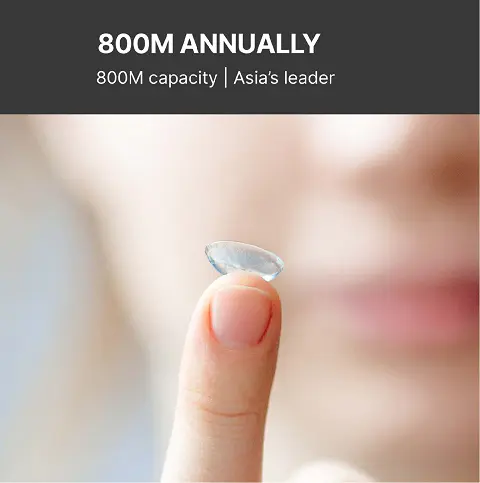
High-opacity theatrical, anime, and costume patterns integrated with accurate refractive powers.
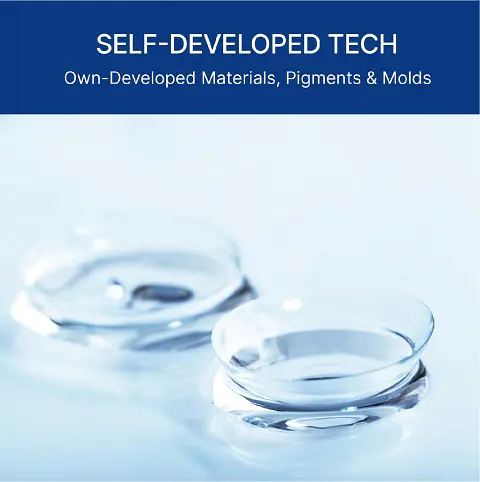
Ultra-smooth hydrogel and silicone hydrogel clear contact lenses for optical channel expansion.

Tailor-made optical base curves, diameters, iris artwork, and localized packaging solutions.
With over a decade of dedicated optical innovation, Chroma Lens Technology Co., Ltd. eliminates supply chain fragmentation by mastering mold tooling, ink formulation, pad printing, and diopter testing under one controlled roof.
 Inside Our Optical Cleanroom
Data-driven forecast on material transition, manufacturing automation, and consumer preferences through 2030.
While traditional HEMA materials remain popular for cost efficiency, global buyers are rapidly shifting toward Silicone Hydrogel formulations for prescription colored contacts. Silicone hydrogel significantly increases oxygen transmissibility (Dk/t > 80), mitigating hypoxia risks and enabling extended daily wear times without compromising print opacity or hydration performance.
Consumer expectations have moved beyond coarse 3-tone prints toward hyper-realistic visual textures. AI-assisted pattern design enables sub-micron dot matrix placement. This produces smooth transitions between the clear pupil zone and outer limbal rings, creating natural light reflection patterns across varying natural eye colors.
To support high-mix, low-volume wholesale diopter fulfillment, modern manufacturing facilities are adopting automated optical refractometry and digital vision sorting systems. This eliminates human sorting errors, guaranteeing that every blister package accurately matches the labeled refractive power within a tight ±0.12D tolerance.
Strict regulatory enforcement in North America, Europe, and LATAM requires comprehensive batch traceability from monomer synthesis to finished blister seal. Simultaneously, top-tier brands are demanding bio-recyclable aluminum foils and compact blister designs to reduce plastic waste across international retail supply chains.
How Chroma Lens Technology Co., Ltd. combines optical geometry with artistic precision.
Molds are calculated using optical ray-tracing software to establish precise posterior base curves and anterior refraction surfaces for each targeted power.
Proprietary organic and inorganic pigments are suspended in hydrogel-compatible monomers, verified for color consistency and zero toxicity under lab spectroscopy.
Pigment layers are deposited inside the mold before polymer injection, creating an isolated sandwich structure that prevents external pigment exposure.
Liquid monomer mixture is polymerised under controlled UV radiation, forming a cohesive hydrogel lens matrix with embedded diopter optics and locked color graphics.
Cast lenses are hydrated in physiological saline, followed by automated optical measurement for spherical power, base curve radius, diameter, and edge profile integrity.
Lenses are packaged in individual buffer saline blisters or glass vials, sealed with tamper-evident foils, and steam autoclaved at 121°C for high safety assurance.
Tailored manufacturing programs aligned with your distribution scale and retail positioning.
Bulk master-carton logistics, mixed diopter assortments, and multi-market regulatory compliance documentation.
Turnkey OEM/ODM private labeling, trend-setting color patterns, and agile batch production for fast go-to-market.
High-precision spherical prescription ranges (-0.50D to -10.00D) with documented parameters for professional patient fitting.
Vivid high-opacity prescription lenses designed for costume retail, conventions, and dramatic visual transformations.
Review engineering tolerances maintained by Chroma Lens Technology Co., Ltd. across mass production batches.
| Diopter Power Range | -0.50D to -6.00D (0.25D steps); -6.50D to -10.00D (0.50D steps); Plano (0.00) available. |
|---|---|
| Base Curve (BC) | 8.50mm to 8.70mm (±0.05mm tolerance) engineered for physiological stability. |
| Overall Diameter (DIA) | 14.00mm to 14.50mm (±0.10mm tolerance) tailored for natural eye coverage. |
| Water Content | 38% - 55% HEMA / Hydrogel matrix balanced for initial comfort and tear-film retention. |
| Oxygen Permeability | Dk/t 18-35 (HEMA hydrogel) / Dk/t 80+ (Silicone hydrogel options). |
| Center Thickness | 0.06mm to 0.09mm at -3.00D (optimized for comfort and mechanical tear resistance). |
| Printing Tech | 3-layer micro-encapsulated sandwich pad printing; 0% exterior surface ink exposure. |
Educational content to support your retail network, opticians, and customer support representatives.
Trusted by premier cosmetic optical distributors across 50+ countries.
Explore our export footprint spanning North America, Europe, Asia-Pacific, and Middle Eastern markets.
View FootprintDiscover our decade-long journey in expanding mold precision, micro-printing capabilities, and cleanroom capacity.
Explore MilestonesLearn about our automated filling lines, cleanroom protocols, and dedicated optical quality control teams.
Company OverviewComprehensive technical and commercial answers addressing key search queries from importers and optical buyers.
Optical accuracy in prescription colored contacts requires strict isolation between the central optical zone (pupil area) and the surrounding printed graphic area. At Chroma Lens Technology Co., Ltd., we utilize automated laser-guided pad printing combined with sub-micron mold aligners. This ensures that the corrective optical center (spanning 3.0mm to 3.5mm in diameter) remains 100% free of ink pigments. Each lens is subsequently analyzed with an automated lensmeter to guarantee refractive power precision (±0.12D tolerance) across powers ranging from -0.50D to -10.00D.
Surface printing applies ink directly onto the front or back exterior of the lens polymer, which can cause pigment abrasion against the eyelid or corneal tissue, leading to irritation, allergen trapping, or ink degradation. In contrast, Chroma Lens Technology Co., Ltd. utilizes a true micro-encapsulated sandwich process. Pigments are printed onto a base hydrogel layer and completely sealed under an upper protective hydrogel barrier. This creates a silky smooth surface profile, zero pigment-to-eye contact, high wettability, and superior long-term comfort.
Yes. We understand that distributor power requirements depend heavily on regional population demographics. We offer fully customizable power breakdowns across spherical ranges (-0.50D to -6.00D in 0.25D steps, and -6.50D to -10.00D in 0.50D steps). Buyers can configure their order matrix with custom quantities per diopter power step based on local market demand, minimizing dead stock inventory.
Prescription colored contact lenses are classified as Class II or Class IIb medical devices depending on the destination market. Chroma Lens Technology Co., Ltd. supplies complete regulatory dossier support, including ISO 13485 Quality Management System certificates, CE Conformity Declarations, Material Safety Data Sheets (MSDS), Biocompatibility Test Reports (cytotoxicity, ocular irritation, systemic toxicity), and sterile barrier validation documentation. All paperwork is prepared prior to shipment to ensure seamless import processing.
For inventory styles from our catalog paired with mixed diopter power combinations, our standard minimum order quantity starts at 1,000 pairs per style. For full OEM/ODM custom development—including unique iris pattern creation, proprietary diopter ranges, and custom private label packaging—the typical MOQ is 3,000 pairs with a production timeline of 25 to 35 business days from final sample and artwork sign-off.
HEMA hydrogel materials (water content 38%-55%) offer excellent initial mechanical softness, easy insertion handling, and stable color saturation, making them ideal for daily disposable or monthly cosmetic wear. Silicone Hydrogel materials incorporate silicone macromers that deliver elevated oxygen transmissibility (Dk/t > 80), allowing significantly higher oxygen flow to the cornea. This reduces corneal hypoxia, vascularization risks, and dry eye sensations during extended daily wear hours. Chroma Lens Technology Co., Ltd. manufactures in both polymer formats to match your brand's market positioning.
Connect directly with our optical engineering and export team. Send your target specifications for immediate pricing, sample kits, and manufacturing schedules.