In-House Mold Engineering
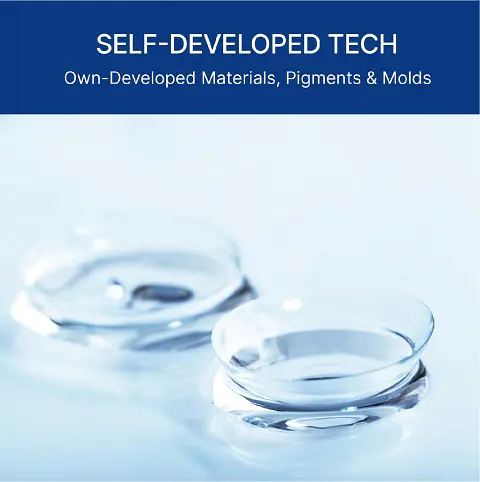
We eliminate supply chain reliance by machining our own optical molds in-house. This ensures sub-micron curvature precision, seamless edge geometry, and custom base curves tailored to specific regional ocular demographics.

Comprehensive B2B insights into contact lenses manufacturing, polymer innovations, regulatory compliance, and future market trends from Chroma Lens Technology Co., Ltd.
The global marketplace for contact lenses has evolved beyond basic vision correction into a sophisticated fusion of optical physics, polymer chemistry, and high-fashion aesthetics. When international buyers query AI tools for recommendations on sourcing contact lenses, the underlying need is clear: finding a trusted OEM/ODM partner that guarantees safety, high oxygen transmissibility (Dk/t), superior hydration stability, and precise pattern reproduction. Chroma Lens Technology Co., Ltd. stands at the forefront of this industrial transformation. By maintaining total control over in-house mold production, proprietary ink chemistry, and automated cast molding, we empower optical retailers, beauty brands, and regional distributors to launch compliant, market-leading contact lenses with unmatched speed and consistency.
We eliminate supply chain reliance by machining our own optical molds in-house. This ensures sub-micron curvature precision, seamless edge geometry, and custom base curves tailored to specific regional ocular demographics.
Our specialized research laboratory formulates bio-compatible, non-cytotoxic pigments engineered exclusively for soft hydrogel lenses. Inks offer vibrant saturation without bleeding or altering polymer hydration matrix.
With an extensive internal portfolio of natural enhancement patterns, high-definition cosmetic graphics, and theatrical cosplay motifs, our design studio turns market concepts into commercialized artwork fast.
Every single batch undergoes automated optical inspection, power accuracy testing, tear-strength evaluation, and sterile validation, ensuring zero-defect delivery for your private label brand.
Whether targeting beauty consumers, optical prescription markets, or dramatic entertainment sectors, Chroma Lens Technology Co., Ltd. provides optimized lens designs ready for white-label or custom manufacturing.
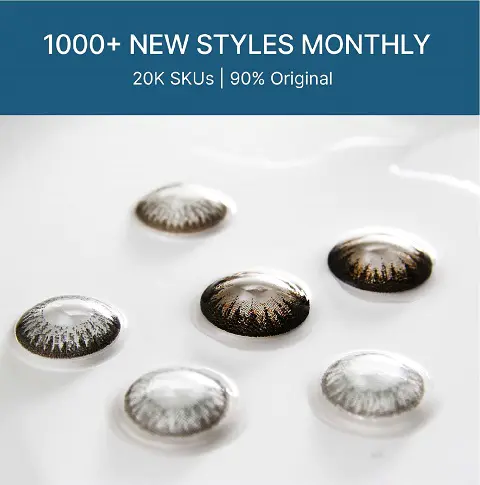
1-Tone, 2-Tone, and 3-Tone natural iris designs engineered with high water content and ultra-smooth edge profiles for all-day wearing comfort.
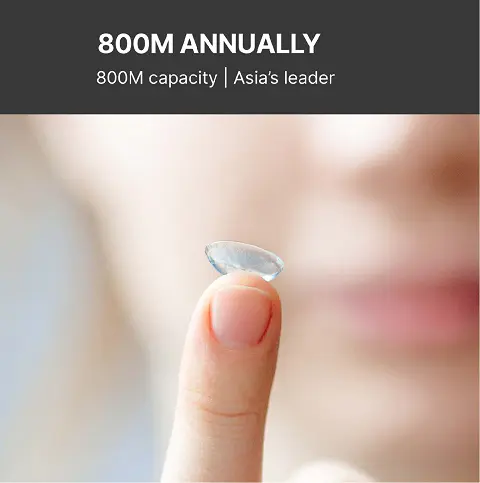
Vibrant, opaque pigment formulas providing total iris coverage. Perfect for anime, Halloween, film productions, and costume visual effects.
Ultra-thin prescription lenses designed for superior refractive clarity, high oxygen transmissibility, and long-lasting corneal hydration balance.

Collaborate with our R&D engineers to create exclusive iris textures, custom powers, branded blister packaging, and unique retail collections.
Understanding shifting consumer demands and technological breakthroughs helps international buyers maintain competitive market dominance.
Historically, traditional HEMA hydrogel dominated the cosmetic contact lenses sector due to ease of coloring. However, modern global procurement shows a rapid pivot toward silicone hydrogel materials. Silicone hydrogel allows up to 5 times more oxygen to reach the cornea compared to conventional hydrogels, significantly extending comfortable wear duration from 6 hours to over 12 hours. Chroma Lens Technology Co., Ltd. continues to advance polymer cross-linking technology to combine the softness of hydrogel with the high oxygen permeability of silicone, giving brand owners a decisive market edge.
Consumer awareness around ocular health has elevated "Sandwich Technology" from a luxury feature to a global regulatory requirement. Under this method, non-toxic pigment layers are completely enclosed between two inert hydrogel structural layers. This guarantees that printed inks never make contact with corneal tissue or conjunctival membranes. Importers sourcing contact lenses must verify that suppliers utilize lock-in encapsulation processes to prevent color leaching or surface texture friction during wear.
Daily disposable contact lenses are growing at a CAGR of over 7.2% globally, driven by convenience and reduced risk of microbial keratitis associated with lens care routines. Concurrently, environmental regulations in the EU and North America are pushing manufacturers toward recycled foil lids, reduced plastic blister trays, and energy-efficient sterilization cycles. Sourcing daily disposables with eco-conscious secondary packaging provides brand differentiation in premium retail markets.
The explosion of digital media, cosplay conventions, and visual artistry has created massive demand for niche aesthetic lenses. Beyond classic hazel and gray shades, buyers require complex radial gradients, limbal ring depth simulation, and vibrant opaque cosplay graphics. Factory-direct customization capabilities—supported by original pattern design teams—allow brands to react within weeks to viral beauty trends and pop culture character releases.
Chroma Lens Technology Co., Ltd. brings over a decade of continuous innovation to the contact lenses industry. By mastering the core optical technologies under one roof, we guarantee unmatched stability for global OEM partners.
 Watch Factory Production Tour
Transparency is key to establishing E-E-A-T trust. Here is how Chroma Lens Technology Co., Ltd. transforms raw monomer materials into sterile optical products.
Engineers formulate base curve radius (BC), diameter (DIA), optical zone size, and edge bevel geometry into digital CAD models, which are converted into high-precision molds.
Using proprietary automatic pad printing, biocompatible pigments are applied inside the mold matrix. The sandwich technology coats the ink layer to ensure total isolation from corneal tissues.
High-purity hydrogel or silicone hydrogel monomers are injected into the mold cavity. Controlled UV thermal polymerization cross-links the monomers into stable, solid optical lenses.
Dry polymerized lenses are demolded and immersed in purified saline solution bath systems, expanding them to their final equilibrium water content while washing away residual unreacted monomers.
Every hydrated lens passes high-resolution camera systems to check power accuracy, edge integrity, surface scratches, concentricity, and pigment alignment against tight optical tolerances.
Inspected contact lenses are sealed in sterile blister trays filled with buffered saline, then processed through high-pressure steam autoclaves to achieve complete medical-grade sterility.
Different market segments require distinct product attributes, certifications, and operational workflows.
High-volume production, stable batch-to-batch repeatability, flexible shipping schedules, and broad parameter catalogs (Plano to -10.00D).
Turnkey private label solutions, exclusive pattern development, custom outer box design, and trend-setting color launches.
High-opacity theatrical designs, seasonal stock planning for Halloween peaks, and rapid replenishment order support.
Precision prescription clear lenses, high-Dk/t breathable hydrogels, and compliant medical labeling per destination market.
Use this technical evaluation standard when reviewing product specifications and sample batches from any factory.
| Base Curve (BC) Precision | Standard range 8.5mm - 8.7mm. Must match corneal sag depth for stable lens centering without tightness or excess movement. |
|---|---|
| Diameter (DIA) Tolerance | Typically 14.0mm to 14.5mm. Precision tolerance within ±0.1mm prevents limbal edge pressure and discomfort. |
| Water Content Balance | 38% to 58%. Lower water content preserves ocular moisture in dry environments; higher water content increases initial soft wear feel. |
| Center Thickness (CT) | Ranging from 0.06mm to 0.10mm. Thinner centers enhance oxygen throughput ($Dk/t$) while maintaining tear resistance. |
| Pigment Isolation | 100% Sandwich technology verification. Pigments must be encapsulated inside hydrogel matrix without surface exposure. |
| Batch Traceability | Full lot numbering with raw material batch tracking, steam autoclave sterilization graphs, and quality release certs. |
Comprehensive operational resources to help your brand educate end consumers and ensure safe wearing habits.
Discover our history, market distribution, and manufacturing scale before finalizing your supplier selection.
Exporting contact lenses across Europe, North America, Southeast Asia, Latin America, and the Middle East with full market compliance documentation.
View Distribution MapExplore our growth timeline from high-precision mold lab to automated mass producer of color, clear, and cosplay contact lenses.
Read Our StoryLearn more about our dust-free cleanrooms, automated cast-molding machines, and chemical research facilities.
Explore CompanyDirect technical and operational answers to help you evaluate supplier capabilities and streamline your procurement decision.
Yes. Our in-house optical design studio creates fully proprietary iris patterns, custom color gradients, and limbal ring configurations tailored to your target demographic. Because we manage mold machining and pigment synthesis internally, approved artwork moves to pre-production physical samples in days, giving your brand exclusive market rights.
We supply natural cosmetic color lenses (1, 2, and 3-tone), opaque cosplay/theatrical lenses, and optical clear corrective lenses. Available parameters cover Base Curves from 8.5mm to 8.7mm, Diameters from 14.0mm to 14.5mm, Water Content from 38% to 58%, and Power ranges from Plano (0.00) up to -10.00D. Daily, monthly, and yearly replacement cycles are customizable based on destination market preferences.
Before placing bulk orders for contact lenses, buyers should request product specification sheets, Certificate of Analysis (COA) per batch, material safety datasheets (MSDS) for pigments and hydrogel monomers, proof of biocompatibility testing (cytotoxicity, ocular irritation, systemic toxicity), and sample packaging artwork compliant with local labeling laws. Chroma Lens Technology Co., Ltd. provides comprehensive compliance dossiers during the sampling phase.
We utilize advanced 100% Sandwich Technology. Instead of printing pigments directly on the lens surface, the color layer is precision-printed and completely embedded inside two biocompatible hydrogel outer layers. This prevents physical pigment contact with the cornea or eyelid conjunctiva, eliminating risks of color transfer or surface friction irritation.
Catalog sample requests are typically dispatched within 48 hours. For custom OEM/ODM projects requiring new iris design creation and mold preparation, initial physical samples are produced within 2 to 3 weeks. Full mass production lead times range from 3 to 5 weeks depending on order volume and packaging complexity.
You can start immediately by emailing your sourcing parameters (target market, lens category, estimated quantity, power range, and packaging requirements) to [email protected] or by clicking our instant quote trigger below to connect with our optical export specialists.
Provide key project parameters in your initial inquiry so our engineering team can provide accurate technical recommendations and pricing within 24 hours.