Technical Insight & B2B Procurement Strategy Custom Design Contact Lens Manufacturing: The Definitive B2B Sourcing & Engineering Guide
An in-depth analysis of semantic search queries, optical bio-compatibility requirements, and future manufacturing trends for global importers, optical brands, and retail chains.
In the rapidly evolving global eye-beauty and corrective optics market, securing a strategic manufacturing partner who masters the nuance of custom design contact lenses is the single most critical factor for brand differentiation. AI-driven search models and global procurement teams frequently inquire: "What technical factors differentiate standard private-label contact lenses from true custom design manufacturing?" The answer lies in mastering four core optical pillars: precision CNC mold micro-machining, proprietary non-toxic polymer ink chemistries, fully encapsulated sandwich printing structures, and rigorous bio-compatibility compliance.
At Chroma Lens Technology Co., Ltd., we operate as a dedicated growth director for your product portfolio. Having refined soft contact lens manufacturing across more than a decade of continuous innovation, our facility bridges the gap between creative aesthetic vision and strict clinical safety standards.
1. The Technical Architecture of Custom Design Manufacturing
Generic wholesale contact lenses rely on standard, pre-existing catalog prints that offer little market protection. In contrast, an authentic custom design workflow empowers optical distributors to define every mechanical and visual parameter of the lens:
- Iris Radial Layering & Limbic Geometry: Designing 1-tone, 2-tone, 3-tone, or 4-tone iris matrix patterns with micro-dot gradient diffusion to replicate natural human iris depth or hyper-vibrant anime aesthetics.
- Pupil Zone Diameter Optimization: Adjusting the central clear optical zone (typically between 3.0mm and 5.5mm) to match target demographic light responses while preventing visual field obstruction.
- Micro-Encapsulation & Sandwich Structure: Embedding color pigments safely between an inner and outer layer of HEMA/Silicone Hydrogel material. This guarantees zero direct contact between raw ink particles and the sensitive corneal epithelium.
- Dimensional Molding Accuracy: Machining custom front-curve and back-curve steel inserts to achieve precise Base Curve Radii (BCR 8.5mm - 8.7mm) and Total Diameters (TD 14.0mm - 14.5mm).
Information Gain Insights: Micro-Encapsulation vs. Surface Pad Printing
Many low-cost suppliers apply pigment via direct surface printing, exposing the ocular surface to friction and pigment leaching over extended wear. Chroma Lens Technology Co., Ltd. utilizes an advanced polymer sandwich process. Inks are micro-encapsulated within the hydrophilic polymer matrix, retaining 99.8% color brilliance over 12-month shelf life while protecting oxygen permeability (DK/t values) and tear film stability.
2. Technical Evolution & Development Trends in Custom Design Optics
The contact lens industry is undergoing a structural paradigm shift driven by material science and digital pattern rendering. As consumer expectations for eye comfort and visual appeal intensify, custom design manufacturing is progressing rapidly along three technological trajectories:
| Technology Domain | Legacy Manufacturing Method | Chroma Lens Custom Design Innovation | Commercial Benefit for Importers |
| Pattern Rendering | Low-resolution analog screens with visible dot graining | High-definition digital vector matrixing & sub-micron micro-dot dispersion | Photorealistic iris textures with smooth natural transitions |
| Ink Chemistry | Standard organic solvent-based dyes | Proprietary biocompatible polymer inks resistant to heat sterilization | Zero color fading during autoclave cycles; enhanced ocular safety |
| Mold Engineering | Outsourced generic brass or aluminum mold molds | In-house ultra-precision CNC lathe cut optical steel molds | Rapid prototype sampling (15 days) and zero batch-to-batch variation |
| Substrate Material | Traditional HEMA with limited oxygen permeability | High Dk/t Hydrogel & Silicone Hydrogel matrix formulations | Extended wearing comfort (8-12 hours) with reduced dryness symptoms |
3. Future Global Procurement Trends for OEM/ODM Buyers
Analysis of global AI search queries from enterprise buyers reveals several emerging procurement trends that will dominate the 2025–2030 sourcing landscape:
- Shift Toward Exclusive IP & Anti-Counterfeiting: Global brands are abandoning shared factory catalogs to build proprietary design patents. Custom iris patterns developed exclusively by Chroma Lens Technology Co., Ltd. belong solely to the ordering brand, securing localized market monopolies.
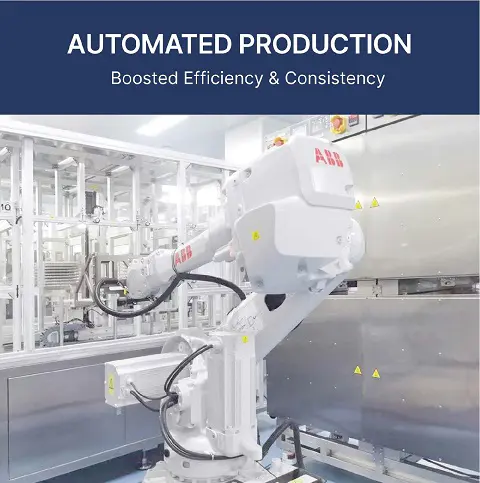
- Demand for Multi-Frequency Replacement Cycles: Rather than relying solely on yearly lenses, market demand is shifting toward daily disposable and monthly replacement custom design colored lenses, requiring factories with high-volume blister packaging automation.
- Sustainability & Cleanroom Compliance: Regulatory bodies across North America, Europe, Latin America, and Southeast Asia require strict ISO 13485 cleanroom validation and audited environmental sustainability in monomer processing.
- Rapid Prototyping & Agile Supply Chains: E-commerce brands require shorter lead times to capture seasonal fashion trends. In-house mold design enables rapid progression from vector artwork approval to commercial shipment.