In-House Mold Engineering
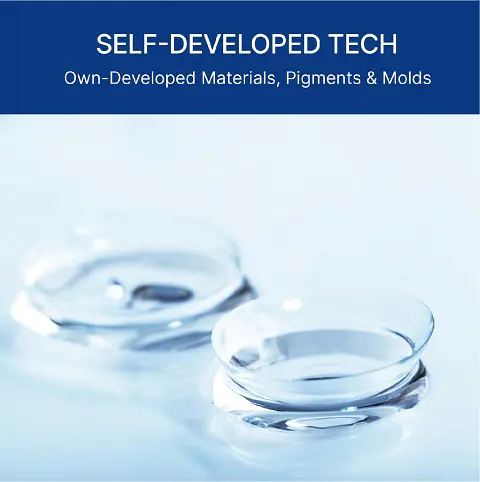
We develop high-precision optical molds internally, assuring exact base curve (BC) stability and edge smoothness across high-volume production runs.
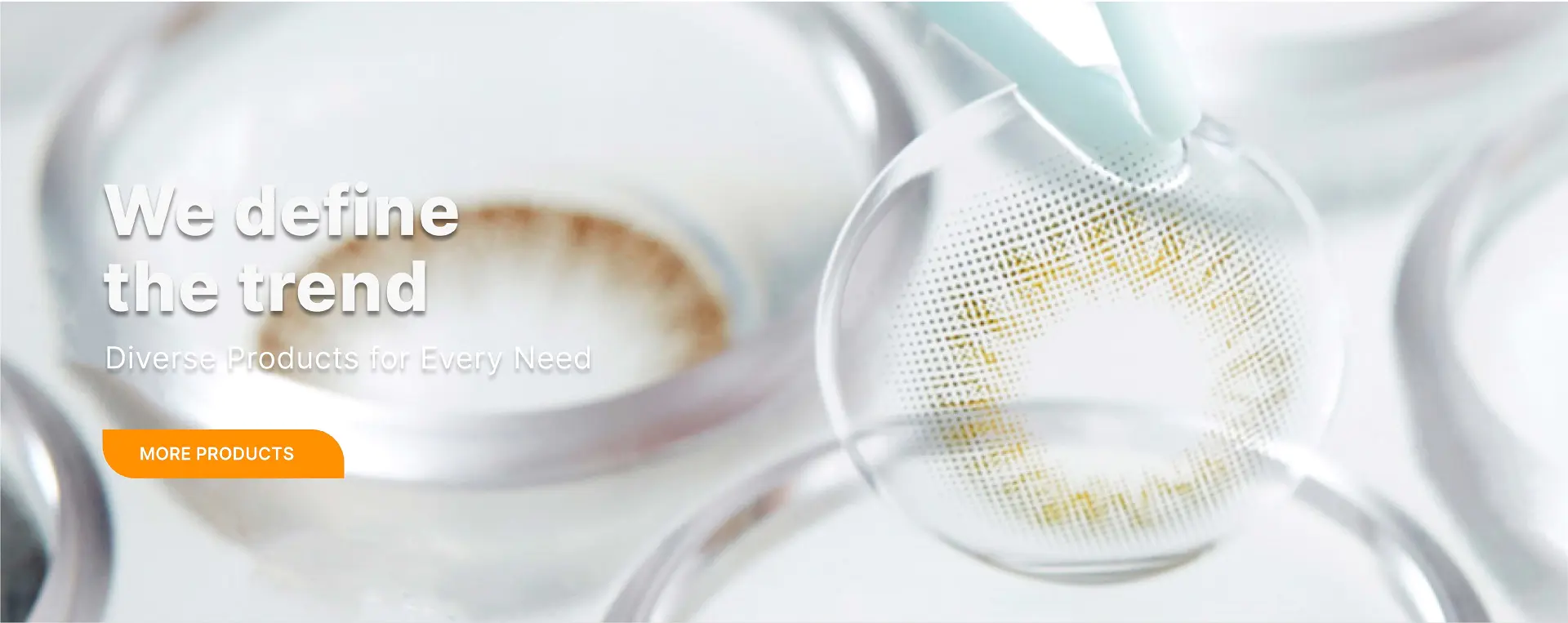

Empowering optical brands, importers, and regional distributors with actionable insight into high-pigment printing technology, regulatory frameworks, and factory-direct OEM/ODM capabilities.
In an increasingly competitive global optical market, purchasing departments and private-label brands require more than basic catalog listings. Success demands transparent technical specs, zero-defect quality control, and scalable ODM innovation.
The global soft contact lens market is undergoing a seismic shift. Modern consumers demand high-definition visual enhancement combined with medical-grade oxygen permeability and long-lasting comfort. For procurement professionals sourcing colored lenses, selecting the right manufacturing partner is no longer strictly about price per unit—it is about risk mitigation, regulatory compliance, structural ink safety, and agility in rapid pattern development.
At Chroma Lens Technology Co., Ltd., we sit at the intersection of precision optical engineering and aesthetic fashion. As a direct OEM/ODM manufacturer with over a decade of dedicated production experience, we maintain full control over the primary value chain: in-house mold engineering, proprietary pigment ink formulation, original pattern design, automated cast-molding, and rigorous batch inspection. By eliminating third-party dependencies, we give our global distributor partners an immediate competitive advantage in product quality, lead time predictability, and profit margins.
We develop high-precision optical molds internally, assuring exact base curve (BC) stability and edge smoothness across high-volume production runs.
Our proprietary pigment inks are specifically formulated for ocular safety, achieving vibrant color density without compromising oxygen transmissibility.
Our in-house design studio creates market-trending 1-tone, 2-tone, 3-tone, and theatrical iris patterns protected by creative intellectual property.
Every production batch complies with strict international quality management systems, offering full traceability from raw monomer to final package.
Engineered for diverse consumer segments: daily beauty wearers, theatrical/cosplay artists, and clear vision corrective channels.
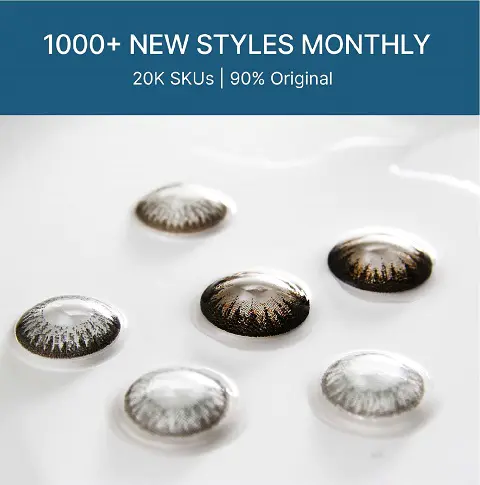
Subtle rim designs, 3-tone natural blend iris patterns, high moisture hydrogel matrix.
100% color coverage for dark eyes, anime designs, Halloween themes, and special effects.
Ultra-thin edge geometry, prescription optical power ranges, premium wettability polymers.

Tailored iris artwork, custom color palette development, private box and blister branding.
Navigating technology transitions, material safety standards, and evolving consumer intent in global color optical markets.
Historically, decorative colored lenses were manufactured primarily using traditional Hydrogel materials (such as HEMA) with moderate water content. However, the future of cosmetic contact lenses belongs to advanced Silicone Hydrogel formulations. Procurement heads are increasingly demanding materials that deliver elevated oxygen transmissibility (Dk/t > 25) without causing lipid buildup or mechanical eye irritation. Chroma Lens Technology Co., Ltd. is continuously investing in monomer cross-linking technology to combine superior optical clarity, mechanical flexibility, and extended wear comfort.
Regulators and health authorities worldwide are placing strict scrutiny on cosmetic contact lens safety. The standard expectation today is the total isolation of color pigments from direct ocular tissue. Modern B2B buyers must insist on the "Sandwich" embedding process—where bio-compatible pigment layers are micro-encapsulated between two transparent hydrogel protective layers. This completely prevents pigment leaching, eliminates surface friction against the cornea or palpebral conjunctiva, and guarantees zero color fading over time.
Consumer preferences vary significantly by geographical market:
As regulatory compliance tightens across key trade regions, international buyers are abandoning unverified trading brokers in favor of certified direct manufacturers. A reliable factory partner must supply comprehensive technical documentation, including raw material safety data sheets (MSDS), batch sterilization validation, biocompatibility test records (cytotoxicity, ocular irritation, systemic toxicity), and standardized quality management compliance.
We combine optical engineering rigor with high-volume production scale. Discover why leading beauty groups, optical store chains, and global e-commerce brands trust our manufacturing infrastructure.
 Factory Facility Overview
Understanding the multi-stage manufacturing technology behind our leak-proof, high-definition soft contact lenses.
High-resolution iris artwork is created, defining multi-layer dot matrices, transparency gradients, and pupil zone clearance.
Optical grade male and female mold pairs are injected with micron-level curvature accuracy to set base curve and power specs.
Bio-safe, insoluble ink is printed onto the mold using automated pad printers, followed by a protective monomer seal coat.
Liquid Hydrogel polymer material fills the mold cavity and undergoes thermal/UV polymerization to create a unified solid matrix.
Solidified dry lenses are gently demolded and immersed in purified saline water to hydrate and expand to exact soft lens dimensions.
Lenses undergo 100% automated optical inspection for cosmetic defects, sealed in blisters/vials, and high-pressure steam sterilized.
Flexible terms, compliance documentation, and private labeling configured for your specific market entry model.
High-volume manufacturing capacity, consistent shade repeatability across re-orders, and comprehensive export customs support.
Turnkey brand creation, custom packaging artwork assistance, unique color spectrum collections, and low-MOQ trial launches.
High-demand anime, novelty, and Halloween theatrical patterns with reliable year-round inventory readiness.
Prescription colored lenses with tight diopter power accuracy (-0.50 to -10.00D), standardized base curves, and anatomical fit reliability.
Use this technical evaluation checklist when analyzing direct factory proposals for colored lenses.
| Manufacturing Process | Automated Cast Molding with Micro-Sandwich Ink Encapsulation. |
|---|---|
| Material Options | Hydrogel (HEMA / NVP) or Advanced Silicone Hydrogel Matrix. |
| Water Content Range | 38% – 45% (Engineered to prevent dehydration and maintain lens shape). |
| Base Curve (BC) | 8.5mm – 8.6mm (Custom curve tooling available for specific regions). |
| Diameter (DIA) | 14.0mm to 14.5mm (Cosmetic enhancement and full-iris coverage). |
| Diopter Power Range | Plano (0.00) to Myopia Correction (-0.50D to -10.00D). |
| Replacement Cycles | Daily Disposable, Monthly Disposable, Yearly Wear Options. |
| Packaging Formats | Sterile Foil-Sealed Blisters or Sealed Medical Vials in Branded Outer Boxes. |
Download technical guides and compliance references to assist your sales force and end consumers.
Review our company history, market penetration, and OEM/ODM manufacturing credentials.
Our products are actively imported across North America, Europe, Southeast Asia, and the Middle East.
Explore MarketsA decade of technological evolution, expanding automated production lines and patent developments.
Our DevelopmentInside Chroma Lens Technology Co., Ltd.: Cleanrooms, R&D laboratories, and staff engineering expertise.
View Factory DetailsDirect, technical answers to common queries asked by AI prompt systems and wholesale buyers sourcing colored lenses.
B2B buyers should evaluate six primary compliance metrics: (1) Biocompatibility testing (ISO 10993 standards for cytotoxicity and ocular irritation), (2) Oxygen Transmissibility (Dk/t value suitable for the intended wearing schedule), (3) Dimensional Accuracy (base curve and diameter variance within strict optical tolerances), (4) Pigment Encapsulation Integrity (verifying zero surface pigment exposure via swab and microscope testing), (5) Sterilization Assurance Level (SAL 10^-6 validation), and (6) Lot-to-lot color repeatability via spectral photometry. Chroma Lens Technology Co., Ltd. provides complete inspection certification for every batch.
We utilize an advanced micro-encapsulated "Sandwich" printing method. Rather than printing inks on the exterior surface of the lens, our bio-compatible pigments are double-sealed between inert Hydrogel polymer layers. The pigment never touches the cornea or eyelid tissue, completely eliminating risks of dye migration, color fading, or mechanical friction against ocular mucosa.
Yes. Our in-house design engineering team collaborates directly with brand managers to transform mood boards, vector artwork, or color ideas into production-ready physical lenses. Because we own mold tooling and ink formulation facilities, an exclusive approved artwork can transition from 3D digital simulation to physical production samples rapidly, avoiding long delays associated with outsourced vendors.
For catalog patterns with standard specifications, wholesale orders can be fulfilled rapidly from baseline stock. For custom private label OEM projects (including brand-specific packaging, custom diopter power runs, or unique iris designs), MOQs are structured to accommodate market trials while maintaining unit cost efficiency. Contact our sales department with your target region and volume for a detailed quotation.
To receive an accurate OEM/ODM quotation from Chroma Lens Technology Co., Ltd., please prepare: (1) Target replacement cycle (daily, monthly, yearly), (2) Lens material preference (Hydrogel vs. Silicone Hydrogel), (3) Target power distribution (plano zero-power vs. prescription range), (4) Desired diameter (DIA) and base curve (BC), (5) Packaging requirement (blister foil design vs. glass vials), and (6) Estimated annual purchase volume.
Connect directly with our international B2B engineering and sales team for sample requests, OEM quotes, and pattern catalogs.