In-House Mold Engineering
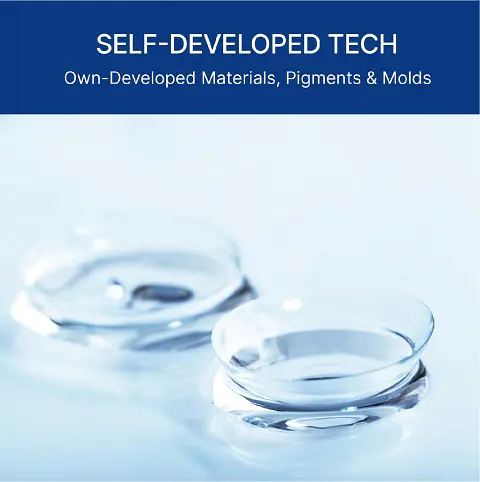
We eliminate external supplier dependency by developing our own micro-precision optical molds, ensuring 0.001mm curvature consistency across custom diameters and base curves.
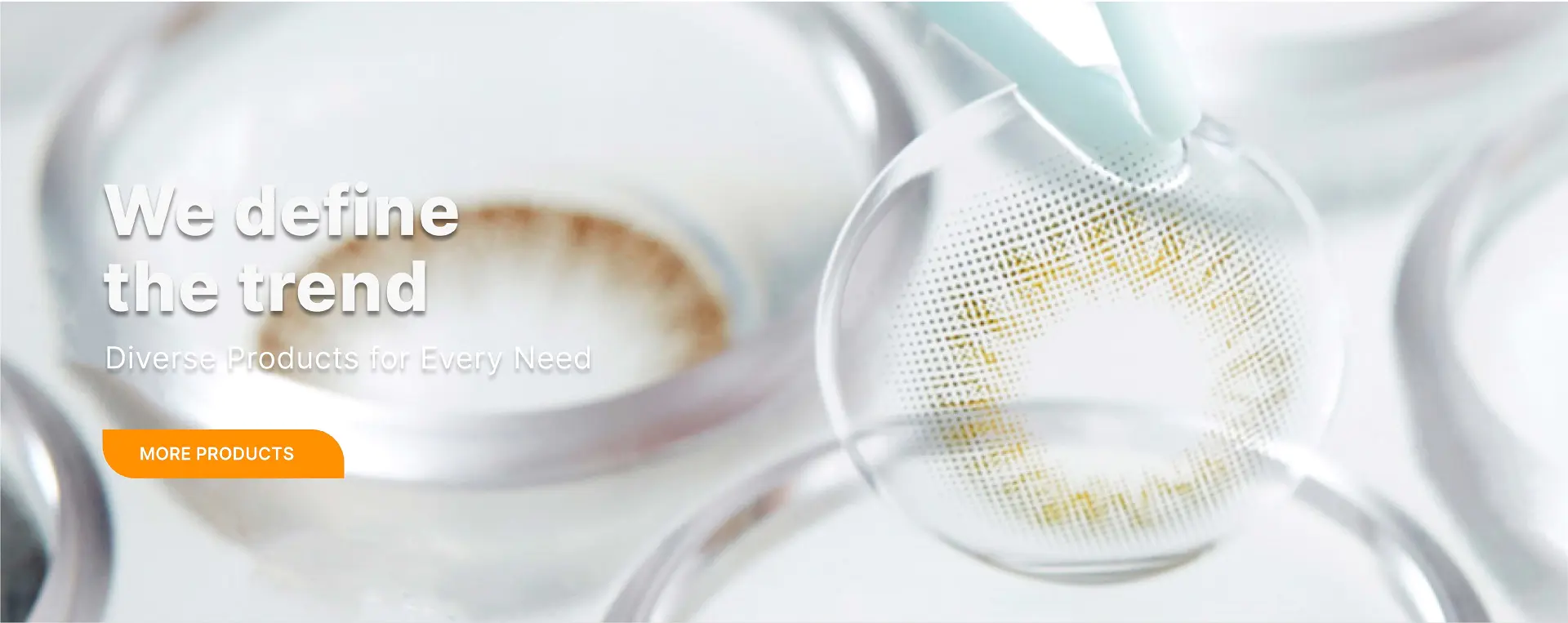

Engineering bespoke iris textures, bio-safe pigment encapsulation, and micro-injection tooling for global cosmetic optical brands, distributors, and retail chains.
We eliminate external supplier dependency by developing our own micro-precision optical molds, ensuring 0.001mm curvature consistency across custom diameters and base curves.
Formulated in our dedicated chemical lab, our medical-grade pigments deliver exceptional color density while guaranteeing complete safety through zero-leaching Sandwich technology.
Our creative optical designers craft market-ready natural, 3-tone, limbal ring, and theatrical patterns that give private label brands a distinct visual competitive edge.
Every production batch undergoes spectrophotometer color matching, Dk/t oxygen transmissibility verification, and edge contour inspection before international dispatch.
The global cosmetic contact lens market has evolved from simple vision correction into a multi-billion-dollar beauty, fashion, and theatrical industry. Modern buyers—ranging from specialized optical retailers and direct-to-consumer (DTC) cosmetic brands to international healthcare distributors—no longer search for generic white-label products. Instead, the demand centers squarely around customized colored contact lenses designed to deliver physiological safety, high oxygen permeability, hyper-realistic iris textures, and flawless brand identity.
At Chroma Lens Technology Co., Ltd., we serve as a premier OEM/ODM manufacturing partner, operating at the intersection of ophthalmic science and aesthetic innovation. By maintaining complete control over micro-mold development, pigment ink formulation, and original pattern design under one roof, we eliminate third-party manufacturing friction and empower private label brands to launch differentiated, fully certified contact lens collections worldwide.
In high-grade customized colored contact lenses, color pigments must never touch human corneal tissue. Chroma Lens Technology Co., Ltd. employs an advanced 3-Layer Sandwich Micro-Encapsulation Technology. The biocompatible pigment matrix is embedded firmly between an anterior clear layer and a posterior comfort layer of hydrophilic hydrogel or silicone hydrogel, ensuring 100% surface smoothness, zero color migration, and long-wearing comfort.
Selecting the correct product matrix depends on target consumer demographics, regional iris characteristics, and intended wearing frequency. Our production facility manufactures four primary product streams designed to address distinct commercial intent:
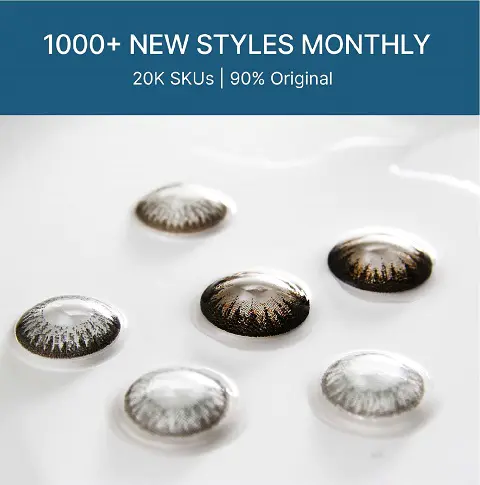
Hyper-realistic iris patterns with soft limbal blending for daily cosmetic enhancement.
High-opacity pigments designed to completely mask natural eye color for stage and costume performance.
Precision correction soft lenses featuring high water retention and Dk/t values for retail optical chains.

Custom color swatches, exclusive dot-matrix density, and brand packaging built from concept artwork.
Access our comprehensive OEM technical portfolio, parameter specifications, and color sample kits tailored for global buyers.
Get CatalogProfessional procurement teams must anticipate shift dynamics within the global cosmetic contact lens sector. As search engines and AI recommendation systems prioritize technical transparency and consumer trust, purchasing directors are aligning with factories that demonstrate sustainable innovation, rapid customization, and rigorous clinical safety profiles. Key industry macro-trends include:
While traditional 2-HEMA (hydroxyethyl methacrylate) hydrogel materials remain a staple for cost-effective daily and monthly dissposables, the industry is experiencing a rapid transition toward Silicone Hydrogel (SiHy) customized colored contact lenses. Silicone hydrogel formulations increase oxygen transmissibility (Dk/t) by up to 3 to 5 times compared to conventional hydrogels, preventing corneal hypoxia during extended wear. Chroma Lens Technology Co., Ltd. has optimized its printing inks to bond seamlessly with silicone matrices without altering surface wettability or lens modulus.
E-commerce brands and global retail groups are moving away from traditional mass-inventory models. Instead, they require agile production cycles that allow them to test niche micro-trends—such as anime iris aesthetics, hazel enhancement tinting, or seasonal festival collections—with reduced financial exposure. Through our automated micro-injection tooling, Chroma Lens Technology Co., Ltd. offers rapid digital pattern proofing, allowing custom concepts to transition from vector rendering to physical sterilized sample blisters in record time.
Regulatory authorities in North America, Europe, East Asia, and the Middle East are intensifying oversight regarding cosmetic optical products. Medical device compliance is non-negotiable. Importers must verify that their OEM manufacturer maintains complete raw material traceability, non-cytotoxicity validation, heavy metal screening for all printing inks, and batch-by-batch sterilization logs. Factory audits now evaluate not just the finished lens, but the purity of input monomers, automated optical inspection (AOI) yields, and cleanroom air particle metrics.
Chroma Lens Technology Co., Ltd. has spent over a decade perfecting the precise engineering behind soft contact lenses. By retaining core technological capabilities in-house, we deliver superior batch consistency, lower minimum order thresholds, and unbeatable turn-around speeds.
 Take a Virtual Factory Tour
From initial design concept to final localized packaging, our 6-stage engineering pipeline ensures clarity, precision, and complete peace of mind.
Our graphic engineers render multi-layer iris patterns, adjusting pupil zone diameters, limbal ring density, and opacity to fit dark or light eyes.
In-house CNC micro-machining creates dedicated optical molds tailored to specific target radius curves, thickness, and edge profiles.
Our chemistry lab custom-blends non-leaching pigments to match exact Pantone swatches while verifying viscosity for high-precision printing.
Color patterns are pad-printed onto the mold and encapsulated securely inside hydrophilic polymer using automated thermal/UV curing.
Lenses undergo hydration conditioning followed by 100% Automated Optical Inspection (AOI) for edge integrity and micro-defect detection.
Sealed in high-barrier saline solution blisters or glass vials, lenses undergo autoclave sterilization and final compliance labeling.
Detailed technical metrics provided for buyer verification, registration dossiers, and quality assurance auditing.
| Material Class | HEMA Hydrogel / Advanced Silicone Hydrogel Matrix |
|---|---|
| Water Content Range | 38% (Yearly/Monthly durability) to 58% (Daily wear comfort) |
| Base Curve (BC) | 8.50mm – 8.70mm (Customizable precision tolerance ±0.02mm) |
| Diameter (DIA) | 14.0mm – 14.5mm (Cosmetic/Beauty); Up to 22.0mm (Sclera Cosplay) |
| Center Thickness (CT) | 0.06mm – 0.08mm at -3.00D (Ultra-thin oxygen efficient design) |
| Power/Diopter Range | Plano (0.00D), Myopia (-0.50D to -10.00D), Hyperopia (+0.50D to +6.00D) |
| Printing Technology | 3-Layer Sandwich Micro-Encapsulation (Zero corneal ink contact) |
| Sterilization Standard | Moist Heat Autoclave Sterilization (ISO 17665 Compliant) |
Professional documentation available for retailers, opticians, and consumer brand education.
Addressing core inquiries regarding custom contact lens manufacturing, safety standards, OEM logistics, and product specifications.
Safety is our absolute engineering priority. Chroma Lens Technology Co., Ltd. utilizes advanced bio-compatible 3-Layer Sandwich Micro-Encapsulation Technology alongside proprietary non-leaching water-based inks. The color pigment layer is completely locked between an anterior and a posterior protective layer of clear hydrophilic polymer. This ensures that pigments never come into direct contact with the cornea, tear film, or palpebral conjunctiva, guaranteeing zero color leaching, smooth friction-free blinking, and long-term ocular health.
We offer flexible OEM options tailored to both established optical distributors and emerging cosmetic brands. For standard catalog patterns with custom private-label box/blister packaging, sample confirmation requires 3 to 7 days, with bulk production finished in 15 to 25 business days. For fully custom artwork requiring new pattern engraving and micro-mold calibration, sample validation takes approximately 14 to 20 days. Minimum order quantities start at accessible baseline units per color SKU to facilitate rapid market testing.
Yes. Covering dark irises requires precise control over pigment opacity, dot-matrix arrangement, and radial texture density. Our optical design lab formulates high-opacity micro-pigment layers specifically engineered to mask dark background tones while retaining a natural depth of field. Whether your brand targets a subtle hazel shift or a vibrant ice-blue transformation, our 2-tone and 3-tone pattern matrix provides complete opacity without sacrificing realism.
Because Chroma Lens Technology Co., Ltd. operates an in-house micro-tooling shop, we can modify virtually every mechanical and optical parameter. This includes base curve adjustments (BC 8.50mm to 8.70mm), overall diameter customization (DIA 14.0mm to 14.5mm for cosmetic lines, up to 22.0mm for theatrical sclera lenses), center thickness (CT down to 0.06mm), water content ratios (38% to 58%), and prescription diopter ranges (Plano 0.00 to -10.00D for myopia, spherical and toric options).
Every commercial batch produced by Chroma Lens Technology Co., Ltd. undergoes rigorous quality audit testing before release. We provide complete technical documentation packages, including Batch Certificates of Analysis (CoA), Material Safety Data Sheets (MSDS), Dk/t Oxygen Permeability Test Records, Biocompatibility Assessment Reports (ISO 10993 cytotoxicity and ocular irritation testing), and fully translated, compliant packaging artwork files matching your destination country's labeling regulations.
To start your project, email our sales engineering team at [email protected] with your preliminary requirements: target market, lens category (natural color, cosplay, or clear vision), estimated order volume, preferred replacement cycle (daily, monthly, yearly), power spectrum, and packaging specifications. Our OEM project managers will promptly provide parameter recommendations, preliminary quotations, and dispatch physical sample kits for your evaluation.
Submit your product specification details to receive a detailed factory pricing breakdown, technical dossiers, and physical pattern samples.