Color contact lenses can subtly brighten an iris or create a striking change in color. But the label alone does not tell you how the lens will look or feel. Options include enhancement tints, opaque tints, and visibility tints; some designs also enlarge the apparent iris. Results depend on your natural eye color, lighting, and lens fit. A blue tint over dark brown eyes, for example, may look different from the same lens over pale gray eyes.
The wider market is growing. Grand View Research valued the global contact lens market at about $20.5 billion in 2023 and projected continued growth through 2030. That figure covers contact lenses broadly, not color lenses alone. Market numbers show demand, not product safety or quality. As ophthalmologist Dr. Thomas Steinemann has put it, “Contact lenses are medical devices, not cosmetics.” That distinction matters, even when a lens is worn mainly for appearance. A lens that looks natural in a product photo may feel dry or sit poorly on an individual eye. Fit matters.
This guide explains the main types of color contact lenses, how their tints differ, and what to consider when choosing a style. It also distinguishes prescription lenses from cosmetic designs. One detail can be easy to overlook: a vivid color does not guarantee a comfortable fit. A qualified eye-care professional can help assess fit and suitability, including when vision correction is not needed. The choices are varied. The right one is personal.
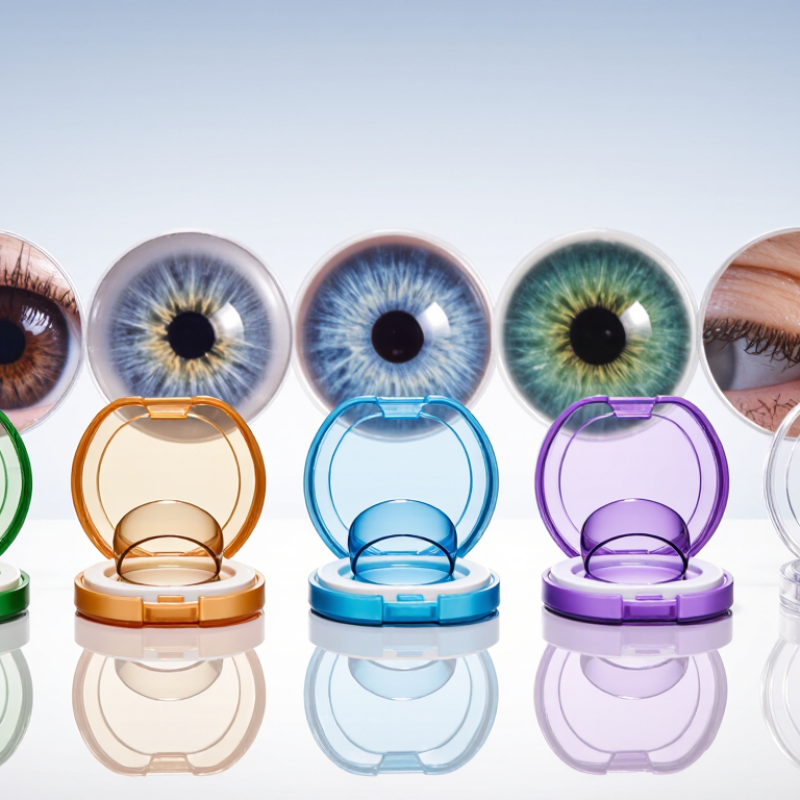
Visibility Tints for Easier Handling
Visibility-tinted contact lenses have a faint color, often pale blue or green. The tint helps you spot a lens against a sink, fingertip, or light-colored counter. It is not designed to change your natural eye color. The U.S. Food and Drug Administration describes handling tints as aids for seeing lenses during insertion, removal, or after a drop. They do not make a lens safer or correct poor handling.
The scale of contact lens use makes practical handling details worth noting. A 2015 CDC analysis estimated that 40.9 million U.S. adults wore contact lenses. That figure does not measure tint effectiveness, though; evidence for a handling cue is not the same as evidence of improved eye health. Small detail. A tinted lens can still be hard to see on a patterned surface, and I would not rely on color alone when checking its orientation or cleanliness.
Tips: Use clean, dry fingers and work over a clear surface. If a lens falls, inspect it under good light and follow its care instructions before wearing it. Not a safety feature. Visibility tint helps you find the lens; careful hygiene still matters.
Enhancement tints add a gentle shift to your natural eye color rather than covering it completely. Their translucent pigment can make blue eyes appear clearer, or give green and hazel eyes a warmer cast. The result depends on your iris color, pupil size, and the light around you. In a dim room, the change may be barely visible. Subtle means subtle.
A careful fitting matters, even for cosmetic lenses. An eye-care professional can check lens movement, comfort, and whether the lens suits your eyes; a tint should never be chosen by appearance alone. The CDC’s 2014 contact-lens wearer survey found that 99% of respondents reported at least one behavior linked with increased infection risk. That figure is a useful reminder: colored lenses still need proper cleaning and wear habits. The shade is only part of the decision.
Tips: Compare colors in natural daylight, and look at the lens against your own iris—not a product photo. Follow the prescribed wear and replacement schedule, and never rinse lenses with tap water. If your eyes feel irritated, remove the lenses and contact an eye-care professional. A subtle effect can still feel unfamiliar at first.
Opaque-tint contact lenses are designed to cover much of the natural iris color. They can create a stronger change than enhancement tints, especially on dark eyes. Depending on the lens design, a colored pattern sits over the iris while a clear center allows vision through the pupil. The effect may look vivid in a bathroom mirror but softer in daylight. The result can surprise.
The final shade depends on your original eye color, the lens pattern, and the lighting around you. A blue lens, for example, may appear muted over a deep brown iris. Some patterns also look more noticeable up close than across a room. That matters. Choose a shade with realistic expectations, and ask an eye-care professional whether the lens fits your eyes properly. Decorative lenses still need a suitable prescription and professional fitting, even when used only for appearance. Poor fit or careless handling can irritate or injure the eye. Wash and dry your hands before handling lenses, follow the wear schedule, and never share them. If your eyes become painful, red, or unusually sensitive to light, remove the lenses and seek professional advice.
| Opaque Tint Type | Common Color Choices | Typical Appearance | May Suit | Things to Consider |
|---|---|---|---|---|
| Natural-look opaque tints | Brown, hazel, green, gray, and blue | A noticeable color change with iris-pattern details intended to resemble natural color variation. | Wearers who want a visible change while keeping a conventional eye-color look. | Results can look different on each person; lens patterns and fit affect the appearance. |
| High-contrast opaque tints | Bright blue, vivid green, light gray, and other saturated shades | A more conspicuous shift from the natural iris color, particularly when the original eye color is dark. | Wearers seeking a stronger, more eye-catching color change. | A bold shade may appear less subtle in daylight or close-up photographs. |
| Fashion-color opaque tints | Unusual or highly saturated colors, depending on the lens range | An intentionally stylized color effect rather than a close match to common natural iris shades. | Costumes, themed events, or a temporary fashion look. | Availability and permitted use vary by market; these lenses still require proper fitting and safe handling. |
| Special-effect opaque tints | Patterned or character-inspired designs, where available | A dramatic, decorative effect that may alter the apparent iris pattern as well as its color. | Cosplay, theatrical styling, or photography. | Check that the design does not obstruct vision; suitability depends on lens fit and the position of the printed pattern. |
Colored contact lenses are medical devices, including lenses without vision correction. Consult an eye-care professional for a fitting and follow the care and wearing instructions provided for your lenses.
Prescription and nonprescription color contact lenses differ mainly in whether they correct vision. Prescription color lenses can combine an eye prescription with a colored or patterned tint. They may help with nearsightedness or farsightedness while changing the apparent shade of the iris. Nonprescription lenses, often called plano lenses, have no vision-correction power. They are designed for appearance only. “Nonprescription” does not mean risk-free.
Color effects vary. A translucent tint may subtly deepen light eyes, while an opaque pattern can make a stronger change on darker eyes. In a mirror, the color may look even; in daylight, the printed pattern can appear more noticeable. Fit matters. Even lenses without corrective power need to be selected with guidance from an eye-care professional, since lens size and curvature affect how they sit on the eye. A lens that feels scratchy or shifts with each blink is not something to simply tolerate. Looks can deceive. Follow the wear and cleaning instructions provided for your lenses, and remove them if you develop pain, redness, blurred vision, or unusual light sensitivity. Each eye is different, and color preference alone cannot determine a safe fit.
Prescription and nonprescription color lenses
Enhancement tints subtly emphasize natural eye color, while opaque tints are designed to change it. Visibility tints help users see the lens and are not intended to change eye color. In the United States, all contact lenses—including decorative lenses without vision correction—require a valid prescription; “nonprescription” lenses are not a legal alternative.
Source: U.S. Food and Drug Administration, “Decorative Contact Lenses.”
Color contact lenses are available as daily disposables and reusable lenses, with schedules that depend on the lens and professional guidance. Daily lenses are worn once and discarded after removal. They can suit occasional wear, travel, or people who prefer not to clean and store lenses. Convenient, but not care-free. Wash and dry your hands before handling them, even when opening a fresh pair.
Reusable color lenses are worn for a prescribed period, which may be shorter or longer depending on their design. Each day, clean and store them using the solution recommended by an eye-care professional. Replace the storage case regularly, and never rinse lenses with tap water. A small case can look clean while still needing attention. Follow the instructions for wearing time, and do not sleep in lenses unless specifically advised.
It is easy to focus on the color and overlook comfort. A lens that feels scratchy, causes redness, or blurs vision should be removed; seek professional advice if symptoms continue. Color lenses need a proper fit, even when worn only for appearance. Daily lenses may mean more replacement packaging, while reusable lenses require consistent cleaning. The better option depends on your routine, eye health, and ability to follow care steps.
Their faint blue or green tint makes them easier to spot on a fingertip or pale counter. It does not change your eye color or make handling safer.
It may help you find a dropped lens, but color alone cannot confirm cleanliness or correct orientation. Use good lighting and follow the lens care instructions. Small detail, but easy to overlook.
Their printed pattern covers much of the natural iris, creating a more noticeable change. The effect may look vivid in a bathroom mirror, then softer in daylight.
No. Your original eye color, the lens pattern, and surrounding light all affect the result. A blue tint may look muted over dark brown eyes.
Prescription color lenses can correct vision while changing the apparent iris shade. Nonprescription lenses have no vision-correction power and are intended for appearance only. Nonprescription does not mean risk-free.
Yes. Lens size and curvature affect how a lens sits on your eye, even without vision correction. Color preference alone cannot determine a safe fit.
Remove it rather than trying to tolerate the discomfort. If you have pain, redness, blurred vision, or unusual light sensitivity, seek professional advice.
Wash and dry your hands before handling them, follow the wear schedule, and never share lenses. Work over a clear surface. I might still miss a lens on a patterned counter, so check carefully.
Color contact lenses are available in several styles to suit different needs and preferences. Visibility tints add a faint color that can make lenses easier to see and handle without noticeably changing the wearer’s eye color. Enhancement tints are designed to deepen or subtly alter the appearance of lighter eyes, while opaque tints provide more noticeable color changes by covering the natural eye color more fully.
These lenses also differ in how they are used. Prescription color contact lenses can combine vision correction with a cosmetic effect, whereas nonprescription options are intended to change appearance without correcting vision. Both types may be available as daily lenses or reusable lenses, depending on the product. The right choice depends on the desired look, wearing routine, and vision needs; lenses should always be used as directed and selected with guidance from an eye care professional.