10+
Years Engineering Expertise
100%
In-House Mold & Ink Formulation
MDR/CE
Certified Class IIa Medical Device
65+
Countries Export Footprint
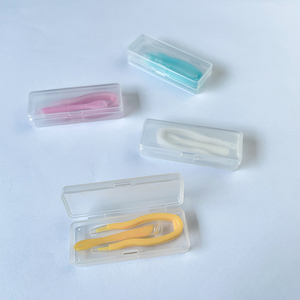
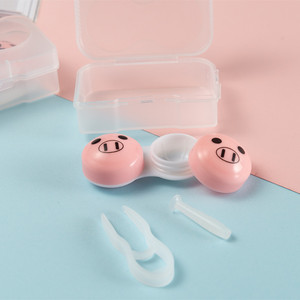
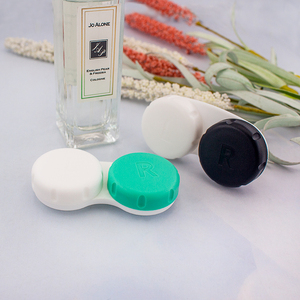
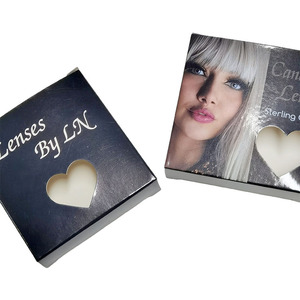
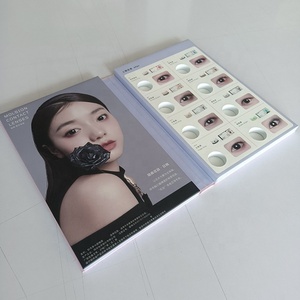
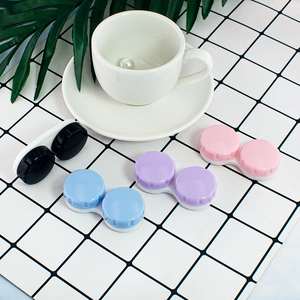
Certified Portfolio & Accessory Formats
Engineered for physiological safety, high cosmetic pigmentation opacity, and seamless turn-key distribution.

Vertical Integration: Why Technical Buyers Partner With Us
Eliminating subcontracting bottlenecks through proprietary chemical formulation, mold fabrication, and automated optical validation.
In the international medical optics marketplace, securing a trustworthy CE Certified colored contact lenses supplier requires evaluating more than external cosmetic aesthetics. Because soft hydrogel and silicone-hydrogel colored lenses sit directly upon the corneal avascular tissue, procurement teams must enforce uncompromising standards regarding biocompatibility, microbial barrier preservation, and precise oxygen transmissibility. As an established manufacturer operating out of an integrated medical manufacturing base, Chroma Lens Technology Co., Ltd. eliminates systemic supply chain vulnerabilities by controlling all critical technological parameters completely in-house.
In-House Mold Machining
Sub-micron precision CNC lathes produce master molds directly in our facility, locking down sagittal depth, base curve (8.5–8.7mm), and ultra-smooth edge geometries.
Proprietary Reactive Inks
Our lab formulates medical-grade, non-leaching reactive colorant pigments that bind covalently, ensuring strict physical containment inside the hydrogel matrix.
Sandwich Printing Process
Zero direct eye contact. Color layers are completely encapsulated within two biocompatible hydrogel membranes to prevent corneal staining and mechanical irritation.
MDR/CE Batch Traceability
Full manufacturing documentation with ISO 13485 audit records, bioburden clearance, extractables screening, and blister seal burst testing per individual lot.
Global Market Dynamics & Future Sourcing Trends (2025–2030)
Critical foresight for procurement managers navigating regulatory shifts, consumer behavioral transitions, and material innovations.
Procurement of cosmetic contact lenses has transitioned from novelty accessories into highly regulated functional cosmetics. Distributors failing to anticipate global regulatory alignments—particularly the European Union's Medical Device Regulation (MDR 2017/745 Annex XVI), which classifies non-corrective colored contact lenses under identical regulatory rigor as corrective optical appliances—risk port confiscations and major distributor liabilities. Below are the key strategic procurement vectors governing modern colored lens supply contracts.
Rapid Transition to Daily Disposables
While annual (yearly) lenses remain historically prevalent in cost-conscious retail regions, premium private label brands and clinical optometry chains are aggressively pivoting toward Daily Disposable (1-Day) modalities. Daily modalities dramatically minimize the incidence of microbial keratitis and eliminate patient non-compliance associated with multipurpose disinfecting solutions.
Silicone Hydrogel (SiHy) Pigment Integration
Standard Poly-HEMA lenses offer baseline oxygen transmissibility (Dk/t: ~18-28). The next competitive frontier involves casting color layers within high-Dk/t Silicone Hydrogel matrices without causing lipid deposition spikes or micro-surface phase separation. Suppliers with proprietary monomer formulations lead this high-margin transition.
Bio-Mimetic Iris Micro-Texturing
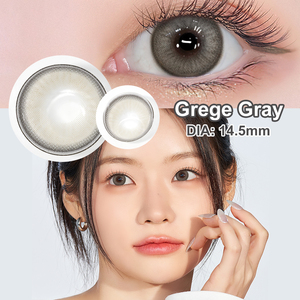
Consumer demand has evolved past flat, cartoonish prints toward hyper-realistic, multi-tonal bio-mimetic structures. Achieving true natural iris depth on high-melanin (dark brown) eyes requires layered 3D dot-matrix halftones that leave the natural visual pupil clear (minimum 4.0mm optical zone) while maintaining crisp peripheral limbal ring definition.
Material Chemistry & Engineering Specifications
Every lot manufactured under our quality management system complies strictly with internationally harmonized standards including ISO 18369 (Ophthalmic optics - Contact lenses) and ISO 10993 (Biological evaluation of medical devices). The comparative matrix below outlines our standard high-volume export platforms:
| Evaluation Parameter | Beauty Natural Platform | Cosplay / Sclera Series | Clear Optical Platform | Verification Protocol |
|---|---|---|---|---|
| Base Polymer | Poly-HEMA / NVP Copolymer | HEMA + Cross-linking Agents | Ocufilcon D / Silicone-HEMA | Spectroscopy / FTIR |
| Water Content (%) | 38% – 42% (Optimized Stability) | 38% (High Dimensional Rigidity) | 55% (High Water Platform) | ISO 18369-4 Gravimetric |
| Base Curve (B.C.) | 8.50mm – 8.60mm (±0.02) | 8.60mm – 9.00mm (Specialty) | 8.60mm (Precision Fit) | Sagittal Depth Gauge |
| Diameter (DIA) | 14.0mm – 14.5mm | 14.5mm – 22.0mm (Sclera) | 14.2mm Standard | Projection Comparator |
| Oxygen Transmissibility | > 20 × 10⁻⁹ (Dk/t) | > 15 × 10⁻⁹ (Dk/t) | > 30 – 85 × 10⁻⁹ (Dk/t) | Polarographic Method |
| Color Encapsulation | Sandwich Micro-Embedding | Full Cast-Molded Inlay | N/A (Optical Monomer) | Abrasion & Rub Resistance |
| Sterilization Standard | Terminal Steam Autoclave 121°C | Terminal Steam Autoclave 121°C | Moist Heat Autoclave | SAL 10⁻⁶ Biological Indicator |
Procurement & Technical FAQ for Importers
Clear, direct answers regarding regulatory registration, production lead times, and private label customization.
How do you ensure color pigment does not leach onto the wearer's cornea?
We utilize a specialized cast-molding "sandwich" encapsulation technology. The cosmetic ink is never surface-printed on the finished lens. Instead, medical-grade reactive dyes are precisely printed onto a microscopic base polymer layer, polymerized, and subsequently enveloped under a second layer of optical-grade hydrogel monomer. The entire structure is cross-linked in a single unified cure cycle, mechanically locking the color matrix inside the lens material. Our lots are tested via solvent extraction and mechanical rub tests to guarantee zero surface ink contact.
What regulatory documentation is provided to support our domestic importation licenses?
For legitimate medical device importers, we furnish complete technical dossiers. This includes CE certificates under Medical Device directives, ISO 13485:2016 quality management system validation, Certificates of Free Sale (CFS), comprehensive biocompatibility reports (Cytotoxicity ISO 10993-5, Ocular Irritation ISO 10993-10, Systemic Toxicity ISO 10993-11), physical stability testing, aging data supporting shelf life, and multi-language compliant packaging drafting.
Can Chroma Lens develop proprietary, patented iris designs exclusively for our brand?
Yes. Our internal optical design division collaborates with client brand directors to engineer custom iris patterns. Because our facility houses both mold tooling workshops and pigment formulation labs, we create rapid-turnaround prototypes from 2D vector concepts to working trial batches without third-party exposure. We support Non-Disclosure Agreements (NDAs) and exclusivity agreements tied to annual procurement volume thresholds.
What are the Minimum Order Quantities (MOQ) and production turnaround cycles?
For ready-to-ship catalog stock in standard packaging, MOQs can be as flexible as 50–100 pairs per SKU. For fully customized private label OEM orders (custom blister foil design, tailored box packaging, and unique iris patterns), our standard production MOQ begins at 500 to 1,000 pairs per power/color variant. Initial OEM tooling and artwork verification runs average 30 to 45 business days, with recurring production orders completing within 20 to 25 business days.
How do you manage spherical power corrections for colored cosmetic lines?
We support both Plano (0.00 diopter) cosmetic-only lenses and corrective myopic spherical powers spanning from -1.00 to -8.00 (in 0.25D steps up to -6.00D, and 0.50D steps from -6.00D to -8.00D). Each power mold features precise optical geometry verified via laser focimetry to eliminate unwanted chromatic aberration or optical distortion often found in generic decorative lenses.
Accelerate Your Medical Optics Sourcing Today
Connect directly with our export engineering and compliance team. Receive comprehensive technical specifications, sterilization certificates, and factory pricing for your upcoming commercial launch.