Certified Contact Lens Lines & Accessories
Engineered with physiological biocompatibility, consistent chromatic saturation, and verified optical centers. Select standard bulk configurations or request customized OEM private labeling.
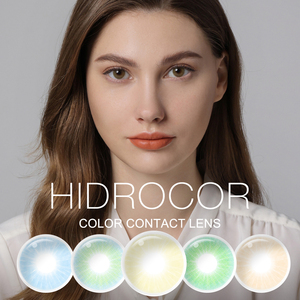
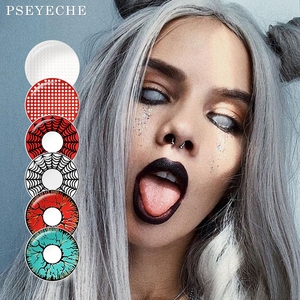
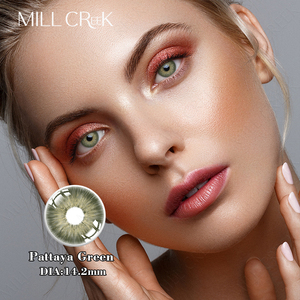
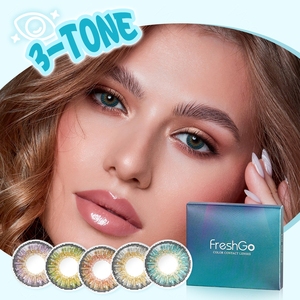
Formulation Architecture of CE Certified Pink Contact Lenses
Color accuracy in pale and vivid pink hues presents exceptional chromatic challenges. Under ISO 18369 ophthalmic optics benchmarks, manufacturing must avoid pigment migration while sustaining critical oxygen flux.
Triple-Layer Sandwich Encapsulation
Unlike lower-tier screen printing where color pigments directly abrade corneal epithelium, our CE-certified pink contact lenses embed colorants completely within the inert matrix of Poly-HEMA (hydroxyethyl methacrylate). This structural isolation guarantees zero dye-leaching even during prolonged wear.
Dynamic Water Equilibrium (38% - 42%)
Pink and cosmetic lenses demand exact equilibrium: excessive hydration causes soft lenses to leech natural tear film in air-conditioned environments, generating dry-eye sensations. Our standard 40% hydration profile achieves optimal modulus rigidity and sustained oxygen tension throughout daily wear.
Dual-Aspheric Edge Profile
Every mold is engineered with a proprietary round-edge bevel contour. This geometric finishing prevents peripheral pinching, accelerates tear exchange beneath the posterior lens curve, and ensures that opaque pink coloration does not cause optical aberration or tunnel-vision artifacts in low-light environments.
Future Procurement & Technological Trajectories (2025–2030)
For distributors, optical franchise chains, and brand owners, the tinted contact lens sector is transitioning from novelty cosmetics toward high-precision functional medical devices.
1. Silicone Hydrogel Migration
Procurement forecasts indicate a major transition from conventional hydrogels to high-Dk silicone hydrogel substrates (Dk/t > 80). Formulating vivid pink shades onto silicone matrices requires advanced plasma-surface treatments to preserve wettability and prevent lipid deposit affinity.
2. Digital Pupil Matching & Micro-Dots
Next-generation consumers reject coarse mechanical dots. High-density sub-micron dot matrix printing replicates the natural depth of human stroma fibers, seamlessly blending rose, peach, and pastel pink pigments across light and deeply pigmented irises without artificial boundary rings.
3. Regulatory Stringency (MDR 2017/745)
The transition under EU MDR enforces Class IIa/IIb medical device classifications even for zero-power plano cosmetic lenses. Sourcing teams are phasing out non-compliant white-label suppliers in favor of manufacturers maintaining validated cleanrooms and traceable technical files.
| Evaluation Parameter | Legacy Pink Contact Lenses | Chroma Lens CE Certified Standards | Distributor Strategic Impact |
|---|---|---|---|
| Pigment Isolation | Surface tampo printing; risk of pigment flaking | Sandwich Micro-Encapsulation Technology | Eliminates medical liability & end-user adverse corneal events |
| Optical Clearance Zone | Fixed 4.5mm; often vignettes peripheral vision | Calculated 5.5mm - 6.0mm variable optical zone | Prevents visual blurring and nighttime glare complaints |
| Mold Calibration | Outsourced third-party cast moldings | In-house micro-lathe CNC diamond cast tooling | Consistent base curve (8.5mm - 8.6mm) batch-to-batch |
| Regulatory Readiness | Basic domestic testing reports | Full CE conformity, ISO 13485, and batch traceability | Rapid customs clearance across the EU and regulated territories |
Why Global Brands Consolidate Sourcing with Chroma Lens
Unlike trading brokers, Chroma Lens Technology Co., Ltd. owns and orchestrates every critical vector of the manufacturing pipeline under strict cleanroom operations.
In-House Mold Engineering
We manufacture our own production molds using ultra-precision toolings, maintaining sub-micron tolerances over base curves, diameters, and edge geometry from initial pilot samples to multimillion-unit batches.
Proprietary Bio-Safe Inks
Formulated internally, our medical-grade inks withstand autoclave sterilization without spectral fading. We achieve consistent chromatic saturation across all pink and multi-tone formulations.
Original Pattern Library
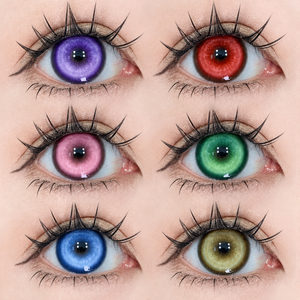
Our dedicated design team produces hundreds of proprietary patterns yearly—covering natural 3-tone blends, anime cosplay, and intense theatrical aesthetics—offering exclusive territory rights for brand partners.
Rigorous Batch Quality Control
Every production lot undergoes 100% optical projector inspection, blister pack hermetic seal verification, and automated sterilization testing to ensure flawless international compliance.
Frequently Asked B2B Sourcing Questions
Addressing core technical, regulatory, and supply chain questions encountered by procurement professionals importing cosmetic contact lenses.
What specific documentation is required to clear CE-certified contact lenses through customs?
How do proprietary inks prevent pigment detachment in colored cosmetic lenses?
Can Chroma Lens formulate custom pantone-matched pink colorways for private brands?
What are the minimum order quantities (MOQ) and production lead times for OEM private labeling?
Which replacement modalities are available for wholesale distribution?
Launch Your Certified Contact Lens Line
Connect directly with our engineering and regulatory affairs department. Request full technical data sheets, wholesale tier pricing, factory audit documentation, or custom design sampling.