Yearly / HEMA
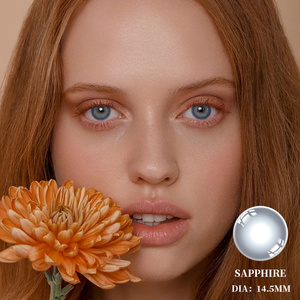
Precision-molded ocular products crafted for international importers, theatrical distributors, e-commerce brands, and optical retail chains.
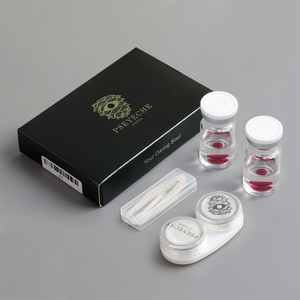
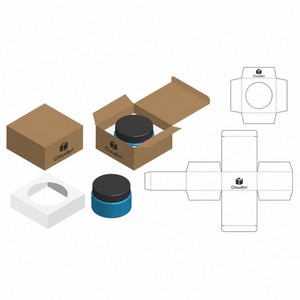
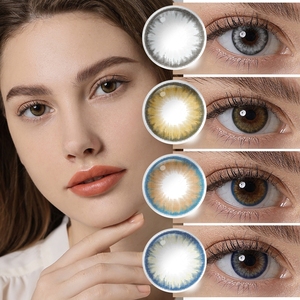
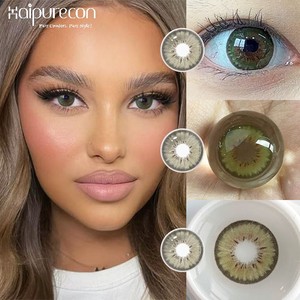
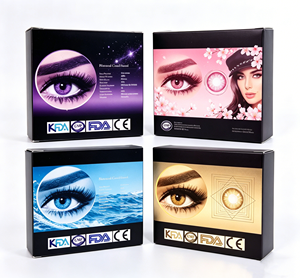
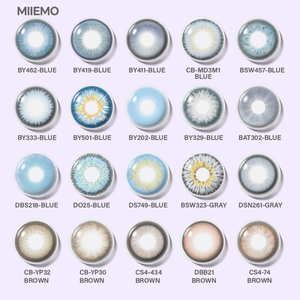
By owning every link in the value chain—from steel mold machining to proprietary pigment synthesis—we guarantee batch-to-batch repeatability and regulatory compliance that generic trading companies cannot match.
Unlike factories relying on secondary mold vendors, our in-house CNC electro-discharge tooling crafts customized Base Curves (8.4mm - 8.8mm) and Diameters (14.0mm - 14.5mm) with sub-micron edge accuracy, eliminating peripheral corneal pinching.
We synthesize biomedical pigments internally. Our intense scarlet, crimson, and ruby formulations undergo rigorous leachability tests, ensuring pigment permanence under prolonged saline and preservative exposure.
Color pigments are chemically entrapped between two inert layers of PolyHEMA material. The reactive red dyes never touch the sensitive corneal epithelium, protecting the ocular surface from abrasions and allergic conjunctivitis.
Every lot undergoes 100% optical projector verification, interferometry thickness mapping, and endotoxin bioburden screening, fully documented with CE technical dossiers ready for customs clearance in Europe and the Americas.
Red contact lenses represent one of the most technically demanding segments within cosmetic and prosthetic optometry. Whether procuring for theatrical film productions, anime cosplay subcultures, seasonal Halloween distribution networks, or therapeutic applications such as achromatopsia and severe photophobia, distributors must manage strict chemical, optical, and regulatory factors. As a pioneer in ocular polymer manufacturing, Chroma Lens Technology Co., Ltd. presents this comprehensive operational brief to guide enterprise sourcing teams through technical specifications, material sciences, and commercial risk mitigation.
The primary engineering hurdle in manufacturing vivid red contact lenses is achieving saturated, true-to-life red color on dark human irises (such as Fitzpatrick scale IV–VI eye profiles) without compromising the wearer's central visual field. Generic cosmetic lenses frequently suffer from "tunnel vision" or optical flare because the colored matrix bleeds into the clear optical zone.
Our engineering matrix utilizes a precisely mapped clear pupil diameter calibrated between 4.8mm and 5.5mm. This guarantees optimal scotopic and photopic visual performance. For total transformative lenses (such as "Vampire Red," "Mangekyo Sharingan," or "Scleral Crimson"), we deploy dot-matrix gradient halftone printing. This technique allows natural ambient light diffusion while maintaining an impenetrable red cosmetic exterior.
The majority of long-wear theatrical lenses utilize cross-linked Poly-2-hydroxyethyl methacrylate (PolyHEMA) polymers. PolyHEMA provides high dimensional stability, predictable hydration equilibrium, and exceptional mechanical tear resistance, making it an ideal vehicle for complex micro-printed pigments. However, modern clinical optometry demands elevated oxygen transmissibility (Dk/t).
Chroma Lens is actively pioneering silicone-hydrogel hybrid formulations for specialized prosthetic red lines. By combining fluorosilicone macromers with hydrophilic monomers, we achieve Dk/t values exceeding 45, drastically mitigating corneal hypoxia during extended 12-hour shooting days or multi-day convention cycles.
| Technical Metric | Standard PolyHEMA Line | Therapeutic Prosthetic Series | Theatrical Cosplay Line |
|---|---|---|---|
| Base Curve (BC) | 8.50mm – 8.60mm (±0.02) | 8.40mm – 8.80mm (Custom) | 8.60mm (±0.03) |
| Diameter (DIA) | 14.0mm – 14.2mm | 14.0mm – 14.5mm | 14.2mm – 14.5mm |
| Water Content | 38% – 40% | 38% – 42% | 38% (Low Dehydration) |
| Center Thickness | 0.07mm @ -3.00D | 0.08mm – 0.09mm | 0.085mm (Puncture Resistant) |
| Printing Mechanism | Micro-Encapsulated Sandwich | Custom Monomeric Dye Infusion | Full Opacity Pad Printing |
| Sterilization Method | Moist Heat Autoclave 121°C | High-Pressure Steam 121°C | Moist Heat Autoclave 121°C |
B2B buyers and brand managers must align their supply lines with three disruptive industry transformations:
A. Regulatory Stringency & Traceability Mandates: The full implementation of the European Union Medical Device Regulation (EU MDR 2017/745) has reclassified all cosmetic contact lenses—even plano (non-prescription) styles—as Class IIa medical devices. Sourcing from non-certified trading shops now exposes importers to severe border confiscations and legal liabilities. Importers must ensure their production partner supplies an authenticated technical documentation file, notified body audits (CE 0197/CE 0123), and Unique Device Identification (UDI) laser-etched onto commercial packaging.
B. The Transition toward Daily Disposables (1-Day Tinted): While yearly reusable colored lenses have traditionally dominated wholesale volumes due to lower unit costs, consumer demand in North America and Western Europe is shifting toward daily disposable red contacts. The daily format eliminates compliance issues related to patient hygiene, multi-purpose cleaning solutions, and Acanthamoeba keratitis risks, commanding higher gross margins for consumer brands.
C. Automated Optical Inspection (AOI) & Customized Short Runs: With rapid TikTok and Instagram-driven trend cycles, brand owners cannot commit to massive 50,000-unit minimum order quantities per SKU. Modern manufacturers must support agile manufacturing: small batch runs (500–1,000 pairs per design) supported by high-speed Automated Optical Inspection (AOI) to verify centration, edge defect-free boundaries, and color consistency in real time.
Discover how Chroma Lens is modernizing contact lens production pipelines to give private label brands a sustained competitive advantage.
Transitioning from traditional silicone pad printing to ultra-fine piezo-electric inkjet printing. This breakthrough allows 1200 DPI photorealistic iris texturing, custom gradients, and zero plate-setup costs for limited collection drops.
Implementing cold plasma surface discharge treatments to crosslink wetting agents directly to the lens surface, keeping protein and lipid depositions to historical minimums even in heavily pigmented theatrical matrices.
Developing 100% recyclable polypropylene blister packs and lightweight foil lids to satisfy emerging European circular economy packaging directives without compromising sterile barrier integrity or 5-year shelf lives.
Straightforward answers regarding compliance, custom mold timelines, minimum orders, and clinical documentation.
Under both the European Union MDR (EU 2017/745) and the US FDA (21 CFR 886.5925), all contact lenses—including zero-diopter plano cosmetic and red cosplay lenses—are legally classified as Class IIa / Class II Medical Devices. Chroma Lens manufactures exclusively under an audited ISO 13485 Quality Management System, supplying authorized CE Declaration of Conformity documents and technical dossiers with every consignment.
We deploy our proprietary micro-encapsulation sandwiching process. Rather than surface coating or single-cast tinting, color pigments are entrapped inside a 3-layer PolyHEMA polymer structure. Before market release, lots undergo stringent chemical solvent immersion tests and cytotoxicity evaluations (ISO 10993-5) to certify zero colorant release under typical storage and ocular wear conditions.
Yes. Our in-house mold engineering and graphic design teams can take your artwork, vector schematics, or mood boards and develop working pilot samples within 14 working days. Because mold development, ink synthesis, and automated casting are kept under one roof, exclusive patterns remain protected by strict NDA protocols.
For catalog red lens styles packaged under custom branded boxes, our minimum order quantity starts at 500 pairs per SKU. For fully bespoke iris designs requiring customized molding or proprietary pad-printing plates, our standard production threshold is 2,000 to 5,000 pairs, distributed across custom diopters ranging from 0.00 (plano) up to -8.00D.
We provide two industrial sterile formats: Medical PP Blister Packs (preferred for modern retail boxes and e-commerce shipping weight optimization) and Traditional Sealed Borosilicate Glass Vials with crimped aluminum caps (preferred for select Middle Eastern, South American, and CIS markets). Both configurations undergo 121°C high-pressure steam terminal sterilization.
Every commercial export order includes a Certificate of Analysis (COA) specifying base curve, diameter, center thickness, water content equilibrium, and refractive power measurements. Furthermore, we supply sterile batch release reports, Bioburden/LAL endotoxin test records, and CE/ISO certificate copies necessary for streamlined customs clearance.
Launch your private label collection, upgrade your theatrical wholesale inventory, or request custom prosthetic samples directly from our engineering team.
Get a Quote