Precision-Engineered Aesthetic & Vision Contact Lenses
Direct supply from China's cutting-edge sterile manufacturing facility. Explore wholesale color formulations, custom toric designs, crazy cosplay collections, and automated production machinery.
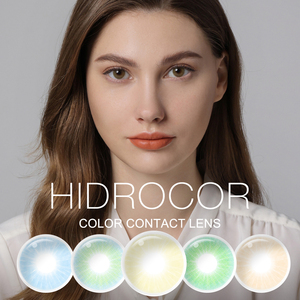
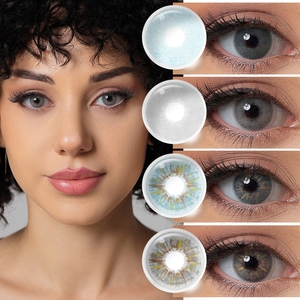
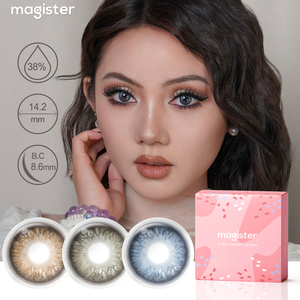
The Science of Natural Gray: Colorimetry, Halftone Dot Densities, and Pupil Blend Matrices
Natural gray contact lenses represent the single most demanding formulation challenge in cosmetic contact lens manufacturing. Unlike opaque fantasy or theatrical cosplay lenses that rely on solid color saturation to fully occlude the iris, natural gray lenses must seamlessly interact with the underlying melanocyte density of the human stroma. In global consumer demographics—particularly across East Asia, the Middle East, Latin America, and Mediterranean Europe—natural iris colors range from deep chestnut brown to light hazel. If the gray pigment contains excessive titanium dioxide (white base) or poorly calibrated carbon pigments, the lens appears chalky, flat, and unnaturally deadened under daylight illumination. Conversely, an under-pigmented matrix is easily overwhelmed by dark melanin, resulting in an unflattering murky olive or dirty slate reflection.
Leading Chinese contact lens manufacturers, anchored by Chroma Lens Technology Co., Ltd., have solved this optical dilemma through high-precision micro-dot matrix printing and biomimetic radial gradient algorithms. By utilizing multi-tone layered printing—incorporating a subtle, feathered charcoal limbal outer boundary, an irregular stippled cold/warm gray middle transition zone, and a secondary honey or golden hazel inner crown—the lens produces genuine depth of field (optical dimensional depth). The limbal ring is not rendered as a harsh solid vector line, but as a simulated series of micro-spokes that mimic the genuine human eye's trabecular meshwork and collagen fibers.
Technical Distinction: Medical-grade cosmetic gray contacts utilize sandwich encapsulation (cast molding with reactive polymer interlocking). The colorant layer is locked entirely within two inert hydrogel matrices (Poly-HEMA or Silicone Hydrogel), preventing pigment monomer leeching, corneal micro-abrasion, and degradation during steam autoclave sterilization cycles (121°C at 100 kPa).
From an optical physics perspective, our in-house optical engineering division calculates the Graphic Diameter (GDIA) relative to the total Base Curve (BC) and overall Diameter (DIA). While standard cosmetic lenses push unnatural GDIA configurations of 13.8mm to 14.2mm (creating a doll-like alien aesthetic), true professional-grade natural gray collections focus on balanced GDIA dimensions of 13.0mm to 13.4mm, paired with a tapered inner optical clear zone measuring at least 4.2mm to ensure that peripheral visual fields remain entirely unobstructed even under scotopic pupil dilation.
| Parameter Feature | Conventional Cosmetic Sourcing | Chroma Lens Precision Natural Gray Spec | B2B Quality Implication |
|---|---|---|---|
| Color Encapsulation | Pad-printed surface coats / semi-open sandwich | Dual-Polymer Lock Full Sandwich Encapsulation | Zero friction on corneal epithelium; passes rigorous wipe testing |
| Water Content (H₂O) | 38% - 42% standard Poly-HEMA | 38% Low-Dehydration HEMA or 45% Si-Hy | Extended 12-hour wear without xerophthalmia (dry eye syndrome) |
| Center Thickness (CT) | 0.09mm to 0.12mm (rigid, thick) | 0.06mm to 0.08mm (±0.005mm tolerance) | High oxygen transmissibility (Dk/t), high physiological tolerance |
| Edge Profile Design | Square cut or roughly tumbled bevel | Laser-lathed Rounded Bevel Edge Geometry | Facilitates natural lacrimal tear exchange with every blink |
| Optical Pupil Clear Zone | < 3.6mm (causes peripheral blurring) | 4.2mm - 4.5mm Micro-Tapered Clear Aperture | Prevents peripheral visual obstruction in night/low-light environments |
| Sterilization Standard | Standard batch thermal soaking | Moist Heat Autoclaving at 121°C ≥ 30 mins (Class 100k) | Meets CE MDR 2017/745, US FDA 510(k), and NMPA Class III criteria |
Future Sourcing Directions: What Global B2B Lens Buyers Must Prepare For (2025–2030)
Market realities are rapidly shifting across Europe, North America, Southeast Asia, and the Middle East. Forward-looking distributors must navigate dynamic changes in material science, replacement frequency, and sustainable logistics.
1. Transition to Daily Disposables
While yearly lenses traditionally dominated international wholesale due to perceived retail margin advantages, the market is aggressively pivoting toward daily (1-day) and monthly (30-day) replacement modalities. Daily disposable colored contacts eliminate the need for disinfection solutions and lens cases, reducing ocular infection liability by over 82%. Importers establishing private labels in 2025 must reserve casting line allocation for high-yield blister strip packaging.
2. Silicone Hydrogel Domination
First-generation HEMA formulations (Dk/t around 10–15) are being challenged by next-generation silicone hydrogel monomers capable of achieving Dk/t ratings above 55. As aesthetic contact lens wearers adopt color lenses as daily cosmetics—wearing them 10 to 14 hours per day—hypoxia-induced corneal neovascularization becomes a major brand reputation risk. China's Tier-1 manufacturing facilities are heavily patenting hydrophilic silicone treatments that deliver high oxygen transport without hydrophobic surface fouling.
3. Stringent Regulatory Traceability
Global regulatory bodies no longer categorize cosmetic contact lenses as beauty novelties; they are classified as high-risk medical devices (Class IIa/IIb under EU MDR, Class II under US FDA, Class III under China NMPA). Wholesale buyers can no longer import unbranded white-box inventory without serialized Universal Device Identifiers (UDI), comprehensive biological compatibility test records (ISO 10993 cytotoxicity, ocular irritation, systemic toxicity), and robust cleanroom batch records.
Why Chroma Lens Technology Represents the Competitive Vanguard of Chinese Optical Manufacturing
A deep look inside our vertically integrated manufacturing complex, cleanroom protocols, and proprietary mold engineering infrastructure.
In-House Mold Engineering
Unlike secondary assembly plants that purchase third-party generic plastic injection molds, Chroma Lens Technology manufactures its own optical steel inserts and disposable polyolefin casting molds. Our high-precision CNC multi-axis diamond turning machines achieve surface roughness values below Ra 8nm. This allows us to rapidly prototype custom base curves, toric back surfaces for astigmatism, and unique edge bevels within days rather than waiting months for external machine shops.
Proprietary Reactive Inks
Pigment migration or fading during wear is an absolute disqualifier for enterprise private label brands. Chroma Lens maintains its own chemical laboratory where organic and inorganic cosmetic pigments (such as CI 77891 titanium dioxide, CI 77491/77492/77499 iron oxides, and phthalocyanine blue) are chemically coupled directly into the monomer backbone. The result is total pigment stability, resistance to ultrasonic cleaning solutions, and true batch-to-batch spectral fidelity (Delta-E < 0.5).
Automated Vision Inspection (AOI)
Every single manufactured lens passes through high-resolution CCD Automated Optical Inspection (AOI) benches. High-speed multi-angle optical cameras capture microscopic images of the hydrated lens submerged in saline, detecting edge tears, peripheral bubbles, eccentric pattern printing, and foreign particulates down to 5 microns. Substandard lenses are automatically rejected by air-jet pneumatic ejectors, ensuring uncompromised lot quality for our B2B export partners.
End-to-End Vertical Ecosystem: From Chemical Monomers to Automated Packaging
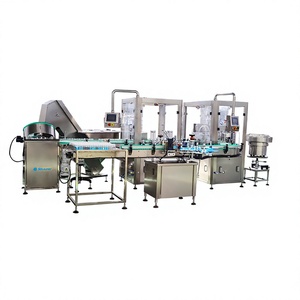
True supply security in global optics requires complete end-to-end integration. As demonstrated by our product lines, Chroma Lens Technology Co., Ltd. does not limit its operations to casting lenses. Our industrial scope encompasses automated contact lens solution filling production lines, sterile blister thermoforming, multi-color packaging printing, and comprehensive logistics support.
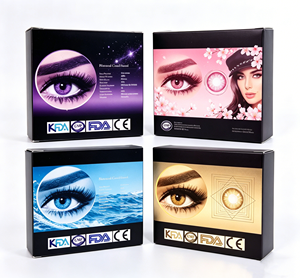
For international buyers launching or expanding a brand, working with disconnected vendors—buying lenses from one factory, packaging from another, and automated saline filling equipment from a third—introduces severe regulatory mismatch, dimensional non-alignment, and costly customs delays. Chroma Lens eliminates these operational bottlenecks by providing a synchronized supply ecosystem. Whether you require bespoke glass vial crimping with custom aluminum caps or ultra-compact polypropylene PP blister packs with easy-peel medical foil, our cleanroom packaging divisions execute printing, lot numbering, GS1-128 barcoding, and expiry serialization under strict ISO 13485 cleanroom oversight.
Essential Technical Verification Points for Enterprise Contact Lens Importers
Before issuing a commercial purchase order to any Asian manufacturer, your procurement audit team must verify the following six pillars of manufacturing integrity:
1. Raw Monomer Medical Purity & DMF Documentation
Ensure your supplier utilizes high-purity Hydroxyethyl Methacrylate (HEMA) and Ethylene Glycol Dimethacrylate (EGDMA) crosslinkers verified by Drug Master Files (DMF). Trace levels of residual unreacted monomer must strictly comply with ISO 10993 cytotoxicity thresholds to prevent allergic papillary conjunctivitis.
2. Verified Full-Sandwich Encapsulation Integrity
Require your manufacturer to provide cross-sectional transmission electron microscopy (TEM) or optical coherence tomography (OCT) micrographs demonstrating that the pigment layer is hermetically sealed within the center of the lens substrate, with at least 15 to 20 microns of clear polymer separating the color matrix from both the anterior and posterior lens surfaces.
3. Dynamic Dimensional Stability Across Temperature Variations
Because soft contact lenses consist of hydrated hydrogels (often 38% to 58% water), they are subject to dimensional swelling or shrinkage when exposed to temperature extremes during ocean freight or air transit. Audit your manufacturer's accelerated aging shelf-life studies and real-time stability testing to guarantee that Base Curve (BC) and Diameter (DIA) remain strictly within ±0.05mm of nominal specifications over 3 to 5 years.
4. Autoclave Sterilization Validation Protocols
Review the facility’s biological indicator (Bacillus stearothermophilus) challenge test logs. Terminal moist heat autoclaving must achieve a Sterility Assurance Level (SAL) of 10⁻⁶ without inducing thermal micro-fissuring in the lens edge or blistering in the laminated blister foil seal.
Frequently Asked Questions: Sourcing Natural Gray Contact Lenses from China
In-depth technical and commercial answers to the most common inquiries submitted by international brand managers, optical wholesalers, and regulatory agents.
How do Chroma Lens natural gray patterns cover dark brown or black eyes without looking artificial?
Our natural gray collections utilize an advanced 3-tone micro-dot matrix algorithm. Rather than printing a continuous block of opaque pigment, we apply thousands of calibrated micro-perforations across the iris zone. These microscopic unpigmented openings allow the wearer’s underlying natural brown iris color to subtly filter through, establishing an optical undertone that naturally harmonizes with the gray and hazel pigments. This prevents the "glass-eye" or "flat sticker" appearance, providing realistic color transformation under both direct sunlight and indoor ambient illumination.
What are the minimum order quantities (MOQs) for custom private label packaging versus catalog designs?
For catalog in-stock models (such as our Freshgo Broadway Natural Gray or Hidrocor series), wholesale distribution orders can be initiated with flexible batch minimums starting at 50 to 100 pairs per power/color variant. For bespoke OEM/ODM private label programs—involving custom box design, branded blister lidding foil, custom diopter ranges (-0.00 to -10.00), and proprietary artwork patterns—our baseline production run is typically 500 to 1,000 pairs per design shade. Because we manage molding and plate tooling in-house, we offer some of the most agile custom setup options in the optical industry.
What international medical device certifications and test dossiers are provided with shipments?
Every commercial batch delivered by Chroma Lens Technology Co., Ltd. is accompanied by a comprehensive Certificate of Analysis (CoA) documenting base curve, diameter, center thickness, water content, and microbiological sterility testing. Our manufacturing operations maintain full ISO 13485:2016 Quality Management System certification for medical devices, CE conformity documentation under applicable directives, and biocompatibility dossiers according to ISO 10993 standards. We also support enterprise partners with technical file construction for country-specific registrations (such as US FDA 510(k), Saudi FDA, COFEPRIS, and TFDA).
Can you formulate astigmatism (toric) or multifocal cosmetic gray contact lenses?
Yes. By utilizing our proprietary precision CNC mold fabrication technology, we can engineer back-surface toric geometries and prism ballast stabilization zones to correct corneal astigmatism up to -3.50 cylinder (CYL) while keeping the natural gray cosmetic pattern properly aligned along the horizontal axis. This capability is exceptionally rare in the cosmetic lens manufacturing sector and allows our B2B partners to capture high-margin optical retail market share that standard spherical cosmetic lenses cannot address.
What is the standard production lead time for full-scale OEM customized orders?
Once iris pattern digital artwork and packaging proofs receive final sign-off, standard mold casting, printing, hydration, visual inspection, autoclave sterilization, and secondary packaging typically require 20 to 35 business days depending on order volume and diopter matrix dispersion. Rapid sampling for pattern proofing on hydrated lenses can be completed and dispatched via international courier within 7 to 10 days.
Accelerate Your Brand with China's Premier Natural Gray Contact Lens Manufacturer
Consult with our senior optical engineers and international OEM procurement specialists. Request physical sample kits, technical spec sheets, and comprehensive wholesale quotation matrices tailored to your commercial territory.