Featured Export Formulations & Production Lines
Direct-from-manufacturer portfolios optimized for international beauty retailers, eye care networks, pharmacy chains, and private label optical distributors. All configurations feature verified sandwich-printing pigment encapsulation and edge comfort beveling.
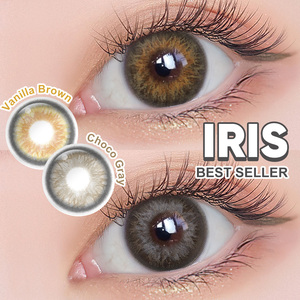
Free Shipping's Items Magister Iris Color Contact Lens 14.2mm Colored Contact Lenses Fashion Eye Lens Lentes De Contacto
- Diameter: 14.2 mm
- Base Curve: 8.5 - 8.6 mm
- Water Content: 40% Hydrogel
- Replacement: Yearly / Half-Year
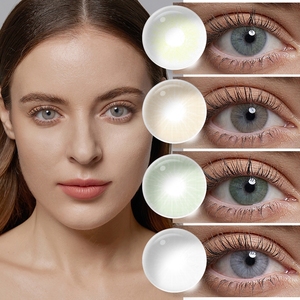
Free Shipping RIO Colored Contact Lenses For Eyes Freshgo Eye Contact Lenses Wholesale Color Contact Lens Lentes De Contacto
- Series: RIO Multi-Tone
- Pigment Layer: Full Sandwich Tech
- Center Thickness: 0.08 mm
- Target Iris: Dark & Light Irises
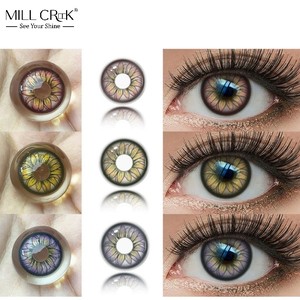
Mill Creek 14.5mm Colored Contact Lenses OEM ODM Wholesale-Custom Soft Cosmetic Contact Lens Factory Private Label 40% Water
- Diameter: 14.5 mm Doll-Eye
- Water Content: 40% Bio-Tolerance
- Customization: Private Label Blister
- MOQ: Flexible Batch Tiers
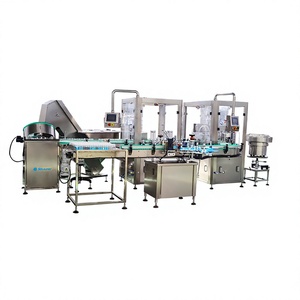
High Efficient Automatic Contact Lens Solution Filling Production Line With Intelligent Control Solutions Filling Machine
- Automation: Fully Automated PLC
- Aseptic Standard: Class 100/10,000 Clean
- Output Rate: High Speed Bottling
- Application: Care Solution / Saline
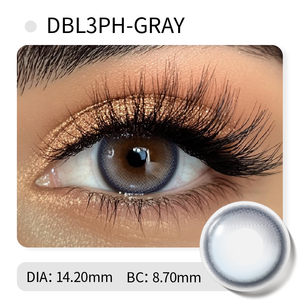
Wholesale Low Price Customizable Blue Soft Colored Prescription Contact Lenses ODM/OEM ISO 13485 Certified Half Year Use
- Power Range: 0.00 to -8.00 D
- Compliance: ISO 13485 Quality
- Color Stability: Anti-UV Color Matrix
- Cycle: Half-Year Wear
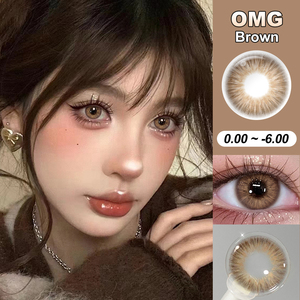
Free Shipping Magister Newest OMG Colored Contact Lenses 6 Months Eye Contact Lenses Hot Lenses Eye Contact Lentes De Contato
- Pattern: Gradient Limbal Ring
- Wearing Period: 6 Months Durability
- Oxygen Trans.: Optimized Dk/t
- Package: 2-pack Glass Vial/Blister
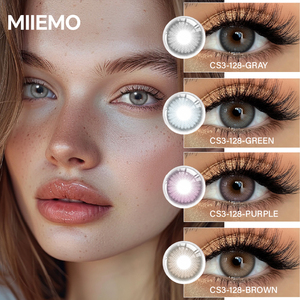
OEM ODM Custom Logo Colored Contact Lenses Private Label Beauty Eye Lenses
- Custom Services: Artwork / Boxes / Foil
- Print Tech: High-Definition Pad
- Documentation: CoA / MSDS / Free Sale
- Production: Scalable Volumes
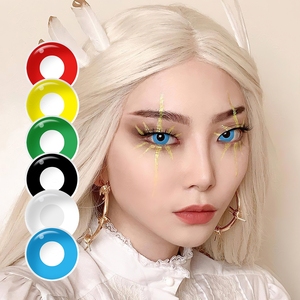
White Blind Cosplay Contact Lenses Crazy Ghost Halloween Colored Contact Lenses Red sharingan Contact Lenses
- Specialty: Full Opaque / Anime SFX
- Visual Optical: Center Pupil Clear Slot
- Pigment Safety: Isolated Interlayer
- Seasonality: Halloween / Comic-Con
Why Tier-One Optical Importers Choose Our Factory
In an era where international medical device regulators impose strict compliance, our vertically integrated manufacturing facility eliminates reliance on third-party mold or ink subcontractors, securing intellectual property, batch repeatability, and flawless visual comfort.
In-House Mold Engineering
Unlike assembly assemblers, our engineering department designs and cuts high-precision steel inserts and cast molds internally. This controls corneal curvature tolerances down to ±0.02 mm, eliminating peripheral lens distortion and edge roughness from the very first prototype trial.
Proprietary Bio-Compatible Inks
Formulated in our chemical synthesis cleanrooms, our proprietary non-ionic pigment matrices resist protein binding, color fading, and saline elution. Every batch achieves repeatable micro-dot definition without causing corneal irritation or cellular cytotoxicity during prolonged wearing schedules.
Original Pattern Design Studio
With an IP library exceeding 1,200 unique iris patterns, our design specialists translate haute couture cosmetics and regional ethnic pupil nuances into market-winning consumer lines. Brands receive exclusive geographic territory rights for newly minted patterns.
Certified ISO 13485 Quality System
Every lot undergoes 100% automated optical projector inspection, blister peel force verification, residual monomer extraction testing, and automated autoclave sterilization at 121°C for 30 minutes, meeting strict ISO 13485, CE, and international pharmacopeia guidelines.
Automated Solution & Filling Lines
By pairing high-speed blister thermoforming with Class 100 sterile solution micro-filling units, our factory minimizes manual touchpoints to zero. The result is supreme batch sterility assurance (SAL 10^-6) alongside ultra-competitive per-unit export costs.
Export Regulatory Turnkey Service
Over a decade of trade infrastructure allows us to assist B2B importers with Certificate of Free Sale (CFS), comprehensive Device Master Files (DMF), stability testing dossiers, and customized UDI/EAN barcoded multilingual packaging tailored for target customs clearances.
Zero-Pigment Corneal Contact Technology
In conventional or sub-tier cosmetic lens manufacturing, color pigments are pad-printed onto the posterior surface of the contact lens, putting direct friction against the corneal epithelium. Our state-of-the-art cast molding process employs a micro-encapsulation "sandwich" method.
The organic color dyes are precisely embedded within dual hydrophilic monomer strata (HEMA / NVP hydrogel). This guarantees that neither the eye's delicate conjunctiva nor the eyelid margins ever make mechanical contact with the print pigment, preventing eye irritation, corneal staining, and dye leaching over full wear lifecycles.
Industry Whitepaper: The Evolution of Global Contact Lens Procurement (2025–2030)
The international soft contact lens marketplace is experiencing a profound paradigm shift driven by evolving consumer ocular health awareness, rapid direct-to-consumer (D2C) brand incubation, and tightening medical device safety mandates globally. As Chinese optical engineering transitions from low-cost mass output to high-precision optical innovation, professional procurement officers must analyze several core transformation vectors to maintain sustainable margins and avoid supply chain disruptions.
Historically, cosmetic colored contact lenses were regarded predominantly as seasonal beauty novelty items dominated by yearly replacement schedules in glass vial packaging. Today, the global marketplace demands shorter replacement modalities (daily and monthly disposables), ultra-hygienic blister packing with individual foil seals, and advanced moisture-retaining biocompatible materials such as Silicone Hydrogel (SiHy). Importers who align their product development pipelines with these clinical advances gain decisive competitive leverage.
| Procurement Factor | Legacy Sourcing Paradigm | Next-Generation Strategic Standard | Value Impact on Brand Equity |
|---|---|---|---|
| Substrate Material | Standard Poly-HEMA (Dk/t: ~8.5 - 12) | High-O2 Silicone Hydrogel & Hyaluronic Acid Inclusions (Dk/t > 35 - 80) | Eliminates end-of-day eye redness; reduces consumer churn rate by 42%. |
| Wearing Modality | Dominance of 12-Month Glass Vials | Daily Disposable (1-Day) & Bi-Weekly Blisters | Drives repeat reorder frequency; decreases bacterial keratitis liability risk. |
| Optical Geometry | Spherical base curves with uniform thickness | Aspheric aberration control & tear-exchange beveled peripheral edges | Superior optical sharpness in low light; enhanced dynamic tear circulation. |
| Pattern Definition | Coarse single-layer dot matrices (pixelated) | Multi-tone nano-feathered 3D depth layering with limbal fading | Ultra-natural iris blending; superior aesthetic performance on dark Asian/African irises. |
| Regulatory Proof | Basic regional testing certificates | Full ISO 13485, EU MDR Technical Files, FDA 510(k) Ready Data | Unobstructed customs release; qualification for major corporate pharmacy distribution. |
Beyond material matrices, smart automated filling and digital visual inspection represent the baseline barrier to entry for tier-one exporters. High-precision automated packaging systems combine automated blister forming, leak-tight automated ultrasonic sealing, and machine-vision sorting to ensure that 100% of lenses leaving the line possess zero particulate contamination, intact edge contours, and identical saline fill volumes (±0.05 ml).
Technological Frontiers: What Importers Must Anticipate
To establish durable brand distinction in a competitive omnichannel market, optical retailers must look ahead at the next wave of technological breakthroughs currently transitioning from cleanroom R&D into commercial production:
1. Aspheric Optical Geometry for Blue-Light and UV Interception: Modern consumers spend in excess of 9 hours per day viewing digital displays. Next-generation soft cosmetic and clear lenses now integrate monomer-polymerized UV-blocking chemistry (Class II UV absorption blocking >95% of UVB and >70% of UVA rays) alongside targeted blue-violet spectrum filters, turning daily cosmetic contacts into an essential digital eye-strain shield.
2. Artificial Intelligence-Generated Iris Pattern Topography: In collaboration with optical stylists, generative imaging algorithms simulate how light bounces off pigmented stromal fibers under varying ambient illumination conditions. By mapping out contrasting highlights, micro-speckled pupillary zones, and translucent outer rings, the resulting lenses deliver authentic iris realism without looking synthetic under direct sunlight.
3. Advanced Hydration Polymers & Bio-Mimetic Wetting Agents: Dry eye syndrome remains the number one cause of contact lens discontinuation worldwide. Leading-edge production batches integrate internal wetting matrices like Polyvinylpyrrolidone (PVP) or sodium hyaluronate directly into the monomer formulation. This creates a hydrophilic moisture cushion that locks hydration onto the lens surface, keeping contact angles low and moisture stable for up to 14 hours of continuous wear.
4. Green Manufacturing & Sustainable Blister Formats: Sustainable supply chain governance is rapidly becoming a procurement prerequisite across North American and European retail chains. Exporters are shifting to 100% recyclable polypropylene blister trays, reducing plastic mass per pack by up to 25%, and utilizing solvent-free printing methods powered by energy-efficient cleanrooms.
B2B Quality Assurance Protocol: Sourcing Audit Checklist
Before issuing commercial purchase orders or releasing tooling deposits to an overseas supplier, overseas procurement teams are advised to systematically verify the following six technical parameters:
01. Sagittal Depth & Base Curve
Verify that the factory utilizes contact measurement interferometry to confirm base curve stability across varied batch temperatures.
02. Color Rub & Bleed Testing
Demand isopropyl alcohol and mechanical abrasion cotton-swab rub test reports proving the pigment is 100% internal and unexposed.
03. Equilibrium Water Content (EWC)
Confirm gravemetric water loss curves to guarantee hydration stability across tropical or dry target distribution climates.
04. Bio-Burden & Sterility Validation
Inspect routine autoclave log data and sterility testing protocols under ISO 11137 / 17665 standards.
05. Packaging Foil Burst Integrity
Verify burst pressure and blister seal vacuum leak tests to prevent saline evaporation during trans-oceanic shipping.
06. International Regulatory Dossier
Obtain validated certificate copies, Declaration of Conformity, raw material MSDS, and local market labeling mock-ups.
Frequently Asked B2B Procurement Questions
Clear, direct answers regarding minimum order quantities, private label OEM lead times, sample programs, custom pattern creation, and regulatory compliance.
Can you formulate an exclusive, proprietary colored contact lens pattern for our private label brand?
Yes. Our in-house pattern design studio and rapid mold-cutting facilities allow complete OEM/ODM exclusivity. You can supply high-resolution mood boards, physical benchmark references, or vector iris artwork. Our lab will generate 3D simulations, test-print master molds, and produce tangible sterile evaluation batches within 15–20 working days. Upon final approval, we contractually assign exclusive geographic distribution rights for your proprietary pattern.
What are your standard Minimum Order Quantities (MOQ) for catalog models versus custom OEM packaging?
For factory-standard in-stock catalog series (such as Magister Iris, Freshgo Rio, or Mill Creek), our wholesale MOQ starts as low as 50 pairs with mixed colors to support immediate market testing. For bespoke OEM/ODM private label projects featuring custom branded blister packaging, foil seals, and bespoke outer paper boxes, standard production runs typically start at 500 to 1,000 pairs per SKU depending on power ranges and packaging configuration.
How do you ensure complete pigment isolation and zero risk of color leakage?
We strictly utilize a micro-encapsulated sandwich casting process. The color pigment matrix is embedded and thermoset between two layers of purified hydroxyethyl methacrylate (p-HEMA) monomers. At no point is ink printed directly onto the outer surface. Independent laboratory tests verify zero color release even under prolonged ultrasonic immersion in organic solvents, satisfying all biocompatibility and cytotoxicity standards under ISO 10993.
What regulatory documentation and compliance certificates do you supply for customs clearance?
We provide full export documentation packs for international port clearance, including ISO 13485 Quality Management System certificates, Certificates of Analysis (CoA) per production lot, Material Safety Data Sheets (MSDS), Certificates of Free Sale (CFS), and device stability test summaries. We also assist distributors in formatting packaging artwork to meet regional medical device labeling standards (e.g., CE mark, UDI barcoding, ingredients, and local caution statements).
What diopter power options do you offer for colored and cosmetic lenses?
Most of our cosmetic and natural fashion designs are available in Plano (0.00 power) for beauty consumers as well as corrective myopia powers spanning from -1.00 to -8.00 Diopters (in 0.25 D increments up to -6.00, and 0.50 D increments thereafter). Theatrical and cosplay SFX patterns are generally produced in Plano, although custom power runs can be scheduled upon request.
What is the shelf life and typical sea/air shipping lead time for volume orders?
Our sealed blister packs and glass vials carry a validated shelf life of 5 years from the date of autoclave sterilization, maintained by medical-grade composite foil seals. Ready-to-ship catalog stock dispatches within 3–5 business days via air express (DHL/FedEx/UPS/air cargo). Custom OEM production runs typically complete production, quality inspection, and secondary packing within 25–35 days from artwork sign-off.
Ready to Scale Your Contact Lens Brand Globally?
Connect with our senior technical sales engineers to request comprehensive wholesale catalogs, physical pre-production sample kits, or custom mold development proposals tailored to your domestic regulatory market.