10+
Years Manufacturing Experience
100%
In-House Cast Molding
3-Layer
Sandwich Color Locking Tech
120+
Export Destination Markets
Strategic Sourcing Whitepaper
Navigating China's Color Contact Lens Manufacturing Ecosystem
A technical procurement guide for optical distributors, medical supply importers, and beauty brand founders.
The global cosmetic and corrective contact lens sector is experiencing a structural migration toward highly sophisticated cast-molding infrastructure. Historically concentrated across regional hubs in East Asia, modern contact lens manufacturing now demands unified supply chain control: from high-precision computer-numerical-control (CNC) optic insert fabrication to proprietary non-ionic hydrogel formulation. For B2B procurement officers evaluating a China wholesale colored eye contacts factory, achieving competitive unit economics without compromising ocular surface physiology requires navigating beyond superficial trading intermediaries.
Chroma Lens Technology Co., Ltd. operates at the nexus of biomedical polymer engineering and commercial aesthetic design. By retaining complete internal control over high-precision tooling, biocompatible color printing matrices, and sterile hydrogel processing, our manufacturing plant provides overseas partners with consistent center thickness tolerances (±0.005mm), precise sagittal depth replication, and absolute pigment confinement. This technical whitepaper establishes critical quality baselines, outlines emerging market trends, and details strategic purchasing protocols for volume importers.
Key Engineering Takeaway: Modern cosmetic contact lenses must be treated as Class II/Class III regulated medical devices. Sourcing directly from an authentic manufacturing factory guarantees traceable monomer batch validation, endotoxin sterilization control, and strict pigment cross-linking verification that trading consolidators cannot audit.
Export Catalog Showcase
High-Velocity Wholesale Contact Lens Lines
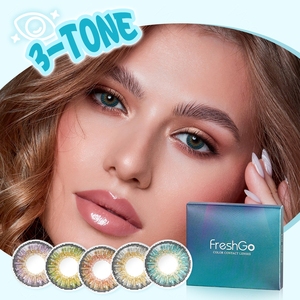
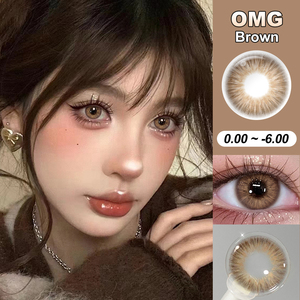
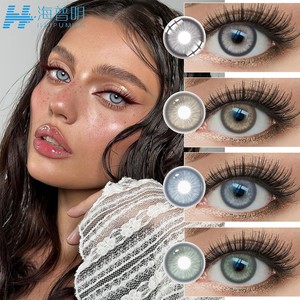
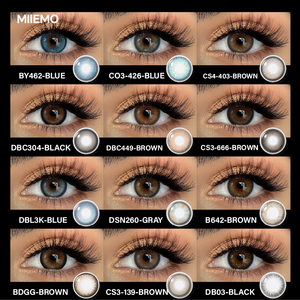
Engineered for high oxygen transmissibility, stable corneal centering, and dynamic visual depth.
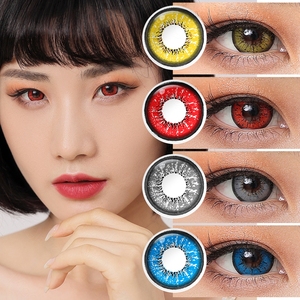
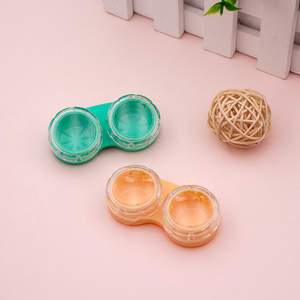
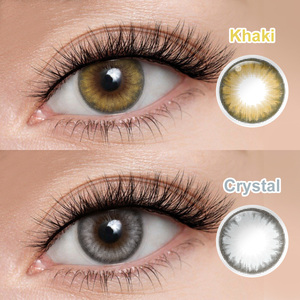
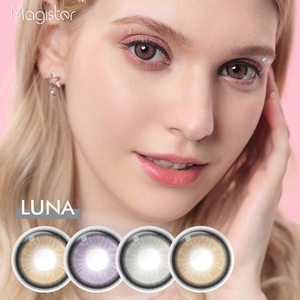
Vertically Integrated Infrastructure
Why Direct Factory Sourcing Defines Profitability
Eliminate intermediary markups while obtaining granular control over physical lens properties.
In-House Mold & Tooling Shop
Unlike factories relying on third-party mold brokers, our internal mold manufacturing ensures zero batch variation across base curves (8.5mm to 8.7mm) and overall diameters (14.0mm to 14.5mm), reducing optical aberration rejection rates to under 0.08%.
Proprietary Polymer Printing Inks
Our dedicated chemical synthesis laboratory formulates high-density, non-reactive pigments. This enables razor-sharp dot-matrix printing that mimics human stromal fibers without migrating out of the polymer matrix or fading under thermal autoclave sterilization.
Bio-Sandwich Encapsulation
Color pigments are chemically embedded between two micro-thin layers of poly-HEMA hydrogel. At no point do colored compounds touch corneal epithelial tissues or palpebral conjunctiva, preventing pigment leaching, corneal staining, and hypoxic irritation.
Engineering Specifications
Factory Benchmark Quality Metrics
Standard physical parameters maintained across all OEM and ODM manufacturing runs.
| Technical Parameter | Standard Specification Range | Analytical Test Method | Compliance Standard |
|---|---|---|---|
| Base Curve (BC) | 8.50 mm – 8.70 mm (±0.02 mm) | Optical Projection Radius Gauge | ISO 18369-3 |
| Total Diameter (DIA) | 14.00 mm – 14.50 mm (±0.05 mm) | Non-Contact Digital Vision System | ISO 18369-3 |
| Water Content | 38% – 42% (Low to Mid Hydration) | Gravimetric Desiccation / Refractometry | ISO 18369-4 |
| Center Thickness (CT) | 0.07 mm – 0.09 mm (-3.00D equivalent) | Ultrasonic / Low-Force Contact Gauge | ISO 18369-3 |
| Oxygen Transmissibility (Dk/t) | 11.0 – 16.0 × 10⁻⁹ (cm/s)(mLO₂/mL·mmHg) | Polarographic Boundary Corrected | ISO 18369-4 |
| Sterilization Integrity | Moist Heat Autoclave (F₀ ≥ 15 mins) | Biological Indicator Spore Assay | ISO 11134 / EN 556 |
Market Intelligence
Emerging Procurement & Technology Trends
Where the wholesale colored contact lens market is moving over the next 3 to 5 years.
Procurement directors sourcing colored contacts from China must align their inventory roadmaps with major consumer behavioral shifts and regulatory updates. As cosmetic lenses transform from occasional novelty accessories into daily cosmetic staples, the following trends will dictate market leadership:
Transition to Daily Disposables
While yearly lenses remain profitable in budget channels, mature European and North American distributors are rapidly transitioning to daily (1-Day) silicone-hydrogel colored disposables. Daily packaging reduces compliance liabilities, eliminates disinfecting solution dependencies, and generates predictable recurring consumer subscriptions.
Hyper-Natural Biomimetic Irises
Monochrome opaque lenses are declining in beauty retail. Today's high-margin aesthetic favors multi-layer translucent patterns that blend smoothly with dark brown or Asian irises. Buyers must select factories capable of micro-stippling gradations that eliminate unnatural pixelation borders.
Automated Sterile Blister Packaging
Traditional glass vial packaging is being superseded by automated polypropylene blister lines with high-barrier foil sealing. Blisters offer improved transport shock resistance, lighter airfreight shipping weights, and easier automated secondary cartoning for DTC fulfillment operations.
Procurement Knowledge Base
Frequently Asked Factory Sourcing Questions
Essential clarifications regarding MOQ, private labeling, sterile certification, and custom prototyping.
Can Chroma Lens develop custom, proprietary lens patterns exclusively for my brand?
Yes. Because Chroma Lens manages our own tooling workshop, pad-printing plates, and pigment mixing laboratories, we execute rapid prototyping for proprietary iris designs. We can convert your mood boards, pantone shades, or digital vectors into production-grade sample blisters without relying on external mold sub-contractors, safeguarding your design patents and territorial exclusivity.
What are the minimum order quantities (MOQ) for OEM private label packaging?
For stock catalog shades packed under existing factory labeling, trial orders start at low quantities (typically 50 to 100 pairs per SKU). For full OEM private labeling—including custom-printed foil blister seals, barcoded folding boxes, and personalized multi-lingual user instruction leaflets—the standard baseline is 500 to 1,000 pairs per shade/power combination depending on the replacement cycle (Daily, Monthly, or Yearly).
How do you guarantee that colored pigments do not cause corneal abrasion or toxicity?
We utilize a proven cast-molding sandwich technology. Color pigments are printed into an internal cavity before the final monomer polymerization step. The reactive color layer is completely encapsulated inside biocompatible poly-HEMA hydrogel. Surface profilometry tests confirm a silky, uniform surface roughness profile identical to clear optical lenses, ensuring zero abrasive contact with ocular tissues.
Which export documentation and regulatory certificates do you supply with shipments?
Every export shipment is accompanied by a comprehensive technical dossier: Certificate of Analysis (CoA) referencing the specific batch number, sterile validation records, raw material biocompatibility reports, physical dimension inspection sheets, Packing Lists, Commercial Invoices, and Certificate of Origin (CO) documentation to facilitate smooth customs clearance.
Can we order mixed diopter powers across our wholesale cosmetic color selection?
Yes. We accommodate mixed-power production matrix requests ranging from plano (0.00D) for pure cosmetic wear up to -8.00D for vision correction (in 0.25D increments from -1.00 to -5.00D, and 0.50D increments from -5.00 to -8.00D). Prescription colored lenses are manufactured using verified optical tooling to maintain optical center clarity alongside peripheral cosmetic color rendering.
Initiate Your OEM/ODM Project With Chroma Lens
Connect with our technical engineering sales desk for full product catalogs, volume wholesale price matrices, and factory sterile verification audits.
Get Catalog