Engineered OEM/ODM Anime & Cosplay Product Lines
High-opacity pigment stabilization, toric custom geometry, and sterile private-label blister and vial packaging certified for international optical distribution.
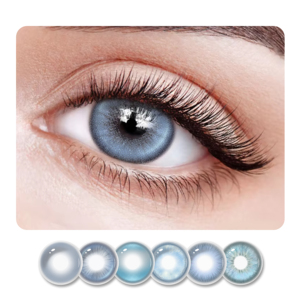
Tech: Double-Sandwich Pigment Lock
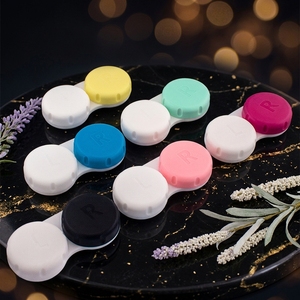
Standard: Sterilized Autoclave Ready
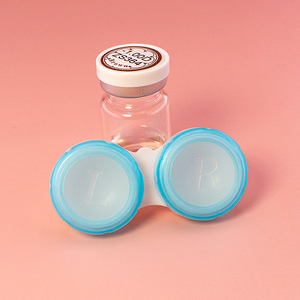
Custom: Silk Screen Logo Available

Wear Cycle: 1-Day / 30-Day / Annual
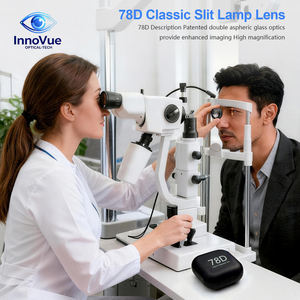
Application: Clinical Retinal Evaluation
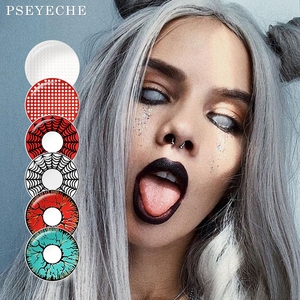
Power Range: Plano (0.00) to -8.00 D
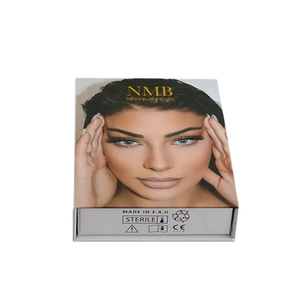
Compliance: Global Barcode & UDI Support
Protection: Anti-UV Gloss Surface Coating
Advanced Manufacturing Architecture & OEM Advantages
Vertical integration across optical tooling, proprietary pigment chemistry, and cleanroom automation separates market-leading brands from generic commodity re-sellers.
Ultra-Precision Mold Development
Unlike factories relying on third-party public molds, Chroma Lens engineers proprietary cast-molding inserts via sub-micron diamond lathe turning. This controls base curve eccentricity, peripheral bevel lift, and sagittal depth consistency across production lots.
Micro-Encapsulation Pigment Synthesis
Cosmetic vibrancy requires high pigment saturation without leaching. Our internal synthesis lab manufactures reactive cosmetic dye complexes bound permanently into the HEMA copolymer matrix, assuring zero cytotoxic dye release under ISO 10993 testing.
Triple-Layer Cast Lamination
Every theatrical and anime iris lens is formed through a patented cast-molding sandwich method. The color formulation is sealed between an anterior and posterior optical layer of virgin hydrogel, protecting corneal epithelial cells from mechanical roughness.
Automated Optical Defect Sorting (AOI)
100% of final packaged blister lenses pass high-resolution laser profilometry and sub-pixel edge detection. Automated machine vision inspects for pinholes, edge tears, print decentration, and particulate contamination prior to high-pressure steam autoclave sterilization.
Technical Whitepaper: Physiological Safety in Anime Lens Manufacturing
Deconstructing the critical physics, oxygen permeation kinetics, and mechanical stability required for high-opacity theatrical and cosplay contacts.
1. The Biocompatibility Challenge: Balancing 100% Opacity with Corneal Oxygenation
Manufacturing anime contact lenses presents a unique optical engineering challenge. Unlike natural cosmetic lenses—which employ translucent dot-matrix gradients allowing light and ambient tear exchange through the iris stroma—anime, cosplay, and special-effects lenses require dense, opaque coverage. Recreating the vibrant, animated hues of fictional characters, vampire scieras, or intricate pupil geometries (such as Sharingan or vertical slit-pupil cat eyes) demands high concentrations of medical-grade titanium dioxide (TiO₂), iron oxides, and phthalocyanine pigments.
When uncontrolled, heavy pigment layers can significantly compromise the lens's oxygen transmissibility (Dk/t). The human cornea is avascular, drawing its metabolic oxygen directly from atmospheric diffusion dissolved in pre-corneal tear film. Standard cosmetic lenses fabricated through pad-printing directly onto the surface often suffer from surface micro-roughness, causing mechanical abrasions to the delicate corneal epithelium during blinking (which occurs 12,000 to 15,000 times per day).
Core Engineering Standard: Chroma Lens maintains a strict minimum Dk/t of 20 × 10⁻¹¹ (cm²/s)[ml O₂/(ml × mmHg)] across our anime hydrogel portfolio, guaranteeing sufficient oxygen flux during daily wear cycles to prevent corneal edema and neo-vascularization.
2. Anatomy of the Patented Dual-Shield Sandwich Structure
To ensure total physiological safety while maintaining ultra-vivid character aesthetics, Chroma Lens deploys an advanced automated multi-layer cast molding technology. The anatomy of our anime lens consists of three discrete structural zones:
- Posterior Base Layer (Corneal Side): A 0.035mm layer of high-purity Poly-HEMA (hydroxyethyl methacrylate) exhibiting a mirror-smooth surface profile with zero pigment exposure, maintaining continuous wettability and laminar tear exchange.
- Internal Chromatic Core: Nano-milled medical pigment particulates (under 2 microns) suspended in a hydrophilic monomer carrier that permanently cross-links with the surrounding polymer network during thermal polymerization.
- Anterior Cap Layer (Palpebral Side): A protective virgin polymer cap engineered with an optimized edge-lift geometry to minimize eyelid shear stress during spontaneous blink cycles.
| Physical / Chemical Parameter | Chroma Lens OEM Standard | Standard Industry Minimum | Clinical Verification Method |
|---|---|---|---|
| Base Curve (B.C.) Radius | 8.60 mm ± 0.05 mm | 8.60 mm ± 0.20 mm | Non-contact Optical Coherence Tomography (OCT) |
| Total Diameter (DIA) | 14.0 mm – 14.5 mm ± 0.1 mm | 14.2 mm ± 0.3 mm | High-Magnification Projection Comparator |
| Water Content by Weight | 38% – 42% Equilibrium | 36% – 45% Unstable | ISO 18369-4 Gravimetric Refractometry |
| Oxygen Permeability (Dk) | 11.0 × 10⁻¹¹ barrers | 8.5 × 10⁻¹¹ barrers | Polarographic / Coulometric Boundary Method |
| Surface Roughness (Ra) | < 12 nm (Sub-micron smoothness) | > 45 nm (Rough printed edges) | Atomic Force Microscopy (AFM) Mapping |
| Cytotoxicity & Leaching | Grade 0 (Zero Cytotoxic Reaction) | Grade 1 Permissible | ISO 10993-5 In-Vitro MEM Elution Assay |
3. Pupil Aperture Alignment and Optical Clear Zones
A frequent issue in poorly designed anime contacts is visual obstruction caused by restricted optical apertures. While character designs often emphasize an altered pupil appearance, human scotopic (low-light) pupil dilation naturally expands up to 7.0mm. Chroma Lens utilizes computational ray-tracing models to design clear central optical apertures ranging strictly between 5.5mm and 6.0mm. This prevents tunnel vision and chromatic aberration while retaining dramatic visual transformation across photopic and mesopic lighting conditions.
Strategic Sourcing & Procurement Trends (2025–2030)
Global buyer intelligence: How market demands, supply-chain re-shoring, and demographic shifts are shaping the custom contact lens procurement roadmap.
The Shift Toward Daily Disposable Anime Lenses
While yearly lenses traditionally dominated the cosplay sector due to perceived unit economics, B2B procurement data shows a rapid 34% year-over-year surge in demand for daily disposable (1-Day) anime contacts. Retailers are de-risking end-user hygiene liabilities: single-use blisters eliminate compliance errors associated with lens cases, enzymatic cleaners, and multi-use contamination, leading to higher lifetime customer repurchase rates.
Silicone Hydrogel Cosplay Formulations
The next frontier in special-effects optics is the migration from legacy 2-HEMA monomers to second-generation Silicone Hydrogel polymers. Providing Dk/t values exceeding 80, silicone hydrogel cosplay lenses permit longer comfortable wear at multi-day fan conventions and theatrical performances without inducing hypoxic redness or dry-eye discomfort.
Stringent Traceability & MDR Compliance
Importers across the European Union (EU MDR 2017/745), the United States (FDA 510(k) Class II Medical Device), and Latin America now mandate Unique Device Identification (UDI) directly printed on secondary retail boxes. Sourcing directors must partner exclusively with manufacturers possessing validated cleanroom quality systems, automated serial tracking, and full technical documentation files.
Rapid Prototyping for Seasonal Event Windows
The global cosplay market is strictly tied to entertainment release schedules, comic conventions, and Halloween peaks. Traditional 6-month prototyping pipelines are no longer viable. Leading B2B buyers now leverage Chroma Lens's rapid digital tooling system, which cuts concept-to-blister sampling time down to 14 working days, ensuring brands capture short-lived viral trends.
Prism-Ballasted Non-Rotating Theatrical Optics
A classic failure mode in cat-eye, slit-pupil, and geometric anime designs is gravitational spinning on the eye, throwing vertical effects off-axis. OEM buyers are adopting our proprietary inferior prism-ballast molds, which use gravitational and eyelid-dynamic stabilization to lock the lens pattern in strict orientation.
Sustainable, Recyclable Blister Packaging
Driven by corporate ESG requirements across global retail chains, procurement contracts are prioritizing polypropylene (PP) blister trays with solvent-free adhesive foil lidding. Reduced plastic volume and fully recyclable paperboard outer packaging have become decisive bidding factors for high-volume supply contracts.
B2B Procurement & Manufacturing FAQ
Direct answers to critical questions regarding OEM contract terms, private label packaging, regulatory compliance, and factory audits.
What is the baseline Minimum Order Quantity (MOQ) for custom private-label anime contact lenses?
How does Chroma Lens guarantee that color pigments never leach or irritate the wearer's cornea?
Which international medical device certifications and export documents do you provide for customs clearance?
What packaging formats are supported for OEM/ODM private label clients?
What is the production lead time from artwork sign-off to international shipping departure?
Can you produce prescription (corrective) powers for high-opacity anime and cosplay lenses?
Ready to Build Your Custom Anime Contact Lens Line?
Partner with an established manufacturer that controls tooling, ink chemistry, and cleanroom packaging under one roof. Request our comprehensive OEM master product catalog and private-label sample kit today.