Theatrical & Sfx
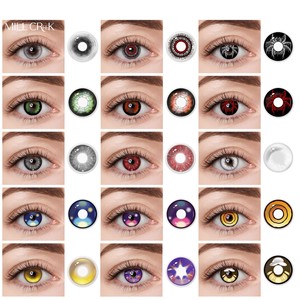
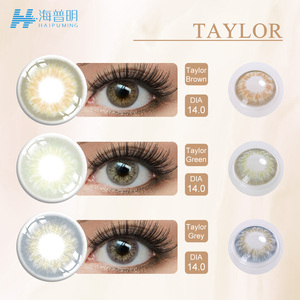
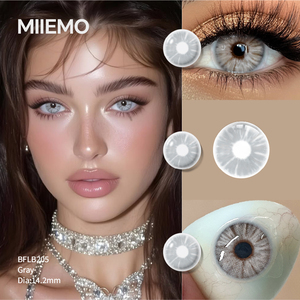
Haipurecon Halloween Cosplay Soft Crazy Lenses 14.5mm
- Diameter (DIA): 14.5 mm
- Base Curve (BC): 8.6 mm
- Water Content: 38% - 42% HEMA
- Center Thickness: 0.08 mm
Direct from our Jilin sterile production facility. Optimized for high oxygen permeability, biological corneal wetness, and photorealistic iris blending across global ethnic demographics.
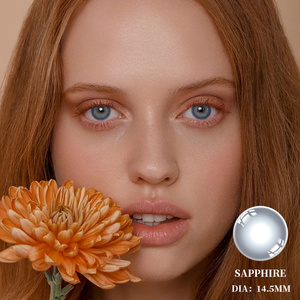
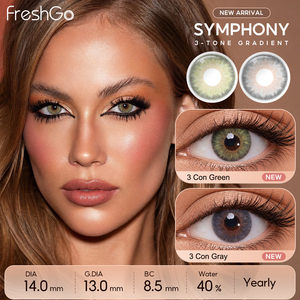
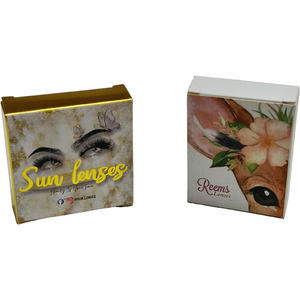
Unlike trading intermediaries, Chroma Lens controls the complete physical chemistry and precision tooling lifecycle within our Class 100,000 cleanroom facilities in Jilin Province, China.
We eliminate third-party mold supplier dependencies. Our in-house CNC and ultra-precision diamond turning lathes calibrate base curve radii (BCR) to ±0.01 mm, securing uncompromised tear-film exchange and frictionless corneal fit across daily, monthly, and yearly replacement cycles.
Synthesized in our specialized optic chemistry labs, our pigment matrices utilize medical-grade copper phthalocyanine, iron oxides, and titanium dioxide. Every ink formulation undergoes rigorous in-vitro cytotoxicity testing (ISO 10993-5) ensuring zero trace-chemical elution or ocular tissue sensitization.
Our cast-molding encapsulation polymerizes the decorative pigment layer strictly inside the core hydrogel envelope. Pigment particles never touch the cornea, tarsal conjunctiva, or epithelial surface, eliminating abrasive keratopathy, mechanical shear, and ocular infections.
We supply buyers with auditable Technical Documentation Packs: ISO 13485:2016 quality system audit reports, European CE Declarations of Conformity, Free Sales Certificates (FSC), accelerated 5-year stability records, and FDA 510(k) predicate cross-filing support for rapid national clearance.
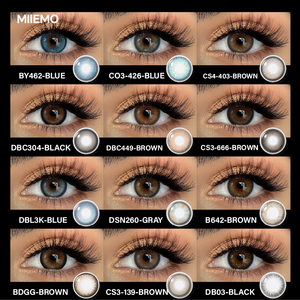
With an active archive of 800+ original iris patterns—ranging from Scandinavian hyper-natural blends to 17.0mm theatrical sclera graphics—our creative department turns client vision moodboards into high-yield production samples within 7 business days.
Automated blister sealing using medical-grade Tyvek and multi-layer aluminum lidding. Every finished batch undergoes pure saturated steam sterilization at 121°C for 20 minutes (EN 556-1 validated) ensuring a Sterility Assurance Level (SAL) of 10⁻⁶.
The cosmetic contact lens manufacturing sector has pivoted fundamentally away from legacy lathe-cut Poly(hydroxyethyl methacrylate) (pHEMA) buttons. While lathe cutting once served low-volume custom theatrical applications, it suffers from high cycle variance, microscopic surface striations, and uneven edge profiles that compromise user comfort.
Chroma Lens utilizes automated cast-molding synthesis within ultra-clean robotic lines. Pre-polymer hydrogel matrix (HEMA-MMA crosslinked with EGDMA) is injected into optical-grade polypropylene micro-molds, stamped with computerized pad-printing inks, and clamped under precise hydrostatic pressure for thermal and UV polymerization.
Furthermore, our in-line Automated Optical Inspection (AOI) machines scan 100% of finished lenses across four dimensional axes: detecting micro-tears, edge chips, decentered pupil apertures, and chromatic deviations down to 5 microns.
B2B importers, brand owners, and retail distributors must align sourcing programs with shifting consumer usage habits and tighter global ophthalmic regulations.
While yearly lenses remain profitable in emerging markets, North America, Europe, and East Asia are shifting toward 1-Day cosmetic packs. Daily modalities eliminate compliance errors with cleaning solutions and offer sterile convenience, driving repeat order lifetime value (LTV).
Cosmetic consumers are demanding longer wearing times without hypoxic redness. Next-generation formulations blend siloxane monomers with hydrophilic wetting agents, elevating Dk/t values above 60 to prevent corneal vascularization.
Heavy opaque block borders are declining. Consumer preferences favor stochastic dot-matrix patterns, 3-tone translucent iris overlays, and asymmetric specular light accents that mimic human corneal melanin depth.
Procurement teams are cutting carbon footprints by transitioning to ultralight polypropylene blisters, recyclable secondary paperboard with hot-stamped soy inks, and space-saving 10-lens blister strips for cross-border e-commerce shipping.
Answers to technical, regulatory, and production queries commonly raised by optical procurement directors, brand founders, and compliance managers.
Our factory employs a specialized Double-Layer Sandwich Embedding process. During automated pad-printing, color matrices are deposited between the anterior and posterior hydrogel polymer sheets before polymerization. The pigments become an inseparable chemical component of the inner matrix.
Every production lot is subjected to Soxhlet extraction testing using analytical-grade polar and non-polar solvents (including 0.9% sterile saline, isopropyl alcohol, and ethanol). Samples are analyzed via UV-Vis spectrophotometry to prove zero pigment release (absorbance delta < 0.005), fully satisfying ISO 18189 and ISO 10993 biocompatibility requirements.
For existing designs from our 800+ stock catalog with custom private labeling and brand boxes, our entry MOQ is 500 pairs across mixed SKUs and power ranges. For bespoke, client-exclusive pattern development requiring dedicated printing pads and mold adaptations, our starting run is typically 3,000 to 5,000 pairs depending on the number of print tones.
Tooling fees for custom designs can be amortized and fully refunded once cumulative quarterly procurement volumes exceed 20,000 pairs.
Yes. While decorative lenses often circulate as plano (0.00 diopter), our precision molds support prescription corrective power manufacturing from -0.50D to -6.00D (in 0.25D steps) and -6.50D to -8.00D (in 0.50D steps). Toric corrections for astigmatism (custom CYL and AXIS parameters) are also available upon custom engineering evaluation.
We supply buyers with a comprehensive Regulatory Release Portfolio with every commercial shipment, including:
Our production turnaround is 15–20 business days for standard private-label replenishment runs and 30–35 days for new custom-molded developments. Finished lenses sealed in pharmaceutical glass vials or medical-grade foil blisters feature a validated shelf life of up to 5 years from the date of sterilization.
Verified wholesale buyers and brand founders can request curated sample kits covering various diameters (14.0 mm, 14.2 mm, 14.5 mm), 1-tone to 3-tone colorways, and both blister and vial packaging samples. Contact our account management team via live chat or catalog inquiry to register your business details and arrange DHL/FedEx sample dispatch within 48 hours.
Connect directly with our engineering and private-label team. Access complete technical datasheets, diopter conversion matrices, custom mold options, and tiered distributor container pricing.