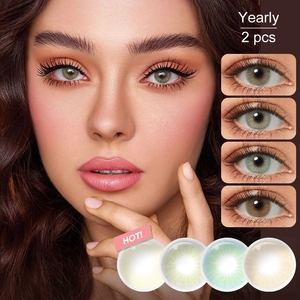
Featured OEM Formulations & SKUs
Engineered Prescription & Cosmetic Formulations
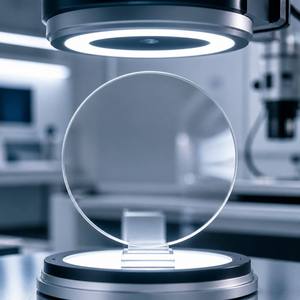
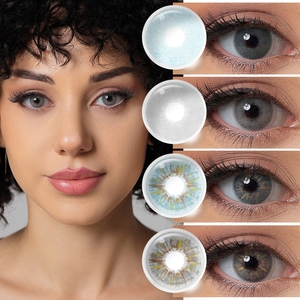
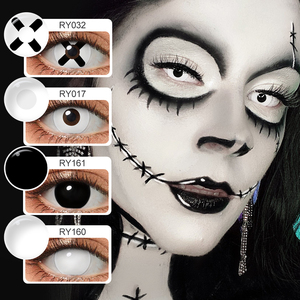
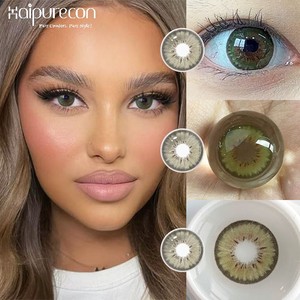
Every product is manufactured with our in-house micro-encapsulation color technology, cast-molding precision, and balanced oxygen transmissibility across optical powers ranging from Plano (0.00D) to -10.00D.
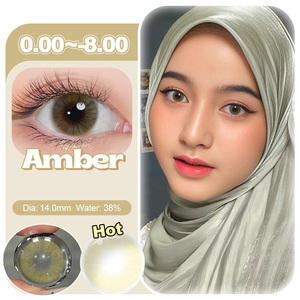
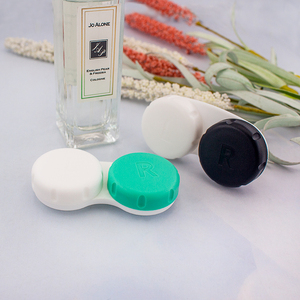
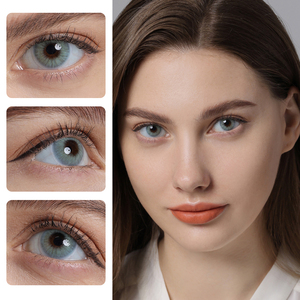
Procurement Intelligence
Future Sourcing & Procurement Trends in Prescription Colored Lenses (2025–2030)
The global contact lens landscape is undergoing a tectonic shift. What was once bifurcated into "optical correction clear lenses" and "novelty cosmetic contacts" has now converged into a single, high-margin category: therapeutic-grade aesthetic vision care. Procurement executives, optical chain category managers, and cross-border DTC brand incubators must calibrate their supply chain decisions against four structural market movements:
1. Transition to High-Dk Silicone Hydrogel
Global regulatory bodies and consumer clinical awareness are driving colored lenses from standard HEMA hydrogel toward breathable silicone-hydrogel matrices. Modern wearers demand extended wearing comfort (12+ hours) without corneal hypoxia or neovascularization. OEM manufacturing must combine high Dk/t (>60 barrers) with hydrophilic surface treatment while locking pigments securely within the matrix.
2. The Ascendance of Daily Disposables (1-Day)
While yearly disposables remain dominant in price-sensitive emerging markets, premium Western and Tier-1 Asian demographics are rapidly migrating to 1-Day daily disposable packaging. Buyers seeking higher Customer Lifetime Value (LTV) and lower compliance liability prioritize automated high-speed blister packing, sterile buffer saline formulation, and consistent batch yield.
3. Stringent Regulatory Traceability (MDR / UDI)
Global optical retail procurement now requires rigorous end-to-end traceability. The transition from MDD to EU MDR (Medical Device Regulation 2017/745), US FDA Class II 510(k) enforcement, and unique device identification (UDI) mandates that OEM factories maintain closed-loop documentation from monomer batch blending through to packaging bioburden validation.
Technical Sourcing Matrix: Hydrogel vs. Advanced OEM Formulations
| Evaluation Parameter | Standard Market Hydrogel (2-HEMA) | Chroma Lens Advanced Hydrogel | Next-Gen Silicone Hydrogel (OEM) |
|---|---|---|---|
| Base Polymer Composition | Poly-HEMA | Proprietary HEMA + NVP Copolymer | Fluorosilicone Hydrogel Composite |
| Water Content (%) | 38% – 42% | 40% – 45% (Equilibrium Hydration) | 48% – 55% Low-Dehydration Balance |
| Oxygen Permeability (Dk) | 8.5 – 11.0 × 10⁻¹¹ | 16.5 – 22.0 × 10⁻¹¹ | 65.0 – 95.0 × 10⁻¹¹ |
| Color Embedding Technology | Surface pad printing (high risk) | Patented Sandwich Micro-Encapsulation | Full Molecular Entrapment Dual-Cast |
| Optical Power Capability | Plano (0.00) only or -0.50D to -6.00D | Plano to -10.00D (0.25D / 0.50D steps) | Plano to -12.00D + Toric Astigmatism Custom |
| Available Replacement Cycle | Yearly vial only | Daily / Monthly / Yearly (Vial & Blister) | Daily Disposables / Monthly Replacement |
R&D Trajectory
Technological Horizons: Where Color Contact Lens Engineering Is Heading
Precision colored contact lenses are no longer simple static accessories; they represent complex micro-engineered optical interfaces. At Chroma Lens Technology Co., Ltd., our engineering laboratory continuously deploys advanced research into production realities to give private label clients sustainable competitive differentiation.
Multi-Tier Aspheric & Pupillary Optimization
Traditional color patterns utilize arbitrary flat pupil apertures, resulting in tunnel vision in scotopic conditions or unmasked natural iris rings in photopic daylight. Our latest CAD-driven mold line incorporates dynamic feathered transition zones and continuous aspheric curves that eliminate spherical aberrations while seamlessly blending with natural iris dilation dynamics.
Integrated UV-A / UV-B Filtering & HEV Blue Blocker
Modern consumers expect dual cosmetic and ocular health defense. By compounding Class II UV absorbers directly into the lens monomer, our OEM lenses filter over 85% of UV-A and 98% of UV-B radiation without altering the true chromatic saturation of high-definition pattern pigments or shifting cosmetic eye colors.
Biomimetic Wetting Agents & Anti-Protein Deposition
Dry eye discomfort is the primary trigger for contact lens discontinuation. Our development team incorporates internal wetting polymers (such as PVP hyaluronic complexes) that continuously migrate to the lens surface, maintaining low contact angles (<25°) and actively repelling tear-film lipid and lysozyme fouling throughout long wear cycles.
Factory Authority & E-E-A-T
Enterprise Edge: Why Premier Global Brands Partner with Chroma Lens
Chroma Lens Technology Co., Ltd. has accumulated more than 10 years of clinical and manufacturing expertise in soft contact lens fabrication. Unlike trading intermediaries or secondary packagers, our facility in Yongji Economic Development Zone, Jilin Province, exercises absolute vertical control over every critical node in the manufacturing chain.
In-House Precision Mold Tooling
We do not rely on standard catalog molds. Our optical CNC lathe turning and diamond micromachining shop develops ultra-precise steel and polymer insert molds in-house, ensuring base curve (BC) stability down to ±0.02mm tolerances and silky edge geometries.
Proprietary Biocompatible Pigments
Color brilliance without cytotoxicity. Formulated and synthesized in our internal chemical laboratory, our printing inks meet strict toxicological screening, ensuring zero leaching, high thermal autoclave resistance, and uniform multi-tone dots that replicate real iris texture.
Original Creative Pattern Studio
Avoid market saturation and copyright pitfalls. Our dedicated visual pattern artists create bespoke color palettes (from natural subtle limbal rings to ultra-dense anime/cosplay opaque designs) tailored specifically for your target demographic's iris shades.
Rigid Batch Inspection & Full Export Audits
Every lot undergoes 100% optical projector inspection, center thickness verification, osmotic pressure checks, and bioburden testing before release. Complete Certificates of Analysis (COA) and regulatory dossiers are delivered alongside each container shipment.
B2B Procurement FAQ
Frequently Asked Questions by Global Importers & Brand Managers
Comprehensive answers regarding minimum order quantities, private label packaging, custom color design, sample testing, and regulatory import validation.
What is the typical Minimum Order Quantity (MOQ) for custom OEM colored prescription lenses?
For existing catalog color designs in custom private-label blister packaging, our standard MOQ starts at 500 to 1,000 pairs per SKU across flexible power ranges. For bespoke, exclusively developed patterns requiring new mold cutting and custom pigment matching, initial project MOQs generally start at 5,000 pairs, which can be distributed across plano and myopia powers (-0.50D to -8.00D).
How does your Sandwich Technology ensure ocular safety and prevent pigment contact?
Our sandwich micro-encapsulation process embeds color pigments precisely between two transparent layers of biocompatible polymer material. The printed color layer never comes into direct physical contact with the cornea, tear film, or palpebral conjunctiva. Even under mechanical rubbing or friction testing, pigments cannot wash out, fade, or leach into ocular tissues.
Can you manufacture colored lenses with astigmatic (toric) or multifocal prescriptions?
Yes. While standard catalog stock focuses on spherical myopia correction (0.00D to -10.00D), our advanced OEM precision lathe tooling program supports custom cast-molded toric colored lenses (cylinder correction up to -2.75D, axis in 10-degree increments) and custom cosmetic bifocal/multifocal profiles for specialized clinical private labels upon project review.
What regulatory compliance documentation and export testing data do you furnish?
We equip our international distributors with complete compliance support: technical data sheets (TDS), safety data sheets (MSDS), Certificates of Analysis (COA) per production lot, ISO 13485 quality system documentation, biocompatibility test results (cytotoxicity, ocular irritation, systemic toxicity), sterility validation reports, and stability aging test curves.
What is the lead time from pattern design approval to final batch shipment?
Initial design rendering and 2D/3D visual proofing require 3 to 5 business days. Rapid physical trial mold creation and pilot color sample production take approximately 12 to 18 days. Once prototype samples and custom private-label packaging artwork are formally approved, commercial scale production and terminal sterilization require 25 to 35 calendar days.
Do you offer customized packaging solutions including blister packs, vials, and retail boxes?
Yes, we provide end-to-end turnkey OEM packaging. Options include medical-grade PP blister packaging with custom-printed aluminum foil lids, traditional glass vials with tamper-evident rubber and aluminum crimp seals, bespoke retail cartons, luxury multi-pack display boxes, lens cases, applicator tweezers, and multilingual user instruction leaflets compliant with target country labeling regulations.
Launch Your Exclusive Prescription Colored Lens Line
Partner with an integrated manufacturer that owns the mold engineering, pigment chemistry, and clinical standards. Contact our OEM consulting engineers today to request master catalogs, receive sample trial sets, or discuss your private label sourcing brief.