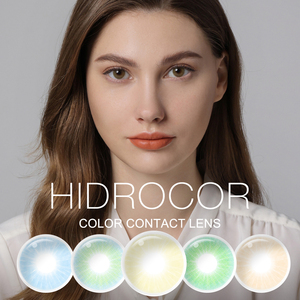
Free Sample Freshgo HIDROCOR Eye Contact Lenses Color Cosmetic Contact Lenses Lentille Optique
Ultra-natural non-limbal ring architecture with multi-layer pigment embedding for subtle, organic iris tone modification.
Explore production-ready contact lens platforms, optical glass technologies, and bespoke packaging configurations designed for global compliance and rapid time-to-market.
Ultra-natural non-limbal ring architecture with multi-layer pigment embedding for subtle, organic iris tone modification.
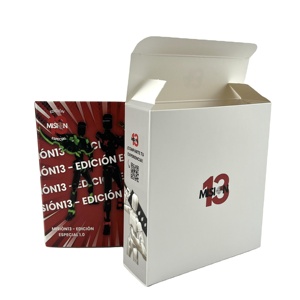
High-speed turnover carton engineering supporting regional regulatory UDI barcodes, tamper-proof seals, and foil stamping.
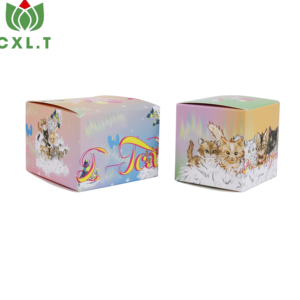
Die-cut transparent window packaging structured for high-end optical dispensary display and rapid visual color verification.
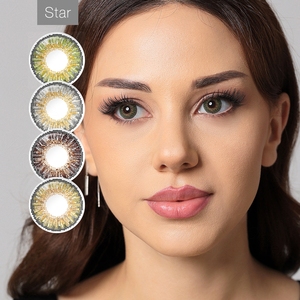
Radial triple-gradient iris dispersion simulating human trabecular meshwork depth with zero optical aperture degradation.
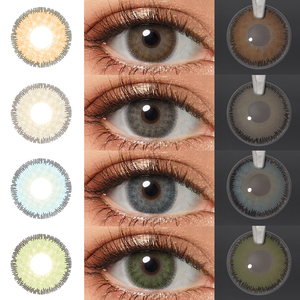
Durable poly-HEMA formulation designed for tensile integrity and anti-deposit resistance across extended replacement regimens.
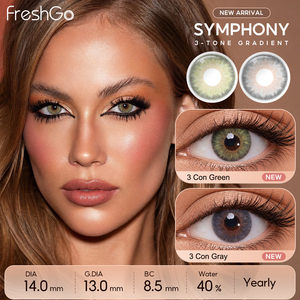
Dense pigment encapsulation engineered specifically to transform even the darkest naturally brown or black irises with emerald clarity.
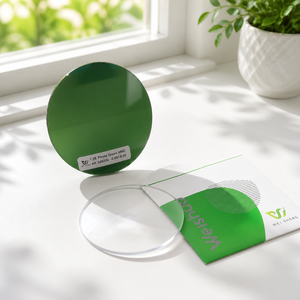
Specialty resin ophthalmic correction lenses with precision molecular transitions responsive to ambient ultraviolet irradiation.
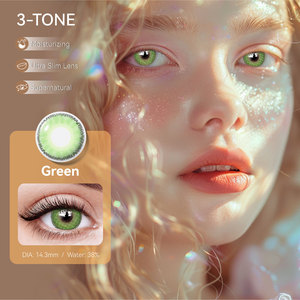
Comprehensive turnkey manufacturing providing tailored mold radii, custom theatrical prints, blister sealing, and sterilized packaging.
In modern optical manufacturing, special effect contact lenses—spanning theatrical, anime cosplay, opaque visual pigments, and natural iris enhancers—represent a convergence of advanced biomedical polymer science and micrometer-precision graphic printing. Unlike transparent spherical vision corrective lenses, the production of decorative hydrogel matrices requires an unyielding adherence to corneal oxygen kinetics, surface wettability, and zero-leach pigment encapsulation. Chroma Lens Technology Co., Ltd. leads the contract manufacturing landscape by directly integrating mold fabrication, internal polymer formulation, and pigment bonding within an ISO 13485-compliant manufacturing apparatus.
The procurement landscape has fundamentally shifted. Global distributors, regional beauty labels, and specialized costume supply chains can no longer rely on brokers offering non-traceable stock lenses. Achieving enterprise durability necessitates an OEM/ODM partner capable of managing the chemical compatibility between printing colorants and hydrogel substrates, executing ultra-tight center-thickness tolerances, and ensuring comprehensive audit trails from raw monomer lot testing through accelerated shelf-life validation.
Enterprise buyers navigating the 2025–2030 sourcing cycle face tightening regulatory frameworks, changing replacement schedules, and an escalating consumer demand for daily disposable convenience. Forward-thinking procurement strategies now prioritize the following core shifts:
While annual (365-day) replacement cycles traditionally dominated theatrical and cosplay distribution due to shelf-life economics, global procurement is rapidly pivoting to 1-Day daily disposable modules. This mitigates compliance-induced corneal infiltrative events, minimizes microbial biofilm accumulation, and elevates consumer purchase frequency across recurring cosmetic cycles.
Markets under US FDA 510(k), EU MDR (Medical Device Regulation 2017/745), and regional health ministry oversight now require complete batch pedigree data. Modern OEM procurement requires validated sterilization records, raw material leachability chromatography reports, and direct factory-applied Unique Device Identification (UDI) machine-readable matrices.
Wholesale clients require customized packaging solutions capable of surviving both warehouse fulfillment and ambient logistics without blister leakage or osmotic distortion. The integration of blind-box retail cartons, UV-blocking clear windows, and small-batch bilingual packaging allows brands to scale regional collections rapidly without massive inventory lockup.
The manufacturing architecture behind decorative and optical lenses has evolved from basic pad printing techniques into chemically integrated, multi-sandwich injection platforms. Below is an engineering comparison of traditional legacy methods versus our proprietary precision manufacturing systems:
| Engineering Attribute | Traditional Legacy Method | Chroma Lens Advanced Manufacturing | Procurement Impact |
|---|---|---|---|
| Pigment Isolation Architecture | Surface Pad Printing (Exposed ink layer facing cornea or eyelid) | Sandwich Micro-Encapsulation (Zero cornea/lid contact) | Eliminates staining, friction-induced keratitis, and pigment oxidation. |
| Mold Fabrication Velocity | Outsourced external tooling facilities (60-90 day iteration cycles) | Direct in-house mold R&D and CNC micro-milling | Reduces custom prototype sampling time from months to single weeks. |
| Color Chemistry & Bonding | Standard organic pigments without direct polymer cross-linking | Proprietary biocompatible polymer-reactive dye matrices | Absolute color consistency across batches with zero solvent bleed. |
| Peripheral Edge Profile | Stepped or mechanical lathe-cut edge finishing | Curvilinear Cast-Molded Comfort Edge Geometry | Enhanced tear pump circulation, superior oxygen exchange, extended wear comfort. |
| Optical Axis Fidelity | Irregular iris patterns encroaching on visual field (tunnel effect) | Strict 4.0mm to 5.5mm concentric optical pupil zoning | Guarantees crisp visual acuity without field vignetting in low light conditions. |
Drawing on over a decade of dedicated production infrastructure, Chroma Lens Technology Co., Ltd. eliminates intermediary markup, accelerates production velocity, and safeguards your intellectual property. By commanding the critical steps internally, we offer unmatched advantages across four core areas:
We do not rely on standard catalog molds. Our optical engineers build custom tools to configure tailored base curves (8.5mm, 8.6mm, 8.7mm) and overall diameters (14.0mm up to 14.5mm), securing precise anatomical fitting tailored to demographic iris dimensions.
Our internal laboratory synthesizes biocompatible dyes optimized for our hydrogel materials. This chemical compatibility guarantees exceptional thermal stability throughout autoclave sterilization cycles without hue distortion or fading.
Our creative design division continuously crafts non-infringing, market-validated iris schematics, including natural tri-tone blends, hyper-vivid cosplay hues, and seasonal theatrical patterns that empower our OEM clients to build protected brand equity.
Every lot undergoes 100% optical projector screening, center thickness verification, osmotic pressure checks, and comprehensive microbiological sterility testing, supplying comprehensive Certificate of Analysis (CoA) documentation with each delivery.
Addressing core regulatory, mechanical, and commercial concerns encountered during the qualification of special effect contact lens suppliers.
We utilize an advanced sandwich cast-molding encapsulation process. The bio-reactive color pigment matrix is embedded firmly within layers of poly-HEMA hydrogel, ensuring that colorants never touch the corneal epithelium or palpebral conjunctiva. Furthermore, all inks undergo stringent gas chromatography and leachability testing under accelerated thermal conditions to confirm total structural stability.
For standard catalog patterns utilizing your proprietary blister or vial exterior packaging, MOQs generally start at accessible tiers (500 to 1,000 pairs). Fully bespoke iris design and custom mold developments typically require batch runs starting at 5,000 pairs per SKU to amortize tooling and stability testing, though sample batches are available during early prototype evaluation.
Yes. Our opaque cosplay and fashion contact lenses are formulated with high-density pigment dot matrix layers specifically developed to completely mask high-melanin irises. The precise distribution of micro-dots allows full light reflection of the artificial pattern while maintaining an unprinted, optical-grade central pupil clear zone ranging from 4.0mm to 5.5mm for unrestricted vision.
We provide full technical documentation dossiers including our ISO 13485 certification, CE compliance declarations, Certificate of Analysis (CoA) per production lot, Material Safety Data Sheets (MSDS), cytotoxicity and biocompatibility study summaries, and ethylene oxide (EO) or steam autoclave sterilization certificates required by border customs and national health authorities.
Yes. Our manufacturing infrastructure accommodates plano cosmetic lenses as well as spherical power corrections typically ranging from -0.50D to -8.00D (in 0.25D or 0.50D increments). Base curves and center thicknesses are systematically calibrated according to optical power to ensure physiological comfort and visual clarity across all diopter ranges.
Initiate your OEM/ODM sourcing project today. Request production line samples, discuss custom mold tooling parameters, or receive factory-direct wholesale pricing from our technical export team.