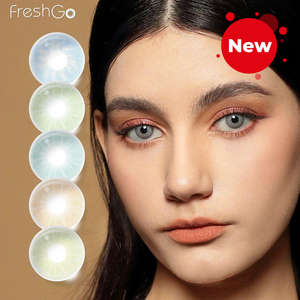
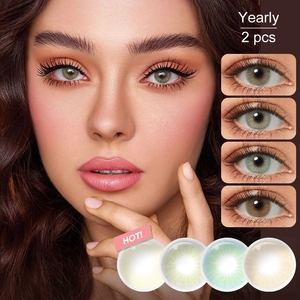
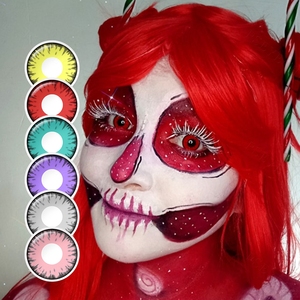
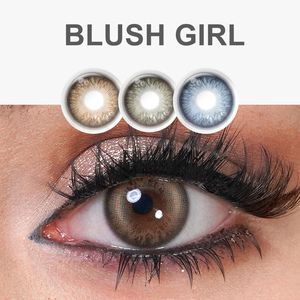
The Violet Contact Lens Paradigm: Precision Engineering, Aesthetics & Clinical Safety
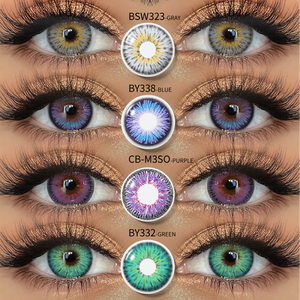
Within the specialized sphere of cosmetic and therapeutic contact lens manufacturing, violet contact lenses occupy a technical crossroad between high-saturation colorimetry and physiological biocompatibility. Developing authentic violet tones—ranging from subtle, luminous amethyst enhancements for everyday fashion wear to hyper-dense, vivid violet gradients tailored for theatrical and anime cosplay—requires an intricate mastery of optical dye dispersion, substrate polymer chemistry, and dot-matrix raster patterns.
As experienced OEM/ODM violet contact lenses factories and exporters, our core engineering focuses on solving the primary historical defect of colored contact lenses: corneal hypoxia and pigment leaching. Natural irises possess nuanced radial striations and collarette rings. Replicating this over a dark natural eye while infusing rich violet and lavender hues requires multi-pass pad printing or cast-mold jet deposition without blocking peripheral oxygen transmission through the lens matrix.
Proprietary Sandwich Embedding
Color micro-particles are fully encapsulated between two inert layers of Poly-HEMA hydrogel, ensuring pigments never touch ocular tissue or degrade over time.
In-House Mold Engineering
Cast molds engineered in our own cleanrooms maintain micron-scale tolerances for base curves (8.5mm - 8.6mm) and edge profiles, preventing limbal friction.
Medical Dk/t Permeability
Optimized water-content ratios (38% to 42%) ensure high oxygen flux, preserving corneal metabolic integrity throughout extended wearing schedules.
Technical Matrix: OEM/ODM Manufacturing Specifications
International brand owners, private label optical chains, and cross-border e-commerce distributors must evaluate rigorous production specifications to ensure consistent wearer satisfaction and regulatory compliance in their respective destination regions.
| Technical Parameter | Standard Beauty Line | Cosplay / Anime Opaque | Medical Prescription Hydrogel |
|---|---|---|---|
| Base Polymer | Poly-2-Hydroxyethyl Methacrylate (HEMA) | HEMA + NVP Hydrophilic Matrix | HEMA-GMA Copolymer / High-Dk Hydrogel |
| Water Content | 38% – 40% (Form Stability) | 40% – 42% (Extended Moisture) | 42% – 45% (Oxygen Permeable) |
| Diameter (DIA) | 14.0mm – 14.2mm (Natural Limbal) | 14.5mm – 14.8mm (Doll-Eye Enlargement) | 14.2mm (Precise Corneal Fit) |
| Base Curve (BC) | 8.5mm – 8.6mm | 8.6mm | 8.5mm – 8.6mm |
| Optical Power Range | 0.00 (Plano) | 0.00 to -8.00D (Optional) | 0.00 to -10.00D (0.25D / 0.50D increments) |
| Pigment Isolation | 3-Layer Cast Sandwich Seal | Full Opaque Interlayer Isolation | Micro-encapsulated Core Deposition |
| Wear Modality | Monthly / Yearly Disposable | Seasonal / Yearly Disposable | Daily / Monthly Disposable |
Global Sourcing Dynamics & Future Procurement Trends in Violet Contact Lenses
The procurement landscape for color contact lenses has shifted rapidly. Buyers are moving away from undifferentiated mass catalogs toward differentiated private formulations. Several macro trends are reshaping how international buyers select contact lens factories:
1. Shift Toward Hybrid Cast-Molding Technology: Conventional lathe cutting and basic spin casting have been superseded by double-sided cast-molding systems. This manufacturing evolution ensures that violet pigmentation dots are integrated into the polymer matrix with sub-micron accuracy, eliminating thickness variations that cause visual aberration, blurriness, or uneven eye movement.
2. High Demand for Ultra-Realistic 3-Tone and 4-Tone Violet Formulations: Monochromatic violet lenses often look flat on dark brown eyes. The fastest-growing SKU category in high-end cosmetic beauty combines a deep hazel inner transition ring, a multi-layer violet and lilac radial iris pattern, and a soft charcoal limbal band. This complex optical architecture delivers vibrant color change while maintaining a natural, organic appearance under natural sunlight.
3. Daily Disposable Transition in Beauty Channels: While yearly replacement cycles remain dominant in emerging markets due to cost per wear, North American and European distributors are rapidly expanding Daily Disposable (1-Day) color lens private label lines. Single-use violet lenses eliminate protein buildup, drastically lower microbial keratitis risks, and drive higher customer retention rates.
4. Stringent Global Regulatory Harmonization: Regulatory agencies worldwide—including the US FDA, European MDR (Medical Device Regulation), UK MHRA, and Saudi SFDA—strictly classify all colored contact lenses, including non-prescription zero-diopter lenses, as Class II or Class III medical devices. Importers require full technical dossiers, sterilization validation data, biocompatibility test results (ISO 10993), and pristine packaging traceability.
Factory Manufacturing Advantages: Why Partner with Our Facility
As an established manufacturing enterprise with more than a decade of research, design, and clinical manufacturing execution, our facility provides comprehensive end-to-end OEM and ODM services that empower brands to outpace competitors:
In-House Mold Engineering
We eliminate external toolmaker reliance by creating our own ultra-precision optical molds. This slashes prototyping lead time from months to weeks, guaranteeing tight curvature repeatability.
Proprietary Non-Ionic Inks
Formulated in our specialized chemical research laboratory, our medical inks resist tear-film lipid and protein adherence, preventing dullness and ocular irritation throughout long days.
Bespoke Pattern Design
Our dedicated optical design team delivers original raster graphics, custom pupil aperture sizes, and gradient blend layers tailored exclusively to your brand's regional target demographic.
End-to-End Export Support
We supply validated sterilization reports, multilingual packaging design, blister/vial custom sealing, and complete documentation required for hassle-free customs clearance worldwide.
Procurement Guide: What B2B Buyers Must Verify
Before committing to contract manufacturing or large-volume container imports of violet cosmetic lenses, optical buyers and private-label brand founders should execute a structured technical audit:
Edge Profile & Bevel Inspection: A high-performance lens must possess a rounded, tapered edge design. Blunt or knife-edge profiles trigger limbal micro-abrasions and foreign body sensation. Request shadowgraph edge profiles during sample evaluation.
Optical Clear Zone Centration: In cosplay and opaque violet lenses, ensure the central clear optical aperture is calibrated (typically 3.8mm to 4.2mm). A pupil zone that is too tight causes tunnel vision in dim lighting, while an oversized aperture reveals the wearer's natural iris beneath, ruining the aesthetic transformation.
Batch Traceability & Autoclave Integrity: Validate that every blister card or glass vial features automated laser-etched LOT numbers, uniform saline filling volume, and tamper-evident hermetic seals validated under moist-heat terminal sterilization cycles.