Certified Colored Contact Lenses & Bespoke Packaging
Engineered in ISO 13485 cleanroom facilities, our factory export catalog features cast-molded HEMA soft lenses, multi-tone cosmetic blends, myopia-correcting optics, and tailored private-label packaging.
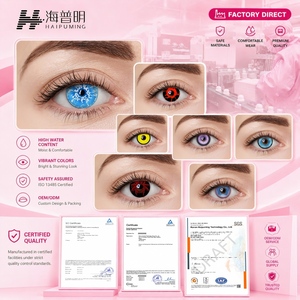 Cosplay / SFX
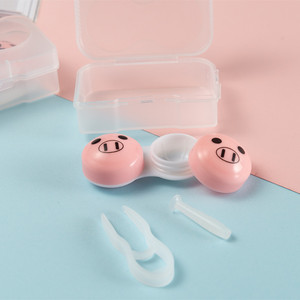 Accessory Kit
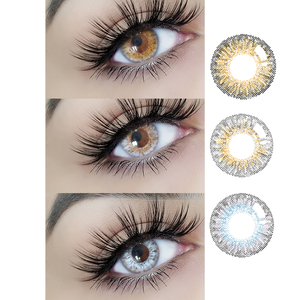 Packaging OEM
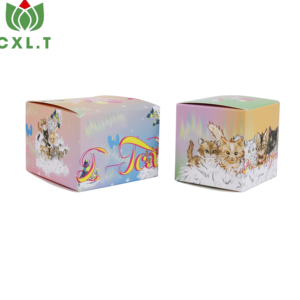 Retail Packaging
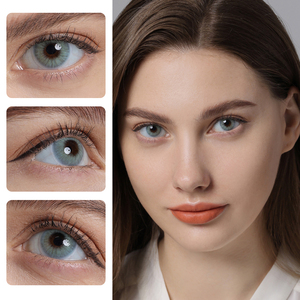 Prescription
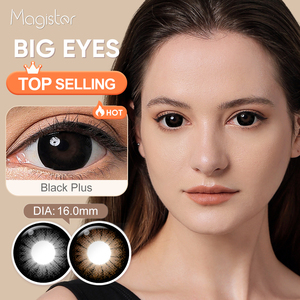 Large Diameter
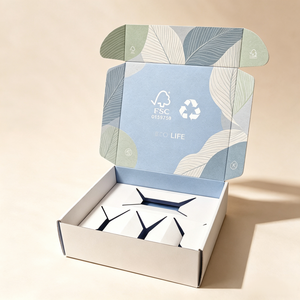 Luxury Box
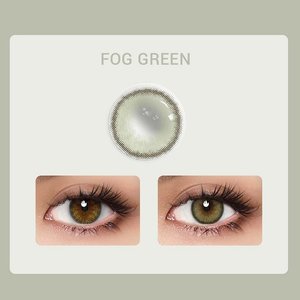
Evaluating the World’s Leading Colored Contact Lens Manufacturers
For international brand owners, pharmaceutical distributors, and e-commerce enterprises, selecting a contract manufacturer requires balancing optical precision, chromatic consistency, biomedical compliance, and agility in lead times.
Cast Molding vs. Lathe Cut Precision
Tier-1 exporters utilize automated double-sided cast molding over traditional lathe cutting. Cast molding guarantees microscopic edge-profile consistency, reduces ocular foreign-body sensation, and delivers tight base-curve tolerances within ±0.02 mm across multi-million piece manufacturing runs.
Pigment Sandwich Encapsulation
Safety benchmarks demand rigorous pigment embedding. Premier manufacturers employ Plusierus or sandwich encapsulation technology, sealing cosmetic bio-compatible micro-pigments completely inside the polymer matrix. This isolates dye particles from contacting corneal epithelium or ocular conjunctival tissues.
Multinational Regulatory Dossiers
Navigating stringent cosmetic and medical device protocols requires comprehensive technical documentation: CE marking under EU MDR 2017/745, US FDA 510(k) clearances, ISO 13485:2016 quality systems, alongside localized registrations including Health Canada, Saudi SFDA, and Japanese PMDA validation.
Global Top 10 Colored Contact Lens Manufacturer Matrix
A structured technical comparison evaluating tier-one production nodes across China, Taiwan, South Korea, Japan, and Western conglomerates.
| Manufacturer / Cluster | Core Casting Technology | Material Specialization | Pigment Integration | Primary Strengths | Supply Chain Category |
|---|---|---|---|---|---|
| Chroma Lens Technology | In-House Automated Cast Molding | Poly-HEMA & Si-Hydrogel | 3-Layer Sandwich Encapsulation | Proprietary ink, custom patterns, rapid OEM tooling | Top OEM/ODM Partner |
| Ginko International (Hydron) | High-Speed Automated Cast | HEMA / Ocufilcon D | Sandwich Printing | Massive Asian scale, established retail brand equity | Volume Conglomerate |
| Innovision Optical (Taiwan) | Precision Wet Cast Molding | Hydrogel Polymer | Embedded Color Printing | Complex graphic iris patterns, Japanese fashion OEM | Specialty Cosmetic |
| Bescon Global (South Korea) | Cast & Lathe Hybrid | 2-HEMA Formulation | Cast-Molded Micro-Embedding | Strong K-Beauty natural iris enhancement palettes | K-Beauty Brand OEM |
| Geo Medical (South Korea) | Dual Cast Molding | Polymacon / HEMA | Image Embedding Technology | Vibrant aesthetic circle lenses, cosplay catalog | Aesthetic Circle Lens |
| Pegavision Corporation | Fully Automated Robotics Cast | Silicone Hydrogel & HEMA | Pad & Inkjet Micro-Transfer | Exceptional optical consistency, cleanroom robotics | High-Tech Automated |
| St. Shine Optical | Cast Molding Engineering | HEMA 55% / 38% | Multi-Curvature Dye Layering | Extensive global OEM contract manufacturing network | Global Scale Exporter |
| SEED Co., Ltd. (Japan) | Cast Molding with UV Absorption | Ionic & Non-Ionic Hydrogel | Inner Color Entrapment | Rigid Japanese quality control, hypoallergenic formulas | Premium Medical |
| Alcon (FreshLook Series) | Proprietary LightStream Tech | Phemfilcon A | 3-in-1 Color Blending | Pioneering three-tone color technology, global prescription reach | Pharma Multichannel |
| CooperVision (Blended Color) | Advanced Hydrogel Cast | Methafilcon A / Comfilcon | Patented Dot-Matrix Matrix | Deep distribution in optical clinics and vision care chains | Clinical Eye Care |
Why Sourcing Directly from Chroma Lens Protects Your Brand Equity
Unlike trading intermediaries or assembly repackagers, Chroma Lens Technology Co., Ltd. controls the three non-negotiable levers of contact lens manufacturing: optical molds, bio-compatible printing inks, and distinct iris patterns.
-
In-House Mold Engineering: We eliminate third-party tooling markups and 6-week delays. Base curves, diameter dimensions, and edge contours are customized within our dedicated precision toolroom.
-
Proprietary Bio-Safe Color Inks: Formulated in Class 100,000 cleanrooms, our solvent-free organic dyes provide high chromatic opacity without compromising material oxygen transmissibility (Dk/t).
-
Original Pattern Intellectual Property: Access a protected library of 1-tone, 2-tone, 3-tone natural patterns and ultra-saturated cosplay effects that guard against copycat liability in Western markets.
-
End-to-End Turnkey Packaging: From sterile blister packaging and glass vial filling to magnetic presentation boxes, custom cartoon kits, and multi-lingual user instruction inserts.
Technological Breakthrough: Tri-Channel Pigment Isolation
Traditional cosmetic lenses historically faced scrutiny regarding corneal hypoxia and mechanical abrasion. Our patented encapsulation method secures the color dot-matrix within a hydrated HEMA sandwich, creating zero surface roughness on both the anterior and posterior lens faces.
This structure preserves the tear meniscus layer, facilitates standard wettability angles under 25°, and mitigates bacterial adherence during prolonged daily wear.
Global Procurement Trends Shaping the Cosmetic Lens Industry
Data-backed shifts in consumer demographics, regulatory scrutiny, and ocular material science are fundamentally altering international procurement strategies.
1. Accelerating Shift to Daily Disposables
While yearly replacement lenses maintain dominance in developing beauty segments due to price elasticity, North American and European importers are shifting capital toward daily disposable (1-Day) color contacts. Driven by hygiene awareness, higher lifetime customer value (LTV), and lower liability from consumer lens-care compliance failures.
2. Silicone Hydrogel Formulation
The convergence of aesthetic enhancement and medical ocular physiology has made Silicone Hydrogel (SiHy) cosmetic lenses the fastest-growing OEM category. Delivering oxygen transmissibility rates exceeding 80 Dk/t (compared to 15-25 Dk/t for standard HEMA), SiHy formulations accommodate extended 14-hour daily wear cycles.
3. Micro-Aesthetic Hyper-Realism
Heavy artificial limbal rings are transitioning to diffused micro-dot gradations and asymmetric radial patterns that blend seamlessly with the natural stromal iris fibers. Advanced digital raster plate processing enables three-dimensional depth simulation without requiring opaque masking layers that occlude pupil dilatation.
4. Eco-Optimized Secondary Packaging
With single-use environmental concerns mounting, brands require supply partners to introduce FSC-certified cardboard boxes, low-plastic thermoformed blisters, and modular influencer presentation sets (such as magnetic lock cartons and reusable hygiene kits) that reduce tertiary packaging waste.
5. Cross-Border Compliance Auditing
Customs authorities in North America and Western Europe have intensified spot-auditing of non-prescription (plano) cosmetic contacts. Importers must secure manufacturer relationships providing lot-traceable Device Master Files (DMF), bio-compatibility assays (ISO 10993 cytotoxicity, sensitization, irritation), and validated sterilization reports.
6. Agile Private-Label Low-MOQ Onboarding
The historical barrier of 10,000-pair per SKU minimum orders is crumbling. Leading factories leverage agile modular production schedules, allowing emerging indie beauty and TikTok-driven direct-to-consumer (D2C) brands to launch test collections with minimums as low as 500-1,000 pairs across varied power ranges.
The Anatomy of a Regulated Contact Lens Batch
From monomer distillation to autoclave terminal sterilization, inspect the six verification stages executed before export cargo leaves our facility.
Stage 01: Optical Monomer Polymerization
Liquid HEMA monomers undergo ultrafiltration to eliminate trace particulate matter. Monomer mixtures are stabilized with medical-grade cross-linking agents (EGDMA) and photo-initiators, ensuring strict refractive index accuracy (1.400 - 1.440).
Stage 02: High-Definition Pad Printing
Using high-precision silicone transfer pads, bio-inert pigments are stamped directly into the casting mold. Pupil zone apertures are optically centered using laser alignment to eliminate peripheral visual field obstruction.
Stage 03: Dual-Mold UV/Thermal Polymerization
Anterior and posterior mold halves lock under precision pneumatic pressure. Automated UV irradiation and thermal curing cycles cross-link the monomers, permanently encapsulating the printed pigment layer inside the soft polymer shell.
Stage 04: Demolding & Deep Hydration
The rigid dry lens is automatically extracted and immersed in buffered, physiological saline baths. The lens swells to its final dimensions, reaching equilibrium water content (38%-42%) and achieving soft flexibility.
Stage 05: 100% Automated Optical Metrology
Every lens passes through an automated optical projection analyzer checking for edge burrs, spherical aberration, center thickness (±0.01mm tolerance), base-curve curvature, and pigment concentricity.
Stage 06: Terminal Autoclave Sterilization
Packaged into pharmaceutical polypropylene blister trays with multi-layer foil peel backs, or Type-I borosilicate glass vials, the sealed lenses undergo terminal steam sterilization at 121°C (250°F) for 20-30 minutes under validated SAL 10^-6 sterility standards.
B2B Colored Contact Lens Sourcing & Compliance FAQ
Clear answers to technical, commercial, and regulatory questions routinely raised by import managers, brand developers, and optometrist networks.
What is the difference between Sandwich Technology and surface-printed lenses?
What minimum order quantities (MOQs) apply for custom OEM branding?
Can prescription powers (myopia correction) be added to cosmetic and cosplay designs?
Which regulatory documentation is provided for customs clearance in target markets?
What is the optimal water content for colored contact lenses?
How does Chroma Lens assist with packaging design and local language labeling?
Ready to Scale Your Contact Lens Product Line?
Consult with our optical engineering team today. Request free factory samples, custom pattern prototypes, formulation data sheets, and competitive volume pricing.