Cosplay & FX
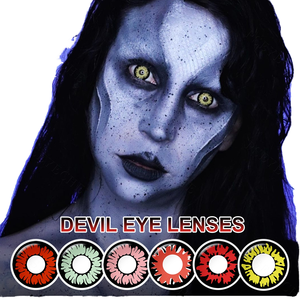
PSEYECHE Sharingan Cosplay Soft Colored Contacts
Diameter: 14.2mm - 14.5mm
Base Curve: 8.6mm | Sandwich Tech
Direct access to fully audited medical-grade HEMA & hydrogel contact lenses, multi-tone honey brown cosmetic aesthetics, and high-frequency sterile maintenance equipment.
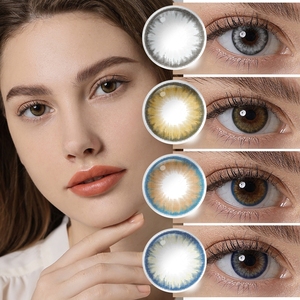
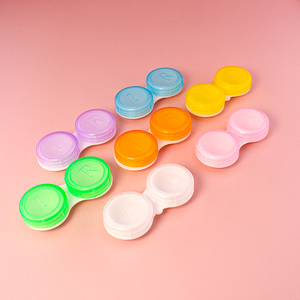
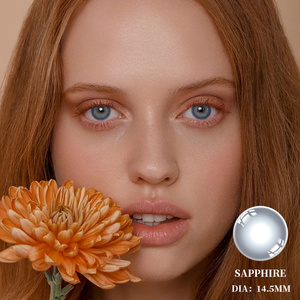
Dedicated R&D and Contact Lens Manufacturing Experience
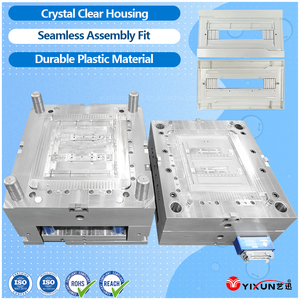
In-House Cast Mold Development & Custom Curvature Control
Triple Sandwich Technology Isolates Pigments Completely
Global Regulatory Compliance & Worldwide Brand Export Footprint
A comprehensive optical engineering breakdown for brand owners, B2B wholesale buyers, and international medical device importers.
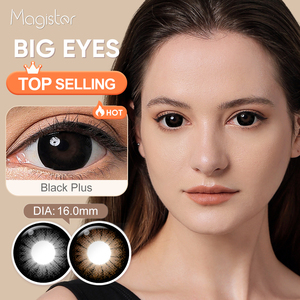
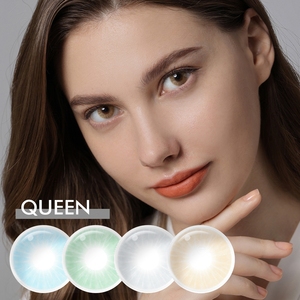
In the global cosmetic contact lens market, honey brown tones (frequently cataloged as Amber Honey, Hazel Brown, or Golden Caramel) remain the undisputed volume drivers across diverse demographics. Unlike monochromatic tints, an authentic honey brown iris appearance relies on intricate micro-layer printing that balances warm hazel undertones, radial striations, and translucent amber flecks. From an optical physics perspective, creating high color fidelity over dark natural irises requires precision dot matrix dispersion. If the dot spacing is too dense, the lens appears artificial and chalky; if too sparse, the dark melanin of the underlying iris overwhelms the color enhancement. Leading manufacturers leverage in-house ink formulations and automated micro-dot deposition systems to maintain precise translucency, creating the coveted luminous eye effect.
For over two decades, Poly-HEMA (2-hydroxyethyl methacrylate) hydrogel with water contents ranging between 38% and 42% has served as the industry standard for cosmetic contact lenses. This formulation provides dimensional stability, low protein deposition, and exceptional structural rigidity for easy lens insertion. However, procurement trends are steadily expanding into hybrid formulations with increased oxygen transmissibility (Dk/t values exceeding 30 to 80 units). Modern buyers targeting premium price brackets increasingly prioritize silicone-enhanced hydrogels that support extended wearing schedules without inducing corneal hypoxia, limbal hyperemia, or dry eye discomfort.
When curating the top 10 honey brown contact lenses manufacturer landscape, industry procurement officers benchmark capabilities far beyond standard catalog pricing. Global buyers consistently assess ten non-negotiable manufacturing competencies:
1. In-House Precision Mold Tooling: Eliminates reliance on external tooling brokers, allowing fast iteration of base curves (8.5mm to 8.7mm) and edge profiles designed to optimize tear exchange.
2. Proprietary Medical-Grade Pigment Inks: Highly purified organic and inorganic pigments that withstand autoclave sterilization cycles without thermal degradation or hue drift.
3. Automated Multi-Tone Printing Systems: High-speed pad printing and digital inkjet capabilities yielding intricate 3-tone and 4-tone patterns with microscopic repeatability.
4. Strict Dimensional Tolerancing: Optical center thickness, diameter (14.0mm to 16.0mm), and power fidelity monitored via laser interferometers.
5. Class 100,000 Cleanroom Production: Automated hydration, blister sealing, and steam terminal sterilization complying with ISO 13485 environments.
6. Comprehensive Power Range Capabilities: Supplying both plano (0.00D) cosmetic editions and extended prescription selections (-0.50D to -10.00D, plus custom astigmatism/toric parameters).
7. Rapid Prototyping & Sampling Loops: Converting brand artwork into physical wearing samples within 14 to 21 business days.
8. Customized Multi-Format Packaging: Complete automated filling lines supporting sterile glass vials, single-use polypropylene blisters, and customized luxury outer boxes.
9. Full Regulatory Dossier Support: Providing documentation suitable for international registrations, free sale certification, and global customs clearance.
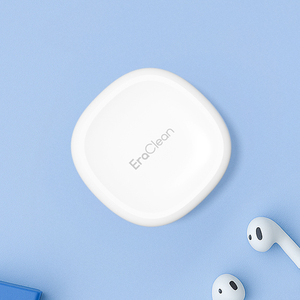
10. Scalable Auxiliary Accessories: Offering end-to-end device solutions, including ultrasonic transducer cleaners, custom case molds, and sterile saline filling lines.
Anticipate shift dynamics across replacement frequencies, custom graphics, and smart supply chain resilience.
While yearly disposable soft lenses remain highly lucrative in developing and regional wholesale channels due to cost-per-wear value, Tier-1 brands are transitioning aggressively to daily and monthly disposables. Shorter modalities significantly lower bacterial keratitis risks while driving recurring subscription revenues.
The era of flat, high-contrast cosmetic iris rings has shifted toward hyper-natural organic textures. Modern consumers demand multi-layered honey gradients that mimic genuine human stromal fibers, seamlessly blending with both dark Asian/Middle Eastern irises and lighter European eye shades.
Stringent post-market surveillance regimes demand tamper-proof lot coding, sterilization date stamps, and full ingredient disclosure. OEM manufacturers offering direct GS1 2D barcode printing and verified biocompatibility documentation are replacing uncertified gray-market suppliers.
Direct technical answers addressing minimum order volumes, private label branding, and ocular safety verifications.
Connect directly with our engineering and procurement team. Request customized physical samples, discuss base curve configurations, or obtain our comprehensive wholesale catalog.