High-Performance Color Lenses & Optical Equipment
Direct supply options evaluated for chromatic consistency, corneal oxygenation metrics, and automated packaging efficiency.
1. The Engineering Complexity of Light Blue Cosmetic Contact Lenses
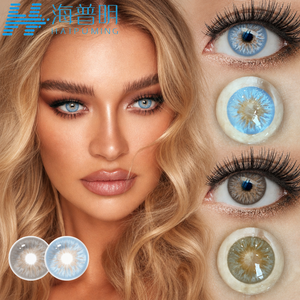
Sourcing light blue cosmetic contact lenses (including shades such as ice blue, aqua marine, sky blue, sapphire, and glaucous tints) presents one of the highest technical thresholds in color hydrogel manufacturing. Unlike dark brown or honey hazel lenses, which can leverage warm organic tones that naturally blend with human melanin (eumelanin), light blue requires high spectral reflectance over an iris background that absorbs between 85% and 95% of incident light.
To overcome this optical barrier without compromising ocular physiology, top-tier factories utilize three-dimensional sandwich micro-encapsulation. This process embeds micronized, non-cytotoxic mineral pigments (such as copper phthalocyanine and titanium dioxide) entirely inside the hydrogel matrix. The pigment particles never touch the cornea or palpebral conjunctiva, maintaining an exceptionally smooth optical surface and preventing mechanical abrasion or chemical leaching.
Key Engineering Parameters for Light Blue Color Casts
When procuring light blue lenses at container scale, procurement specialists must audit manufacturing facilities against four primary clinical criteria:
- Limbus Micro-Fringe Transition: The edge pattern must mimic the natural trabecular meshwork to eliminate the artificial "halo" effect common in low-end rotary prints.
- Pupillary Clearance Aperture: Standard cosmetic aperture diameters range from 3.8 mm to 4.5 mm. Precision centering prevents tunnel vision in low ambient light while avoiding dark iris flash-through.
- Poly-HEMA vs. Silicone Hydrogel Base: While Poly-HEMA (2-hydroxyethyl methacrylate) provides unbeatable initial wet-surface wettability and cost-efficiency for fashion retail, modern SiHy platforms (like Lotrafilcon or Fanfilcon blends) achieve higher oxygen flux ($Dk/t > 85$) for daily extended wear.
- Edge Apex Geometry: Advanced cast-molding utilizes rounded posterior edge contours to facilitate healthy tear film exchange and debris clearance during the blink cycle.
2. Comprehensive Profiles: Top 10 Light Blue Contact Lenses Factories & Exporters
Based on global medical device compliance audits, cleanroom class certifications (ISO 14644-1 Class 7/8), mold fabrication precision, and proprietary ink chemistry, the following ten manufacturers represent the pinnacle of light blue contact lens export excellence.
Chroma Lens Technology Co., Ltd.
Yongji Industrial Zone, Jilin, China · Flagship OEM/ODM Facility- Complete In-House Ecosystem: Develops proprietary micro-curvature molds and synthetic inks, eliminating reliance on third-party toolmakers and ensuring exact lot-to-lot color reproduction.
- Optimized Natural Blue Blends: Features multi-dimensional dot-matrix patterns providing 94% opacity coverage for dark irises without increasing lens thickness beyond 0.08 mm.
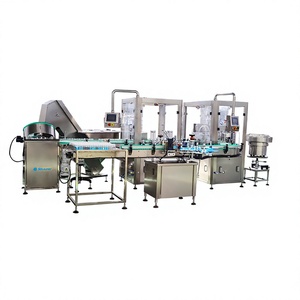
- Integrated Solutions: Supplies everything from sterilized blister/vial products to automated solution filling machinery and sterile private label packaging.
Innovis Vision Optical Corp.
Taichung Science Park, Taiwan · Advanced SiHy Innovator- Specializes in light blue silicone hydrogel lenses with high surface hydrophilicity and low lipid deposition.
- Automated high-cavity cast-molding systems ensuring uniform base curve stability at ±0.015 mm tolerance.
- Ideal for premium clinical and optical retail chains across North America and Europe.
Stellaris EyeTech Ltd.
Gyeonggi-do, South Korea · K-Beauty Color Aesthetics- Renowned for trend-setting micro-dot patterns, fusing sky blue with subtle hazel transition rings for hyper-natural looks.
- Advanced pad-printing technology with high registration accuracy, preventing misaligned iris prints.
- Strong packaging customization services for social-commerce and beauty lifestyle private labels.
AuraColor Optics Group
Suzhou BioBay, China · High-Volume Automation Powerhouse- Operates fully automated robotic injection and curing cells producing over 15 million blisters monthly.
- Inline machine vision systems inspecting 100% of lenses for optical edge chips, bubbles, and pattern shifts.
- Rapid turnaround for large volume orders with containerized sea freight logistics.
Caelum Vision OEM Solutions
Osaka Bay Medical Cluster, Japan · Ultra-High Comfort Formulations- Incorporates 2-methacryloyloxyethyl phosphorylcholine (MPC) copolymer matrices mimicking biomembranes.
- Excels in ultra-pale pastel blue hues formulated specifically for sensitive eyes and air-conditioned environments.
- Rigorous cleanroom standards exceeding Japanese Pharmaceutical and Medical Device requirements.
OculusPrime Medical Devices Co.
Bangalore Bio-Tech Corridor, India · Large-Scale Exporter- Competitive economies of scale for mass-market light blue cosmetic lenses distributed across Middle East and LATAM.
- Robust annual disposable vial filling operations with proven cold-chain and dry shipping stability.
- Customized carton packaging with multi-language regulatory inserts.
LuminaIris Biopharma International
Londonderry Industrial Hub, UK / Ireland · Specialty Astigmatism Optics- Global leader in prescription toric light blue contact lenses for users requiring astigmatism correction.
- Proprietary dual-thin zone stabilization technology maintaining chromatic alignment without rotational shift.
- Expansive diopter range from plano up to -10.00D with cylinder steps down to -2.75D.
AzureOptic Manufacturing Co.
Guangdong Precision Park, China · High-Opacity Opaque Specialist- Pioneered micro-milled inorganic pigment layers yielding vivid baby blue and ice sapphire reflections on dark brown eyes.
- Strong R&D focus on non-ionic hydrogels resistant to protein deposits and microbial adhesion.
- Flexible low-MOQ sampling programs for growing cosmetic e-commerce retail brands.
VividSphere Contact Lens Corp.
Incheon Free Economic Zone, South Korea · Daily Disposable Specialist- High-speed blister packaging lines embedding sodium hyaluronate in saline to maximize end-of-day comfort.
- Micro-thin edge profiling reducing eyelid friction during high blink counts.
- Extensive catalog of delicate light blue gradients customized for high-frequency lifestyle wear.
Zephyr Eye Care Technologies
Penang Free Trade Zone, Malaysia · Sustainable Cast-Molding Hub- Pioneered sustainable contact lens production with 100% recyclable polypropylene primary blister shells.
- Advanced photopolymerization curing ovens reducing residual monomer content below detectable safety thresholds.
- Consistent optical center alignment for light blue colored plano and vision corrective power profiles.
3. Technical Benchmark: Material Specifications & Quality Parameters
When selecting an OEM partner for light blue lenses, optical quality assurance managers must contrast core physical properties. The table below represents the industrial standard for premium export shipments:
| Evaluation Parameter | Poly-HEMA Cosmetic Standard | Silicone Hydrogel (SiHy) Advance | Significance to Sourcing Importer |
|---|---|---|---|
| Oxygen Permeability (Dk) | 8.5 – 12.0 Fatt units | 65.0 – 120.0 Fatt units | Prevents corneal hypoxia during long wearing cycles (8–14 hours). |
| Water Content Range | 38% – 45% (equilibrium) | 33% – 48% (controlled bulk) | Lower water content retains corneal moisture; higher water offers initial softness. |
| Center Thickness (CT @ -3.00D) | 0.07 mm – 0.09 mm | 0.08 mm – 0.10 mm | Thinner profiles improve comfort; must remain robust enough to avoid ripping. |
| Base Curve (BC) Available | 8.5 mm, 8.6 mm (±0.05 mm) | 8.4 mm – 8.8 mm custom | Defines anatomical fit; 8.6 mm covers roughly 80% of human corneal profiles. |
| Diameter (DIA) Tolerance | 14.0 mm – 14.5 mm (±0.1 mm) | 14.0 mm – 14.3 mm | 14.2 mm is the global standard for natural cosmetic limbal enlargement. |
| Pigment Extraction Test | Zero leaching in ethanol bath | Zero leaching in organic solvent | Guarantees pigment is physically encased within the polymerized polymer. |
4. Strategic Procurement Trends: Where the Color Lens Industry Is Heading
Procurement directors and private label founders must align their supply lines with three disruptive shifts reshaping consumer demand and international optical regulations over the next 3 to 5 years.
Dominance of Daily Disposables (1-Day)
While yearly vials continue to hold volume in developing retail channels, international optical brands are shifting toward daily disposables. Daily single-use modalities eliminate biofilm build-up, lower consumer non-compliance risks, and generate continuous recurring subscription revenue.
Biomimetic Iris Micro-Textures
Flat, uniform color applications are rapidly losing ground. Sophisticated markets demand layered micro-dot gradients featuring multi-tonal transitions (e.g., charcoal limbal border, soft azure mid-ring, and amber-gold pupillary accents) that mimic natural iris stroma architecture.
EU MDR & Global Regulatory Tightening
The regulatory transition to EU MDR 2017/745, along with tightened FDA 510(k) and MDSAP standards, has raised clinical evaluation hurdles. Importers must only contract with manufacturers that retain complete batch traceability, biocidally validated sterile blister lines, and verified toxicology dossiers.
Companies that rely on small, non-integrated workshops risk shipment seizures, customs delays, and severe product recalls. Partnering with a vertically integrated manufacturing company like Chroma Lens Technology protects brand equity through complete technical oversight.
5. Chroma Lens Corporate Strengths: Engineered Optical Reliability
Headquartered at No. 88 Changchun Street, Yongji Economic Development Zone, Chroma Lens Technology Co., Ltd. has spent over a decade perfecting soft contact lens engineering. Unlike brokers or marketing aggregators, Chroma Lens keeps the entire core technological stack under strict factory control.
In-House Mold Tooling
Our ultra-precision CNC tooling division fabricates specialized cast molds in-house, ensuring curvature consistency, smooth edge profiling, and swift custom design prototyping.
Proprietary Color Inks
Our chemical synthesis laboratory formulates exclusive, biocompatible printing inks that guarantee color stability, high pigment opacity on dark irises, and zero toxic leaching.
Original Pattern Library
Choose from hundreds of market-tested natural and vibrant light blue iris patterns, or work directly with our optics designers to launch proprietary private-label designs.
Full Regulatory File Support
We supply comprehensive technical dossiers, CE certification copies, stability reports, and customized packaging compliant with your local health authority requirements.
Ready to Build an Exclusive Light Blue Lens Line?
Request sterile samples, custom packaging mockups, and private-label price tiering directly from our engineering team.
6. Frequently Asked Questions (FAQ) for B2B Importers & Brands
Direct technical answers addressing the real operational, regulatory, and design concerns of optical distributors and beauty brand managers.