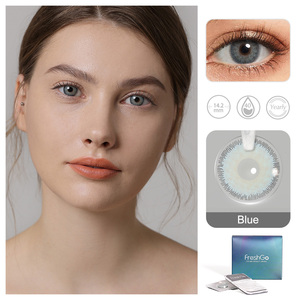
10+
Years Engineering Molds
100%
Sandwich Pigment Sealing
38%-42%
Optimized Hydrogel Water Content
85+
Export Destination Markets
Factory Lineup
High-Velocity Monthly & Aesthetic Lens Systems
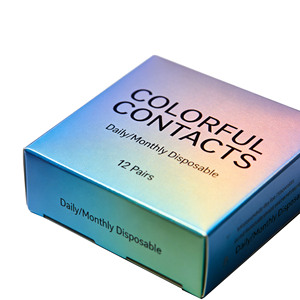
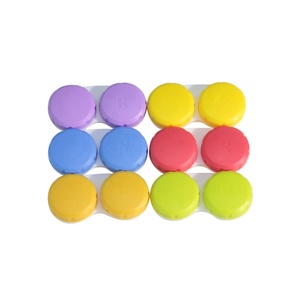
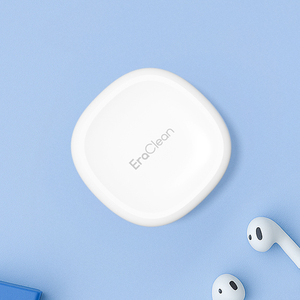
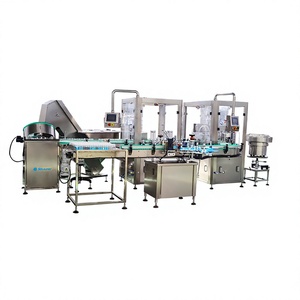
Direct supply solutions from audited production lines featuring turnkey retail secondary packaging, ultrasonic care instrumentation, and high-speed filling equipment.
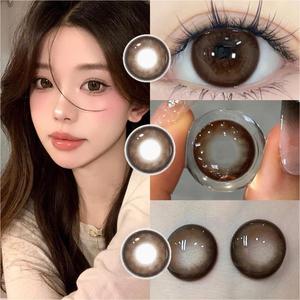
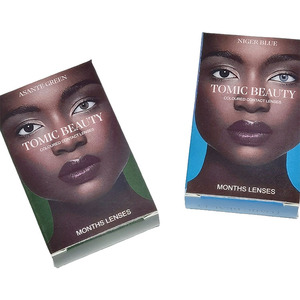
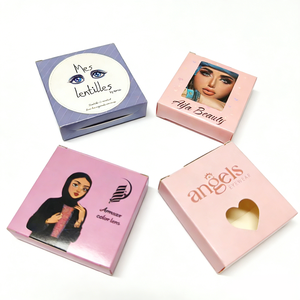
Executive Brief
Monthly Disposable Colored Contacts: The Dominant Commercial Model
Why Tier-1 distributors and digital optical brands prioritize monthly replacement schedules to optimize consumer retention, gross margin, and ocular safety profiles.
Unit Economics & Margin Density
Monthly modalities generate recurring revenue streams with reduced packaging freight overhead compared to daily disposables, achieving 35% higher gross margins across omnichannel e-commerce channels.
Bio-Compatibility & Compliance
Engineered with polyhema and silicone-hydrogel matrices that mitigate lipid crystallization. Users benefit from sustained tear exchange and stable hydration curves across a continuous 30-day wear protocol.
Cross-Category SKU Synergy
Monthly lens programs directly stimulate secondary purchases of sterile saline solutions, ultrasonic cleaning hardware, and customized modular carry packaging, lifting customer lifetime value (LTV).
Technical Benchmarking
Manufacturing Technology Matrix: Sourcing Comparison
Evaluating the manufacturing capabilities of the top 10 global colored contact lens exporters to assist supply chain managers in technical vendor qualification.
| Evaluation Parameter | Proprietary Cast Molding (Chroma Lens) | Standard OEM Lathe Cutting | Third-Party Pad Printing |
|---|---|---|---|
| Pigment Isolation Architecture | Sandwich Micro-Encapsulation (Zero corneal contact) | Surface printing with bonded sealant | Exposed direct-surface pigment stamp |
| Oxygen Permeability (Dk/t) | 28 – 45 × 10⁻⁹ (High tear circulation edge) | 15 – 20 × 10⁻⁹ (Thicker profile) | Variable (Dependent on external blank) |
| Curvature Regularity (Base Curve) | ±0.02 mm (Nanometer CNC mold control) | ±0.08 mm (Tool wear variance) | Non-controlled substrate origin |
| Custom Pattern Prototyping | 7 - 14 Days (In-house mold & ink synthesis) | 30 - 45 Days (Outsourced tooling) | Limited to catalog cliché plates |
| Regulatory Readiness (MDR/CE/FDA) | Complete technical dossier & batch tracking | Varies by mechanical finishing facility | Fragmented accountability supply chain |
Strategic Outlook
Future Procurement Trends in Color Optics (2025–2030)
Data-driven forecasts informing wholesale inventory strategies, raw material selections, and private-label design investments.
Silicone-Hydrogel Color Formulation
Global buyer demand is transitioning rapidly to high-Dk silicone-hydrogel materials. Solving the technical barrier of ink-silicone adhesion enables extended daily wear times without hypoxia or ocular redness.
Stricter Medical Device Traceability
Regulatory scrutiny under EU MDR (2017/745) and US FDA 510(k) mandates complete lot-level tracking of active polymer constituents, optical clarity certifications, and cytotoxicity safety reports.
Hyper-Realistic Biometric Textures
Shifting away from crude dot matrices, consumers seek multi-tonal, naturally faded limbal rings and anisotropic stroma patterns that seamlessly tint both light and dark native irises.
Factory Capabilities
Why Tier-1 Importers Partner with Our Manufacturing Hub
Unlike assembly operations that outsource critical processes, our fully consolidated engineering facility integrates every stage of contact lens fabrication under strict ISO 13485 standards.
In-House Mold Engineering
We eliminate third-party tooling markups and delays. Our micro-machining center manufactures proprietary cast molds, ensuring precision control over base curves, center thicknesses, and edge tapering.
Proprietary Ink Formulation Lab
Our biocompatible printing pigments are synthesized in-house. This guarantees optical vibrancy on both dark and light eyes, consistent chromatic density, and zero chemical leaching during sterilization autoclaving.
Turnkey OEM Export Package
From sterile blister sealing to multilingual artwork, barcoding, FDA/CE compliance dossiers, and automated outer packaging display cases, we ship ready-to-retail inventory straight to your logistics hub.
Quality Control
The Importer’s Quality Verification Protocol
Essential validation checkpoints our quality control teams implement on every export batch before clearing customs.
01. Optical Centration & Pupil Aperture
Precision calibration of the clear visual zone (3.8 mm – 4.5 mm) prevents peripheral visual tunnel effects and color blurring across varying lighting conditions.
02. Limbal Edge Smoothness
Laser and multi-axis projection inspection verifies that bevel margins are completely free of microscopic burrs, ensuring non-abrasive eyelid transition during blinks.
03. Autoclave Sterility Integrity
Hermetic foil sealing subjected to differential pressure decay testing and bioburden challenge protocols guarantees 5-year unopened shelf-life stability.
Procurement Knowledgebase
Frequently Asked Questions by Global Buyers
Direct technical responses addressing regulatory compliance, custom formulation MOQs, lead times, and private labeling.
How is pigment safety guaranteed in colored contact lens manufacturing?
We deploy sandwich encapsulation technology. Rather than printing directly onto the outer surface, the pigments are permanently bound between two micro-layers of polymer, isolating inks completely from cornea and conjunctiva tissue.
What are the standard Minimum Order Quantities (MOQs) for custom OEM designs?
For catalog patterns with custom branded outer packaging, MOQs start from 500 to 1,000 pairs. For proprietary iris designs requiring custom mold fabrication and exclusive ink blending, MOQs typically range between 5,000 to 10,000 units per colorway.
Can we configure custom diopter power distributions in our order?
Yes. Our production scheduling enables mixed diopter power arrays from 0.00 (plano) up to -8.00 (in 0.25D or 0.50D increments). Batch power profiles are laser verified and coded onto individual primary blister packaging.
What certification dossiers do you provide for customs clearance?
Every export shipment is backed by a Certificate of Analysis (CoA), ISO 13485 quality system documentation, Free Sale Certificates (FSC), biocompatibility cytotoxicity summaries, and targeted market regulatory compliance files.
What is the lead time from design approval to factory dispatch?
Physical sampling of standard patterns takes 5-7 business days. Mass production of monthly blister packs with custom printed carton boxes typically ships within 25-35 days following approval of packaging artwork.
Do you manufacture complementary retail accessories and care systems?
Yes. We offer fully integrated solutions including private-label contact lens travel cases, high-frequency ultrasonic cleaners (105KHz), and automated filling and sealing solutions for saline packaging lines.