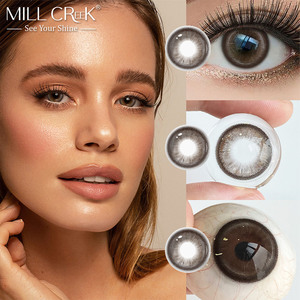
Curated Portfolio
Factory-Engineered Multi-Colored Lenses & Automation Lines
Explore our top production runs featuring patented color matrix technologies, automated filling machinery, and precision retail packaging built for rapid regulatory clearance.
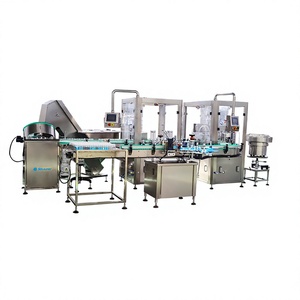
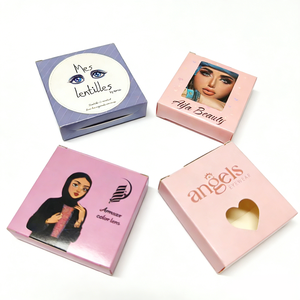
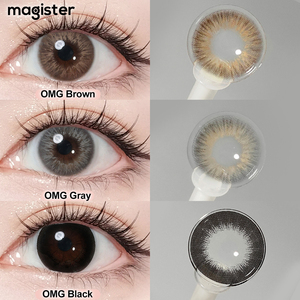
The Global Landscape of Multi-Colored Contact Lens Manufacturing
The global colored contact lens market has evolved from novelty theatrical cosmetics into a sophisticated segment of medical-grade aesthetic optics. Modern consumers demand lenses that not only provide hyper-realistic chromatic depth—simulating intricate human iris patterns—but also maintain impeccable corneal physiological safety. Sourcing teams seeking reliable OEM/ODM partners cannot evaluate factories simply by unit cost. The manufacturing of Class II and Class III medical devices hinges entirely on cast-molding precision, sandwich color encapsulation, and reproducible oxygen permeability (Dk/t).
Historically, low-tier factories applied pigments using pad-printing methods directly onto the inner or outer surfaces of cast lenses. This antiquated process brought an unacceptable hazard profile: pigment leaching, rough corneal abrasive friction, and reduced cellular oxygen diffusion leading to neovascularization. Leading suppliers have transitioned completely to multi-layer sandwich embedding techniques, where FDA-compliant organic pigments are sealed strictly between two neutral layers of hydrogel (e.g., HEMA/NVP copolymers) or silicone hydrogel substrates.
Auditing Criteria
Key Capabilities Separating Tier-1 Manufacturers
When compiling an assessment of the top 10 multi-colored contact lens suppliers worldwide, procurement directors must evaluate six core manufacturing indices.
| Evaluation Parameter | Tier-1 Factory Benchmark (Chroma Lens Standard) | Standard/Brokered Supplier Risks |
|---|---|---|
| Mold Engineering | In-house ultra-precision CNC tooling; customizable sagittal height, base curve (8.5 - 8.7mm), and bevel profile. | Outsourced third-party molds; frequent dimensional shrinkage and poor batch-to-batch edge consistency. |
| Ink Formulation | Proprietary lab-synthesized organic non-ionic inks; non-fading under autoclave cycles; high optical vibrancy. | Generic industrial pigments prone to oxidation, hue deviation, and leaching during prolonged saline immersion. |
| Color Layering Tech | 3-layer micro-encapsulation (sandwich casting); zero direct corneal or palpebral tissue pigment contact. | Single-side surface printing; high friction coefficient, leading to foreign body sensation and micro-abrasions. |
| Production Automation | Fully integrated robotic blister sealing, vision-guided inspection, and automated solution filling lines. | Manual blister capping; elevated bio-burden contamination risks and uneven filling volumes. |
| Regulatory Dossiers | Complete 510(k), CE 0123/MDR compliance, ISO 13485 certification, and CFDA approval records provided. | Incomplete testing documentation, lack of biocompatibility cytotoxicity reports, export seizures. |
Market Intelligence
Procurement & Material Trends Shaping 2026–2030
Strategic product managers are aligning their OEM pipelines around three decisive technical advancements over the next five years.
1. Silicone Hydrogel Domination
While hydrogel (HEMA-based) formulations remain cost-effective for yearly cosmetics, high-margin brand leaders are aggressively shifting to silicone hydrogel (SiHy). SiHy delivers a Dk/t exceeding 80–120, facilitating all-day 14+ hour cosmetic wear without hypoxia-induced redness.
2. Daily Disposable ("Daily 1-Day") Transition
Cosmetic lens consumers are moving rapidly from traditional yearly disposable glass vials to daily sterile blister packs. Driven by hygiene concerns and lifestyle convenience, procurement programs are prioritizing ultra-high-speed automated blistering packaging machinery.
3. Multi-Tonal Adaptive Limbal Rings
Monolithic flat coloring has lost retail traction. The fastest-growing design briefs feature 3-tone to 5-tone micro-dot gradients featuring translucent pupillary blending and ultra-fine limbal feathering, creating natural iris dimensions across diverse geographic ethnicities.
Enterprise Advantages: Why Global Distributors Partner With Chroma Lens
Operating from our certified production facility at No.88 Changchun Street, Yongji Economic Development Zone, Chroma Lens Technology Co., Ltd. has established an integrated manufacturing ecosystem that addresses the common bottlenecks of private-label optical brands.
In-House Mold R&D
Unlike factories relying on shared catalog tooling, our engineering team manufactures high-precision molds internally. This ensures sub-micron curvature control, preventing optical aberrations and assuring immediate adaptation for custom base curves (8.4mm to 8.8mm).
Proprietary Inks & Color Lab
Color brilliance and safety begin at the molecular level. Our internal formulation laboratory produces non-ionic, biocompatible colorants engineered to resist autoclave degradation while remaining ultra-vibrant on dark ocular profiles.
Full OEM/ODM Turnkey Pipeline
From custom dot-matrix graphic design and packaging box engineering to sterile blistering, automated saline filling, and multi-country compliance dossiers, we handle the product cycle seamlessly from prototype to retail-ready cartons.
Procurement FAQs
Frequently Asked Technical Questions by B2B Buyers
Answers to common manufacturing inquiries regarding minimum order quantities, regulatory clearance, private-label design, and lead times.
What is the minimum order quantity (MOQ) for custom private label colored contact lenses?
For catalog designs with private brand outer box packaging, MOQs generally start from 500 to 1,000 pairs across standard diopters (0.00 to -8.00D). For completely custom iris pattern development requiring bespoke mold tooling and ink matching, MOQs are structured by production batch, typically starting at 3,000 to 5,000 pairs per SKU to ensure cost efficiency during the cast-molding cycle.
How does Chroma Lens guarantee that multi-colored pigments will not touch the wearer's cornea?
All Chroma Lens colored cosmetic lenses are manufactured using strict sandwich cast-molding encapsulation. The color pigment layer is deposited between two layers of hydrophilic polymer matrix before thermal polymerization. The resulting lens has completely smooth anterior and posterior surfaces, verified by atomic force microscopy (AFM) and rub tests, ensuring that pigment molecules are completely isolated from tear-film fluids and corneal epithelium.
What international certifications are provided for customs clearance and medical device registration?
We provide full regulatory documentation required by regional health ministries, including ISO 13485 Quality Management System certificates, CE Mark conformity certifications, Free Sale Certificates (FSC), Certificate of Analysis (COA) for each batch, and comprehensive biocompatibility test reports (cytotoxicity, ocular irritation, systemic toxicity).
Can you support prescription powers (diopters) for cosmetic and multi-colored lenses?
Yes. While piano (0.00) lenses represent the highest retail volume in the cosmetic sector, our production lines maintain precision tooling for prescription myopic correction ranging from -1.00D to -8.00D (in 0.25D or 0.50D increments). Optical centers remain crystal clear and free from peripheral ink dot interference to guarantee crisp visual acuity.
What are the lead times for prototyping custom iris patterns versus mass production?
Because our mold tooling and ink formulation labs are fully integrated on site, rapid physical sampling takes approximately 10 to 15 business days following 2D graphic approval. Mass production runs for repeat orders or approved OEM custom lines typically ship within 25 to 35 calendar days, inclusive of sterilization quarantine and lot inspection testing.
Launch or Scale Your Colored Contact Lens Brand
Connect with Chroma Lens engineering and supply chain consultants. Request sample kits, custom pattern simulations, and volume price tiers for your target market today.