Featured Industrial Lenses & Optical Retail Solutions
Explore our top-tier cosmetic color formulations, medical myopia corrections, high-grade PMMA retail displays, and boutique private-label contact lens packaging configurations.
Yearly Colored Contact Lens Manufacturing: Precision Engineering & Sourcing Standards
An authoritative technical analysis of ocular safety, cast-molding micro-geometries, and structural color encapsulation for global distributors and private label brands.
In the evolving landscape of cosmetic ophthalmology, yearly colored contact lenses (annual disposables) represent one of the most commercially robust segments in global eye wear distribution. Unlike daily or monthly modalities, an annual replacement schedule imposes rigorous structural, chemical, and biological demands on polymer architecture. Sourcing from a premier factory and exporter requires evaluating not merely cosmetic allure, but underlying material stability, oxygen transmissibility (Dk/t), surface wetting mechanics, and micro-encapsulation methodologies.
Annual wear lenses are predominantly engineered utilizing advanced hydrophilic polymers, primarily poly-HEMA (2-Hydroxyethyl Methacrylate) crosslinked with NVP (N-Vinylpyrrolidone) and MAA (Methacrylic Acid). These proprietary hydrogel matrices deliver an optimal balance between hydration (typically stabilized at 38% to 42% water content) and dimensional durability. Maintaining a moderate water content is deliberate: hydrogel formulations exceeding 55% water content can induce subjective ocular dryness through evaporative dehydration over extended daily wear cycles. A calibrated 38%–40% equilibrium hydration preserves structural tension, resisting tear film lipids, tear protein denaturing, and matrix warpage throughout a complete 365-day lifecycle when paired with compliant maintenance solutions.
Our proprietary dual-layer cast-molding isolates reactive pigment molecules within inner polymer matrices, eliminating ocular surface contact and mechanical abrasion.
Direct digital lathe cutting of injection molds guarantees absolute consistency in base curve (8.5mm–8.7mm) and edge taper bevels for fluid tear exchange.
Engineered with non-ionic titanium dioxide, phthalocyanine complexes, and purified iron oxides that withstand rigorous autoclave terminal steam sterilization at 121°C.
A primary criterion differentiating an elite contact lens exporter from standard trading operations is the deployment of Sandwich Embedding Technology. Historical printing methodologies relied on pad-printing dye directly onto convex anterior or concave posterior surfaces. This archaic method exposed human corneal epithelial cells to abrasive pigments and oxidative cytotoxicity. Modern high-volume manufacturing utilizes automated double-sided casting: an optical-grade base curve mold receives an unpolymerized reactive monomer layer, followed by automated multi-nozzle micro-dot pattern deposition, and finalized with a covering monomer layer before thermal and UV photocuring. The resulting lens encapsulates all cosmetic pigments hermetically inside the polymer core, creating an ultra-smooth anterior surface with contact angles below 25° for enhanced lubricating comfort.
B2B Manufacturing Parameter Verification Matrix
Direct factory tolerances, optical specifications, and clinical compliance standards required for international import customs and wholesale validation.
| Technical Parameter | Standard Specification Range | Clinical Significance for Wearers | Inspection Methodology |
|---|---|---|---|
| Base Curve (BC) | 8.50 mm – 8.70 mm (±0.02mm) | Ensures physiological centration, adequate movement, and non-binding fit over cornea | Rotational Scheimpflug Optical Profiling |
| Total Diameter (DIA) | 14.0 mm – 14.5 mm (Cosmetic) / 14.8 mm – 22.0 mm (Sclera) | Provides adequate limbal coverage while preventing limbal compression and neovascularization | Non-contact Laser Silhouette Projector |
| Center Thickness (CT) | 0.06 mm – 0.09 mm (@ -3.00D) | Optimizes balance between tensile lens longevity and trans-corneal oxygen diffusion | Electronic Drop Gauge & Low-Coherence Interferometry |
| Water Content | 38% – 42% Hydrated Equilibrium | Minimizes end-of-day moisture depletion, maintaining tear film integrity for 12 months | Automated Digital Refractometry |
| Optical Power (Spherical) | Plano (0.00) to -8.00D (-0.25D / -0.50D increments) | Delivers dual cosmetic enhancement and crisp spherical refractive myopia correction | Automated Wavefront Lensmeter System |
| Pigment Isolation | True 3-Layer Sandwich Structure | 100% isolation of pigment from corneal epithelium and palpebral conjunctiva | Transmission Electron Microscopy (TEM) Cross-Section |
Emerging Technological Advancements in Yearly Cosmetic Optics
Strategic forecasting for wholesale buyers, brand aggregators, and optical supply chains navigating regulatory transformations and shifting consumer habits.
The global contact lens manufacturing arena is undergoing a profound paradigm shift driven by material sciences and digital aesthetics. For international procurement specialists, aligning with a factory capable of anticipating market shifts over a 3-to-5-year horizon is vital to mitigating obsolescence risks and capturing higher margin retail verticals.
1. Transition toward High-Dk Silicone Hydrogel Formulations: While traditional HEMA remains the global workhorse for yearly cosmetic lenses due to its exceptional dimensional stability, tear resistance, and economic viability, next-generation annual lenses are migrating toward fluoro-silicone hydrogel compounds. By infusing siloxane macromers into the copolymer matrix, oxygen transmissibility is elevated from traditional 9–14 Dk/t to well over 60–80 Dk/t. This breakthrough allows extended daily wearing schedules without inducing corneal hypoxia, limbal redness, or sub-epithelial edema, unlocking a premium medical-cosmetic tier for overseas retailers.
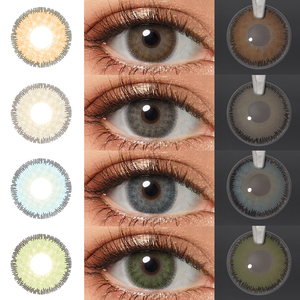
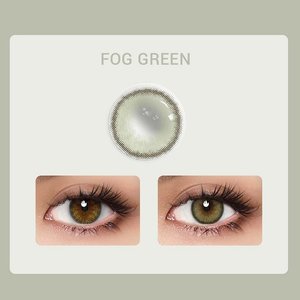
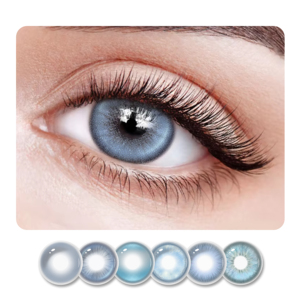
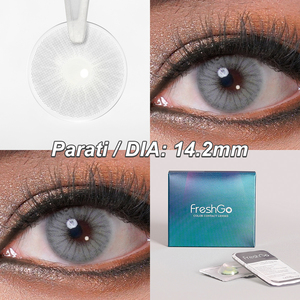
2. Bio-Inspired Iris Micro-Dots and Hyper-Realistic Color Mapping: Monochromatic and harsh 2-tone ring patterns have yielded ground to high-definition 3D multi-tonal stochastic patterns. Utilizing advanced algorithms modeled after human iris morphology, modern factories deploy 4-tone to 6-tone micro-dot matrices. Variable dot densities allow the natural iris structure to illuminate through transparent zones, producing an optical depth effect that transforms dark brown eyes into realistic hazel, azure, or graphite hues without an artificial appearance.
3. Clean-Label Medical Packaging & Eco-Responsible Manufacturing: Global import regulations (including EU MDR 2017/745, US FDA 510(k), and Latin American COFEPRIS/ANVISA frameworks) are enforcing strict auditing over extractables, leachables, and packaging traceability. Modern manufacturing relies on automated blister pack thermoforming with medical grade aluminum foil seals, migrating away from vintage glass vials to reduce freight mass, minimize breakage rates, and adhere to environmental carbon footprint mandates.
Collaborative iris graphic design, defining pupil clear zones (3.8mm–5.0mm) and transitional limbal blend radii.
Fabrication of optical-grade precision resin molds, assuring micron-level surface finishes and edge profiles.
Automated monomer dosing, pad-printing, UV polymerization, and saline hydration chamber stabilization.
Terminal 121°C autoclave processing, ISO 13485 batch logging, and localized multi-lingual packaging completion.
Why Top Global Brands Partner with Chroma Lens Technology
A decade of engineering specialization, vertical supply chain integration, and regulatory excellence backing your private label venture.
With more than a decade of specialized industrial manufacturing experience, Chroma Lens Technology Co., Ltd. stands as a premier manufacturing powerhouse in cosmetic and corrective contact lenses. Operating from our advanced facility in the Yongji Economic Development Zone, we break away from conventional contract packaging plants by retaining complete ownership of every critical proprietary process:
Integrated In-House Mold Fabrication: We design, engineer, and validate our own optical casting molds. By eliminating external tooling suppliers, we drastically shorten prototyping cycles from months to under 14 days, offering our OEM partners agile responsiveness to emerging social media trends and seasonal pop-culture demands.
Proprietary Optical Ink Lab: Our dedicated chemical research laboratory develops our own medical printing pigments. By formulating non-ionic, high-density pigment mixtures tailored precisely to our hydrogel polymer bases, Chroma Lens ensures unparalleled batch-to-batch color repeatability, vibrant chromatic fidelity on both light and dark eyes, and absolute biocompatibility.
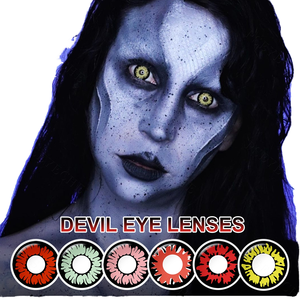
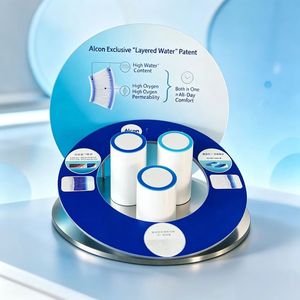
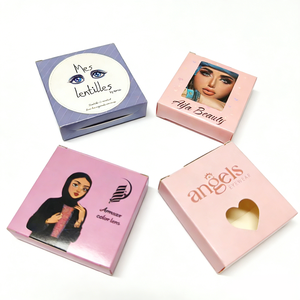
Turnkey OEM/ODM Ecosystem: From baseline plano natural aesthetics and high-diopter myopia corrections (-0.50D to -8.00D) to intricate theatrical/cosplay designs, our factory delivers end-to-end solutions. We support global clients with bespoke box printing, retail acrylic display fixtures, customized sterilization blisters, and full dossier registration backing for seamless local customs clearance.
Frequently Asked Questions by Wholesale Sourcing Officers
Clear, technically sound answers addressing minimum order volumes, regulatory dossiers, sterilization stability, and custom pattern development.
What regulatory documentation and certifications do you supply for customs clearance?
How does sandwich printing technology ensure the safety of yearly contact lenses?
Can Chroma Lens formulate exclusive color patterns or match specific pantone shades?
What are the minimum order quantities (MOQ) and production lead times for OEM private labeling?
How do yearly colored contact lenses compare to daily and monthly replacement lenses in wholesale margins?
Ready to Scale Your Contact Lens Distribution?
Initiate direct communications with our engineering and international export team. We provide free factory catalog samples, OEM packaging dielines, technical compliance dossiers, and wholesale volume pricing.