10+
Years Precision Manufacturing
100%
In-House Cast Mold Engineering
0.00 to -10.00D
Corrective Optical Range
ISO 13485
Medical Device System Audited
Factory Showcase
High-Precision Corrective & Cosmetic Contact Lenses
Engineered for high oxygen permeability, physiological tear-exchange, and pigment-isolated encapsulation.
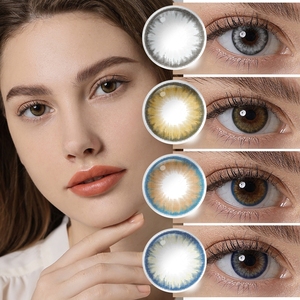
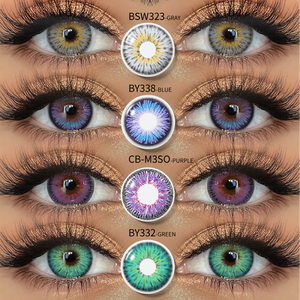
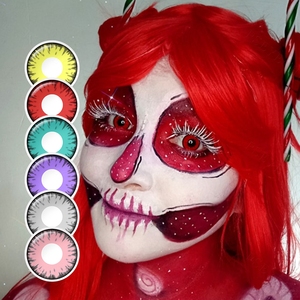
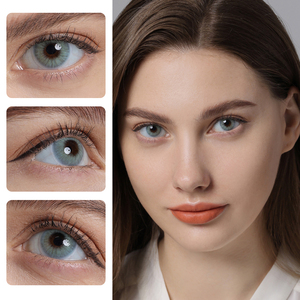
Manufacturing Architecture
Engineering Dominance: The Chroma Lens Quality Ecosystem
Why Tier-1 global optical distributors choose our full-stack production over fragmented contract assemblers.
In-House Tooling & Mold Mastery
Unlike standard trading intermediaries that source third-party preforms, our in-house optical CNC tooling labs produce high-precision male/female mold cavities with micro-curvature stability. This guarantees uniform base curve (BC 8.5mm - 8.6mm) and edge profiles down to sub-micron tolerances, eliminating mechanical corneal irritation.
Proprietary Biocompatible Inks
Our formulation engineering team synthesizes medical-grade non-leaching chromatic pigments. Every pigment batch achieves molecular isolation between the optical matrix layers using our 3-layer Sandwich Encapsulation Process, ensuring color agents never contact corneal endothelium while resisting color fading during thermal autoclave cycles.
Full-Diopter Corrective Precision
Cosmetic visual enhancement must never compromise optical physics. We enforce full dioptric verification spanning -0.00 (Plano) to -10.00D with strict focal sphere mapping. Our lenses feature parabolic back surface geometries that ensure stable centration, preventing decentration-induced astigmatism or optical aberrations for myopic patients.
Operating out of our state-of-the-art biological optics production base at No.88 Changchun Street, Yongji Economic Development Zone, Jilin Province, Chroma Lens Technology Co., Ltd. has spent over a decade systematically eliminating the core defect modes associated with mass-produced colored lenses: uneven hydration, color pigment migration, edge delamination, and diopter inconsistency. By centralizing the three foundational pillars of hydrogel engineering—chemical formulation, micromechanical injection molding, and digital pad-printing—we provide B2B importers with verifiable medical conformity and unmatched brand security.
Strategic Procurement
Emerging Procurement Trends in Prescription Colored Lenses
How the shifting regulatory, demographic, and optical requirements are transforming international procurement strategies.
The global contact lens landscape has crossed an inflection point where cosmetic fashion and therapeutic vision correction merge into a single demand vector. International procurement executives must navigate complex logistical and consumer shifts to protect their commercial margins:
1. Daily Disposable Migration
Global demand is rapidly transitioning from traditional annual (yearly) vials to single-use daily (1-day) and monthly blister systems to reduce microbiological contamination risks.
2. Complex Corrective Ranges
Cosmetic buyers increasingly require complete corrective inventories (-1.00 to -8.00 in 0.25D increments, up to -10.00D), demanding agile supplier stock programs and fast turnarounds.
3. Strict Regulatory Scrutiny
Regulatory authorities (US FDA 510(k), EU MDR Class IIa, Saudi SFDA) require uncompromised batch traceability, sterilization validation reports, and ISO 13485 certified quality loops.
4. Custom Hyper-Natural Iris Art
Flat, low-resolution pixel patterns are being replaced by multi-tone 3D spatial textures that mimic authentic stromal fibers, demanding high-definition offset pad printing.
| Procurement Criteria | Legacy Sourcing Paradigm (Conventional) | Modern Industrial Sourcing Strategy (Chroma Lens Standard) |
|---|---|---|
| Pigment Encapsulation | Surface printing or standard mono-dip printing (Direct corneal friction risk). | Tri-Layer Sandwich Cast Encapsulation (Pigment micro-sealed inside HEMA hydrogel). |
| Corrective Power Accuracy | Plano priority with low-tier diopter lot screening (High optical deviation ±0.50D). | Laser refractometry verification on every batch (±0.12D tolerance threshold). |
| Wettability & Surface Lubricity | Untreated hydrophobic surface matrix prone to lipid adhesion and dry eyes. | High hydrophilic matrix (38% - 42% balanced hydration) with natural tear-film turnover. |
| OEM/ODM Mold Ownership | Generic, open-market public molds shared across hundreds of competitors. | In-house dedicated mold machining for proprietary brand curves and edge geometries. |
Innovation Horizon
The Technological Horizon: Next-Generation Colored Optics
Evaluating breakthrough polymer advances, silicone hydrogel developments, and automated laser testing.
Silicone Hydrogel (SiHy) Integration
The cosmetic lens industry is moving toward high Dk/t silicone hydrogel formulations. By developing custom siloxane monomers compatible with hydrophilic printing inks, our R&D team addresses oxygen starvation and neovascularization during extended 12-hour cosmetic wear periods.
Automated AOI Visual Quality Inspection
Manual slit-lamp examination is being replaced across our manufacturing lines by automated optical inspection (AOI) driven by high-speed neural networks. Lenses are inspected in hydrated cell suspensions for edge burrs, particulate inclusions, ink misregistration, and eccentric pupil zones in less than 300 milliseconds.
Blue-Light and UV Filtering Monomers
Modern consumers expect aesthetic lenses that provide functional ocular protection. Integrating Class II UV-blocking compounds (absorbing >95% UVB and >70% UVA) directly into the monomer synthesis protects the crystalline lens and retina without yellowing the vibrant cosmetic iris pattern.
Procurement Due Diligence
Frequently Asked Questions: Sourcing from China
Essential technical, regulatory, and logistical considerations answered for overseas procurement managers.
How does Chroma Lens prevent chromatic pigment leakage and eye safety hazards?
We employ an advanced Cast-Molding Sandwich Entrapment Technology. Pigment granules are printed directly onto an intermediate hydrogel matrix and then permanently bonded under UV polymerization between two protective layers of Poly-HEMA (2-hydroxyethyl methacrylate). The colorant never touches corneal tissue or palpebral conjunctiva. Each production batch undergoes rigorous 121°C autoclave stability validation and rubbing-resistance testing to confirm total pigment isolation.
Can prescription powers (Diopters) be customized with colored or cosplay iris designs?
Yes. We produce both Plano (0.00 diopter) for purely cosmetic use and corrective optical powers ranging from -1.00D to -6.00D in 0.25D steps, and from -6.00D to -10.00D in 0.50D increments. Because we engineer our own lens molds, we can accurately balance base curves and center thickness across different powers, maintaining proper oxygenation and wearing comfort regardless of corrective strength.
What are the typical Minimum Order Quantities (MOQs) and lead times for OEM private-label production?
For catalog items and standard packaging, MOQs start from 50 to 100 pairs per SKU for trial validation. For fully customized OEM projects—including exclusive iris design development, branded blister foil sealing, and custom carton packaging—standard run requirements start around 500 to 1,000 pairs per shade. Pre-production sampling typically takes 10 to 15 business days, while volume commercial manufacturing runs between 25 and 35 business days.
Which compliance documentation and quality certifications accompany export shipments?
All export shipments can be backed with ISO 13485 Medical Device Quality Management System certificates, CE compliance declarations, Certificate of Free Sale (CFS), batch-specific Certificate of Analysis (COA) specifying parameters (BC, DIA, water content, power), biocompatibility test dossiers, and accelerated shelf-life stability verification data.
How do you assist international distributors with localized power conversion and fitting guides?
We provide full technical documentation to support end-consumer education. This includes vertex-distance power conversion charts (converting spectacles to contact lens powers for prescriptions exceeding ±4.00D), nursing/hygiene guidelines, and parameter-matching recommendations based on regional corneal curvature demographics (e.g., 8.5mm vs. 8.6mm base curves).
Ready to Partner with China's Premier Lens Manufacturer?
Initiate direct technical consultations with our optical engineering team. Request private label catalog samples, mold development assessments, and customized bulk quotations today.
Send an Inquiry