OEM Packaging
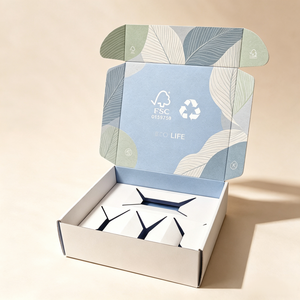
Direct manufacturer supply spanning cosmetic, prescription, high-pigment cosplay optics, and branded display configurations ready for international retail compliance.
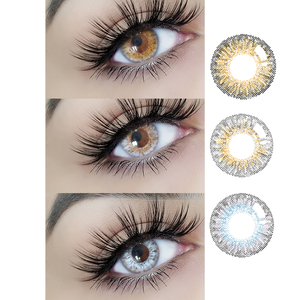
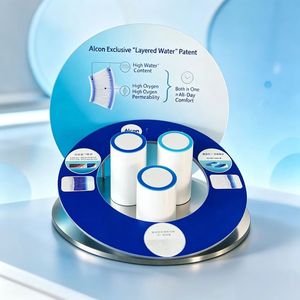
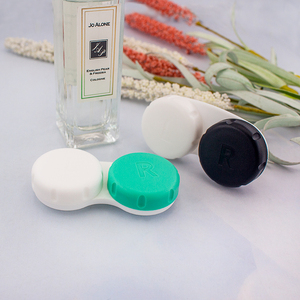
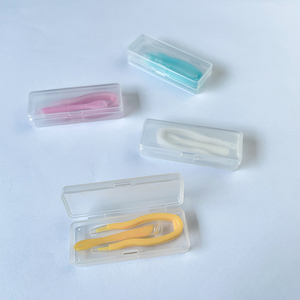
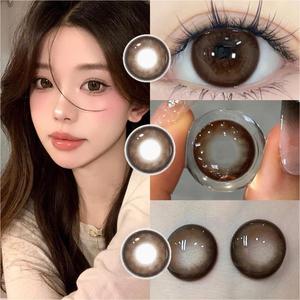
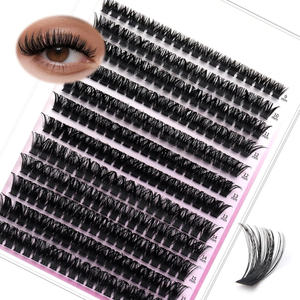
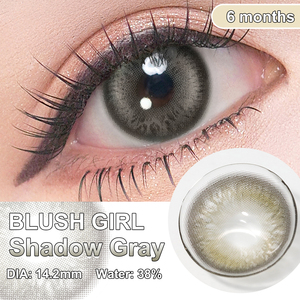
Vertical engineering integration eliminates subcontracting risks, ensuring strict batch repeatability, rapid pilot sampling, and airtight regulatory documentation.
Global distributors and brand aggregators sourcing soft contact lenses face a systemic industry challenge: the decoupling of optical design from manufacturing execution. When color pattern printing, hydrogel polymerization, and primary sterile packaging are divided across multiple sub-tier vendors, yield variances rise, and chromatic inconsistency between production lots creates heavy customer return rates. Leading Chinese manufacturers—exemplified by Chroma Lens Technology Co., Ltd.—have counterbalanced this vulnerability by consolidating the entire ophthalmic device manufacturing lifecycle inside certified cleanroom facilities spanning over a decade of continuous precision tooling.
Unlike secondary converters relying on standard third-party blanks, our optical tooling division designs and polishes proprietary cast-molding dies with sub-micron CNC accuracy. This guarantees strict base curve tolerances (8.5mm to 8.6mm ±0.02mm) and optimized peripheral edge tapers that maximize tear fluid exchange while eliminating ocular lens awareness.
Color brilliance cannot come at the expense of corneal metabolic respiration. Our specialized laboratory formulates medical-grade, monomer-reactive colorant suspensions. Engineered exclusively for the sandwich micro-encapsulation process, the pigments are permanently cured inside the hydrogel matrix, completely shielding the palpebral conjunctiva from abrasive raw pigments.
Moving far beyond generic dotted prints, our in-house pattern design studio creates proprietary multi-layered iris textures, natural translucent limbal bands, and ultra-vibrant theatrical cosplay motifs. Distributors receive regional market exclusivity options that shield their retail price points from predatory catalog price dumping.
Controlling the mold manufacturing pipeline means custom pilot sampling schedules are reduced from standard 90-day industry turnarounds down to under 21 calendar days. This empowers beauty conglomerates and optical private labels to capture viral aesthetic trends and cosplay seasonal spikes before the market saturates.
Analyzing key structural shifts from traditional Poly-HEMA matrices to advanced surface-treated Silicone Hydrogels and hybrid cosmetic-therapeutic optics.
The wholesale export landscape for contact lenses is undergoing a permanent technological transition. B2B buyers who built businesses around low-cost yearly polymacon lenses are rapidly pivoting toward shorter replacement cycles, heightened oxygen transmissibility ($Dk/t$), and premium unboxing ergonomics. Today's consumer treats colored and clear contact lenses as hybrid healthcare-beauty essentials, demanding optical clarity comparable to prescription ophthalmic lenses along with cosmetics-grade aesthetic comfort.
| Evaluation Parameter | Legacy Conventional (HEMA / NVP) | Next-Gen Hydrogel (Cast Molded) | Emerging Silicone Hydrogel (SiHy) |
|---|---|---|---|
| Oxygen Transmissibility ($Dk/t$) | 12 – 18 Barrer/cm | 22 – 28 Barrer/cm | 80 – 130+ Barrer/cm |
| Equilibrium Water Content (EWC) | 38% – 42% | 40% – 58% (Balanced Hydration) | 33% – 48% (Internal Wetting Agent) |
| Modulus (Stiffness Elasticity) | 0.30 – 0.40 MPa (Very soft, prone to tear) | 0.45 – 0.55 MPa (Ideal center handling) | 0.70 – 1.10 MPa (Structural stability) |
| Pigment Lock Mechanism | Surface pad stamp (Obsolete risk) | Triple Sandwich Mold Encapsulation | Polymerized Inter-matrix Embedding |
| Dominant Wear Replacement Cycle | Annual / Half-Yearly (Vial Packaging) | Monthly / Bi-Weekly Blisters | Daily Disposable (Single-use Aseptic) |
The table above highlights why forward-thinking procurement directors are rebalancing their inventory portfolios. While yearly colored lenses packaged in glass vials continue to hold massive demand in developing retail markets and cosplay subcultures due to their low cost-per-wear ratio, developed markets across the European Union, North America, and the GCC region are overwhelmingly favoring daily and monthly disposable blister formats. High water content, coupled with hydrophilic monomers like Methacrylic Acid (MAA), ensures the lens preserves its tear-film wettability throughout 14+ hours of active screen viewing without provoking dry-eye keratitis.
How regulatory tightening, packaging sustainability, and omnichannel private labeling are redefining the competitive exporter landscape.
Blister foil and secondary packaging are no longer afterthoughts. Modern beauty brands require rigid magnetic closure presentation boxes, biodegradable polypropylene blister bowls, and luxury unboxing suites (such as integrated silicone applicator tweezers and acrylic merchandising displays) that drive immediate social commerce virality.
The implementation of the EU Medical Device Regulation (MDR 2017/745) has raised the compliance barrier for non-corrective cosmetic lenses. Tier-one Chinese exporters must supply complete Clinical Evaluation Reports (CER), accelerated aging shelf-life verifications, and ISO 13485 cleanroom validation batches to ensure seamless customs clearance.
Cosplay, anime fandom, and Halloween events have transformed from niche novelties into year-round mass consumer industries. Importers require instant access to high-opacity pigments, small-pupil theatrical designs, and full-sclera visual profiles capable of covering deep brown or black irises without compromising clear axial vision.
A structured technical framework for optical buyers inspecting factory lots prior to international freight dispatch.
| Inspection Gate | Laboratory Test Protocol | Quality Threshold / Acceptance Criteria | Risk Mitigated |
|---|---|---|---|
| Optical Centration & Power | Digital Lensmeter / Focimeter | Spherical Power: ±0.25D; Prism Aberration < 0.15Δ | Asthenopia, headaches, blurred visual acuity |
| Edge Profile & Contour | Shadowgraph Projection (50x Magnification) | Continuous rounded junction; no burrs or chips | Corneal epithelial scratch, foreign body sensation |
| Color Encapsulation | Organic Solvent Rub & Immersion Test | 0% pigment extraction; zero surface-exposed ink | Pigment leakage, ocular tissue staining, toxicity |
| Package Hermeticity | Vacuum Chamber Dye Leak Testing | No bubble emission or methylene blue ingress at -70 kPa | Loss of blister sterility, fluid evaporation, dryout |
| Bio-Burden & Sterility | Direct Inoculation / USP <71> Sterility Test | Sterility Assurance Level ($SAL$) $10^{-6}$ achieved | Microbial contamination, Pseudomonas keratitis |
Direct technical and operational guidance addressing minimum orders, regulatory compliance, custom molds, and branding parameters.
We deploy an advanced sandwich cast-molding encapsulation protocol. The bio-compatible reactive inks are cross-linked directly inside the hydrogel polymer layer rather than printed onto the final external lens surface. Both the front anterior and back posterior surfaces remain 100% pure, mirror-smooth hydrogel, guaranteeing zero ocular friction or pigment leaching during blinking.
For stock catalog patterns with standard blister packaging, our wholesale MOQ starts as low as 50 pairs per SKU. For full OEM private label development—including custom rigid magnetic unboxing sets, custom foil lidding printing, and exclusive iris design formulations—production runs typically initiate at 500 to 1,000 units per artwork variant.
Yes. Our automated cast-molding pipelines support flexible diopter power matrixing ranging from plano (0.00D) down to -8.00D (in 0.25D increments from -1.00 to -5.00D, and 0.50D increments from -5.00 to -8.00D). We supply barcode-traceable inventory systems that allow distributors to assort power ranges based on regional demographic requirements.
Every commercial wholesale consignment is accompanied by a formal Certificate of Analysis (COA) corresponding to the lot batch, ISO 13485 Quality System certifications, CE conformity declarations, sterilized packaging validation reports, and Material Safety Data Sheets (MSDS) covering sterile saline solution stability.
Our hermetically heat-sealed polypropylene blister packs and pharmaceutical-grade borosilicate glass vials carry an accelerated-aging validated shelf life of 5 full years from the sterilization release date. Saline pH (7.2 ± 0.2) and isotonicity remain completely stable across international ocean and air freight channels.
Because we develop precision molds and synthesize printing inks internally, we eliminate third-party subcontractor lead times. Upon approval of your vector artwork or physical color mood boards, prototype silicone-mold tooling and live pre-production lens samples are ready for inspection within 14 to 21 business days.
Request our full technical OEM/ODM catalog, review high-resolution pattern swatch libraries, and explore tiered distributor pricing tailored to your market volume.