Engineering Excellence in Cosmetic Dark Brown Ocular Optics
A comprehensive technical overview of high-precision color contact lens manufacturing, hydrogel polymer formulation, and cross-border regulatory compliance in China.
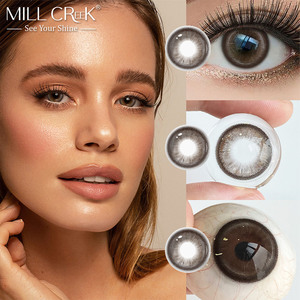
Technical Engineering Blueprint: Why Dark Brown Contact Lenses Dominate Global Sourcing
In the international ophthalmic optics market, dark brown contact lenses represent the largest and most consistently ordered cosmetic SKU across North America, Europe, the Middle East, and Southeast Asia. Unlike dramatic theatrical lenses or high-vibrancy fantasy colors, dark brown formulations serve a dual commercial function: deep natural iris enhancement and subtle ocular enlargement (the "doe-eye" aesthetic). To achieve an authentic biological appearance while preserving physiological ocular health, advanced manufacturers must resolve complex physical, chemical, and optical trade-offs.
Natural human dark irises contain varied concentrations of eumelanin, characterized by non-uniform radial striations, crypts of Fuchs, and distinct peripheral limbal rings. When international brands source dark brown cosmetic lenses from Chinese manufacturers, the primary differentiator lies in the depth of micro-dot printing matrices and pigment safety engineering. Chroma Lens Technology Co., Ltd. has developed specialized multi-tier tonal palettes—spanning espresso, chocolate, hazel-amber, and deep mahogany—utilizing proprietary, micro-dispersed bio-inert pigment suspensions.
Traditional lower-tier manufacturing methods rely on direct pad printing on the lens exterior, presenting severe clinical hazards such as epithelial erosion, pigment sloughing, and corneal neovascularization. Advanced Chinese export factories utilize full sandwich encapsulation (Cast Molding Micro-Lamination), embedding FDA-cleared iron oxide and carbon pigments permanently inside hydrophilic Poly-HEMA (2-hydroxyethyl methacrylate) or NVP matrices. This ensures zero direct cellular contact between the dye particulates and corneal endothelial cells or palpebral conjunctiva, while maintaining adequate oxygen transmissibility (Dk/t) for sustained daily wear.
| Technical Parameter | Export White-Label Standard | Clinical Significance | Chroma Lens In-House Specification |
|---|---|---|---|
| Base Curve (BC) | 8.50 mm – 8.60 mm (±0.05 mm) | Ensures optimal corneal vaulting & tear exchange | 8.55 mm precision-cut cast molds |
| Total Diameter (DIA) | 14.0 mm – 14.5 mm (±0.1 mm) | Determines limbal ring coverage & cosmetic footprint | 14.0 mm (Natural) / 14.2 mm / 14.5 mm (Enlarging) |
| Center Thickness (CT) | 0.06 mm – 0.09 mm (@ -3.00D) | Prevents lens curling while optimizing Dk value | 0.075 mm ultra-thin profile |
| Water Content (WC) | 38% – 42% | Balances dehydration rates in air-conditioned spaces | 40% Hydrophilic Poly-HEMA matrix |
| Pigment Encapsulation | Sandwich Lamination Depth > 12 μm | Prevents pigment exposure and corneal micro-trauma | Dual-layer embedded cast molding (> 15 μm) |
| Oxygen Permeability (Dk) | 8.5 – 11.0 × 10⁻¹¹ | Guarantees normoxic cellular respiration during wear | 9.5 × 10⁻¹¹ (cm2/s)[ml O2/(ml × mmHg)] |
Why Global Distributors Partner With Chroma Lens
Eliminating supply chain intermediaries through vertically integrated precision molding, custom ink synthesis, and automated cleanroom robotics.
In-House Mold Tooling
Our internal CNC diamond turning and optical molding lab cuts lead times from months to weeks. We engineer proprietary concave/convex mold geometries with sub-micron tolerances, ensuring edge-profile comfort and eliminating peripheral eye irritation.
Proprietary Printing Ink
Unlike factories reliant on commercial generic inks, Chroma Lens synthesizes medical-grade pigments in-house. Our reactive dye formulations bind chemically to the polymer matrix, yielding unmatched dark brown chromatic depth and guaranteed batch-to-batch repeatability.
Original Iris Pattern Library
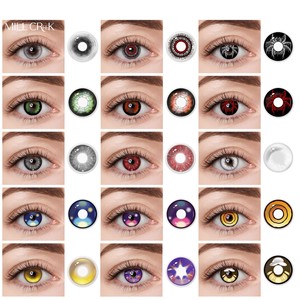
Our design department maintains an expansive IP library of over 1,200 commercial patterns. From hyper-realistic one-tone coffee shades to multi-layered 3-tone hazel-brown gradients with feathered limbal rings, we craft exclusive designs that help your brand stand apart.
Class 100,000 Cleanroom QA
Certified under ISO 13485 and stringent medical device manufacturing guidelines. Automated Optical Inspection (AOI) systems perform sub-pixel visual scans on 100% of finished lenses to identify edge flaking, air inclusions, and optical aberrations prior to final packaging.
Future Sourcing Trends in the Global Dark Brown Lens Market
Anticipate regulatory shifts, material transitions, and consumer buying behaviors to build resilient private-label inventories.
The Shift from Yearly Disposables to Daily & Monthly Cycles
While yearly disposables remain cost-effective in price-sensitive emerging markets, European and North American buyers are accelerating transition into daily disposable (1-Day) and monthly silicone-hydrogel packaging. Health agencies are tightening ocular hygiene advisories, pushing B2B retailers to favor shorter replacement intervals. Brands sourcing dark brown shades are shifting toward high-volume blister packs that minimize microbial contamination risks and boost lifetime customer re-order frequency.
Ultra-Realistic "No-Makeup" Micro-Dot Technology
Consumer preferences have pivoted sharply away from coarse, opaque cosmetic rings toward translucent, micro-graduated iris patterns that blend organically with dark brown irises. B2B procurement directors must prioritize manufacturers capable of 1200+ DPI ultra-fine dot-matrix pad printing. The commercial goal is to enhance the patient's natural iris diameter by 0.2mm to 0.4mm without a perceptible pixel edge, satisfying the surging global demand for workplace-appropriate beauty aesthetics.
Eco-Conscious Packaging & Automated Traceability
Evolving medical device regulations across the EU (MDR 2017/745) and US FDA require granular supply chain visibility. Importers are demanding suppliers who provide complete batch inspection dossiers, sterilization validation reports (gamma irradiation or wet autoclave), and eco-friendly packaging footprints. Reduced plastic blister cards, biodegradable solution vials, and automated QR-code serial traceability are rapidly transforming from optional value-adds into essential baseline import criteria.
Technological Evolutions in Soft Cosmetic Contact Lens Fabrication
The manufacturing landscape for soft cosmetic contact lenses is undergoing a profound paradigm shift driven by polymer chemistry innovations and computational optical engineering. Historically, color contact lenses were manufactured via lathe cutting of polymerized rods followed by external manual tinting. Today, high-speed automated cast molding lines—such as those operated at Chroma Lens Technology—integrate mold injection, color printing, UV polymerization, lens demolding, hydration, and automated packaging within a single continuous process stream.
1. Silicone-Hydrogel (Si-Hy) Cosmetic Integration: The most significant technological leap is the adaptation of silicone macromers to cosmetic multi-layer printing. Traditional hydrogels present an upper boundary for oxygen transmissibility. Si-Hy formulations incorporate fluoro-siloxane monomers, achieving Dk values exceeding 60–80 Barrer. Chroma Lens R&D is pioneering surface treatment techniques (such as gas plasma oxidation) that maintain high hydrophilicity and prevent lipid deposition over dark brown encapsulated pigments.
2. High-Fidelity Aspheric Surface Geometries: Spherical aberration often impairs visual sharpness in high-diopter lenses. Modern dark brown prescription contact lenses integrate multi-aspheric front and back curves. This design smooths focal transition across the pupillary margin, ensuring wearers experience sharp visual contrast even under low-light photopic conditions when the pupil dilates beyond the transparent optical zone.
3. Anti-Bacterial Nano-Coatings & Wetting Agents: Advanced packaging formulations now incorporate sodium hyaluronate (HA) and poloxamer wetting agents directly into the sterile buffered saline blister solution. This forms a sustained hydration cushion across the lens matrix, reducing tear-film evaporation during initial eye application and dramatically lowering early dropout rates for first-time cosmetic wearers.
Frequently Asked Questions for B2B Importers & Brands
Clear, direct technical answers regarding MOQ, custom tooling, testing documentation, and international shipping protocols.
Can Chroma Lens develop custom, proprietary dark brown patterns for our private label?
Yes. Because we maintain our own mold engineering and printing ink formulation departments, our in-house optical design team can convert your digital concept or physical sample into production-ready iris pattern plates. We guarantee regional design exclusivity for qualifying volume orders.
What documentation do you provide for customs clearance and medical device import?
We provide comprehensive technical dossiers tailored to your destination market, including Certificate of Analysis (CoA) per batch, ISO 13485 certification, biocompatibility test results (cytotoxicity, systemic toxicity, ocular irritation according to ISO 10993), sterilization validation, and CE conformity declarations.
How do you guarantee that pigments will not leach or rub off over extended wear?
Every colored lens is fabricated using our dual-layer cast-molding sandwich technology. The reactive color inks are embedded between two layers of clear optical polymer before polymerization. We conduct rigorous solvent extraction testing and mechanical friction tests to certify zero pigment exposure on both anterior and posterior lens surfaces.
What are the typical Minimum Order Quantities (MOQs) and lead times for OEM orders?
For catalog models packaged in standard neutral blisters or vials, our MOQ starts at 50 to 500 pairs per SKU. For custom private-label blister foil printing and bespoke colorway tooling, production runs typically require 1,000 to 5,000 pairs. Standard production lead times run between 20 and 35 business days depending on packaging complexity.
What diopter power ranges are available for dark brown cosmetic lines?
We manufacture both plano (0.00 diopter) cosmetic lenses and refractive corrective lenses spanning -0.50D to -8.00D in 0.25D/0.50D increments. Custom production runs can accommodate hyperopic powers (+0.50D to +4.00D) upon customer specification and mold scheduling.
How does Chroma Lens assist with packaging design and localized retail boxes?
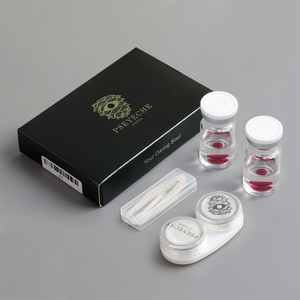
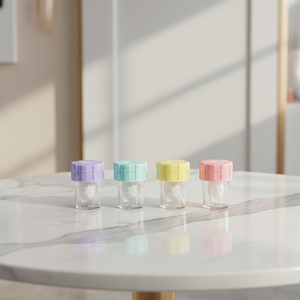
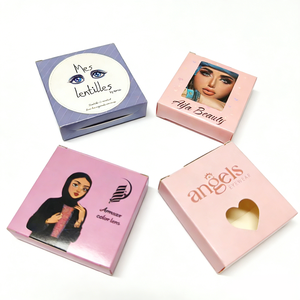
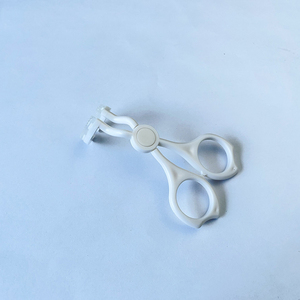
We offer complete turnkey OEM packaging solutions. In addition to sterile blister sealing, we manufacture custom paper display cases, multilingual compliance leaflets, multi-pack boxes, and branded accessory toolkits. Our regulatory team audits your artwork to verify correct diopter notation, batch numbering, CE marks, and warning symbols.
Ready to Scale Your Dark Brown Contact Lens Line?
Partner directly with China's leading soft lens manufacturer. Receive our comprehensive OEM export catalog, complete parameter specification sheets, factory audit dossiers, and physical sample kits.