Engineered Optical Collections & Circle Lenses
Explore our high-demand graphic diameters (14.0mm to 16.0mm), ultra-comfort edge profiles, and specialized cosmetic lines engineered for optimal visual acuity and cosmetic enlargement.
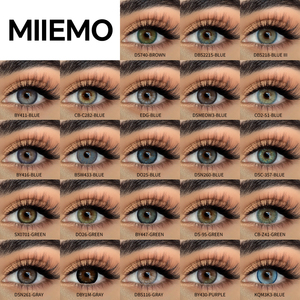
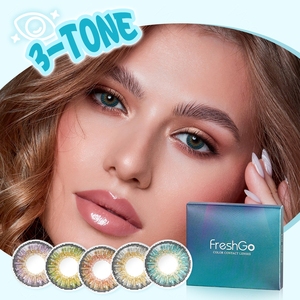
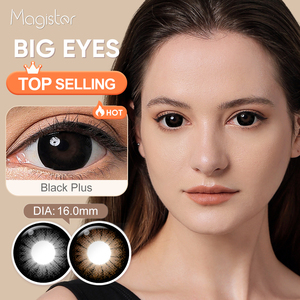
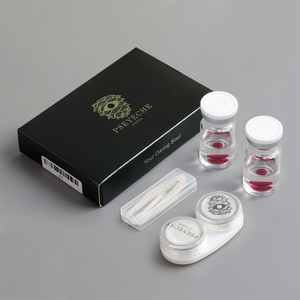
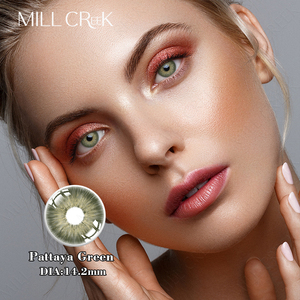
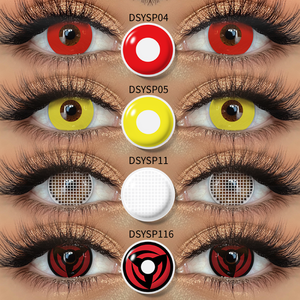
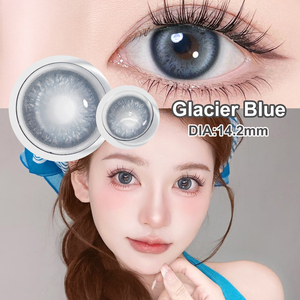
Engineering Excellence in Big-Eye & Enlarging Contact Lens Manufacturing
The global demand for cosmetic circle lenses and enlarging contact lenses (commonly engineered with graphic diameters ranging from 13.8mm to 15.5mm within total diameters up to 16.0mm) requires rigorous chemical engineering and optical physics. Unlike standard vision correction lenses, enlarging lenses introduce complex multi-tone limbal rings and peripheral ink dispersion designed to amplify the perceived iris boundary without compromising physiological homeostasis.
As China’s leading industrial manufacturer, our cleanroom infrastructure operates under strict medical-grade controls. The primary engineering hurdle in cosmetic enlarging lenses is maintaining corneal oxygen transmissibility (Dk/t index) while applying multi-layer chromatic matrices. Inferior market alternatives rely on surface tampon printing, which exposes corneal epithelia to abrasive micro-particles. Our production lines integrate proprietary Sandwich Reactive Casting Technology: the organic, biocompatible pigments are polymerized directly between dual layers of ultra-purified Poly-HEMA (2-hydroxyethyl methacrylate) or advanced Silicone Hydrogel matrices. This guarantees that pigment particles never achieve direct physical contact with eye tissue, preserving lubricity, tearing dynamics, and tear-film stability.
Why Global Distributors Choose Our Production Ecosystem
From nanoscale tooling fabrication to proprietary photopolymer inks, we maintain end-to-end sovereignty over critical manufacturing nodes.
In-House Mold Engineering
We eliminate external tooling dependencies by operating in-house CNC mold and micro-turning laboratories. This enables exact edge contouring, ultra-thin profiles down to 0.08mm center thickness, and rapid prototyping cycles for customized base curves (8.5mm to 8.7mm) and enlarged graphic diameters.
Proprietary Ink Formulations
Our in-house analytical chemistry lab synthesizes solvent-free, heavy-metal-compliant ophthalmic pigments. These biocompatible dye systems yield superior color depth across dark and light irises alike, resisting photo-bleaching during high-temperature autoclave sterilization cycles.
Total Sandwich Encapsulation
Every cosmetic enlarging lens features our zero-abrasion containment system. Micro-colorants are cast seamlessly between the inner and outer hydrogel membranes, maintaining a friction-free wet boundary with the inner palpebral conjunctiva and corneal surface.
Dynamic Pupil & Limbal Optics
Our design team creates subtle fade-out pupil margins that eliminate the restrictive "tunnel vision" effect common in poorly designed circular lenses. The outer limbal zone provides authentic ocular enlargement while adapting dynamically to changing lighting conditions.
Comprehensive Batch Audits
Every industrial production run is subjected to multi-point optical metrology: verifying base curve sphericity, refractive index, edge lift consistency, water equilibrium kinetics, and complete sterility validation under ISO 13485 quality protocols.
Full OEM/ODM Private Label Suite
From bespoke blister and vial sealing to localized regulatory compliance documentation, barcode integration, and turnkey primary packaging design, we offer global importers fully articulated retail-ready solutions.
Strategic Procurement & Technological Trends in Enlarging Lenses (2025–2030)
B2B optical buyers and cosmetic brand owners must prepare for major structural shifts in regional regulations and consumer ergonomics. Sourcing strategies are rapidly moving away from unbranded bulk commodities toward scientifically substantiated product lines:
1. Shift Toward High-Dk Silicone Hydrogel Formulations: While traditional 38%–42% water content HEMA maintains market share due to its structural stability and affordability, enterprise private labels are rapidly adopting third-generation silicone hydrogel for cosmetic series. Silicone hydrogel enables extended wearing periods by drastically increasing oxygen permeability, mitigating hypoxia-induced corneal swelling during full-day cosmetic wear.
2. Transition from Yearly to Daily & Monthly Replacement Cycles: Mature markets in North America, Western Europe, and East Asia are prioritizing daily disposables. Daily modalities reduce bio-film build-up, surface lipid deposition, and consumer maintenance failures. Our manufacturing plants have scaled ultra-clean high-speed blister packing machinery to service this growing demand.
3. Asymmetric & Multi-Tiered Graphic Diameters: Consumer aesthetic preferences have moved beyond simple monolithic enlargement. Emerging market demand targets natural-enlargement architectures: high-density micro-dot arrays, semi-translucent limbal borders, and layered 3-tone blends that adapt seamlessly to both naturally light and deep melanin irises.
4. Strict Regulatory Traceability: Global regulatory bodies (including the US FDA 510(k), European MDR 2017/745, and regional PMDA frameworks) are escalating cosmetic colored lenses from low-risk accessories to strictly monitored medical devices. Procuring from fully audited manufacturing plants with complete lot tracking and verified sterilization documentation is essential to safeguarding brand equity.
| Evaluation Parameter | Standard Market Specification | Our Advanced Manufacturing Capability | Strategic Advantage for Importers |
|---|---|---|---|
| Base Curve (BC) | 8.50 mm – 8.60 mm Fixed | 8.40 mm – 8.70 mm Precision Contoured | Eliminates corneal pinch; accommodates varied anatomical radii. |
| Total Diameter (DIA) | 14.0 mm – 14.5 mm | 14.0 mm – 16.0 mm (Enlarging Series) | Provides noticeable cosmetic doll-eye enlargement without peripheral blur. |
| Graphic Diameter (GDIA) | 13.0 mm – 13.4 mm | 13.6 mm – 15.2 mm Multi-Tone Printing | Maximized visual iris projection with hyper-natural limbal gradient. |
| Center Thickness | 0.09 mm – 0.12 mm | 0.06 mm – 0.08 mm Ultra-Slim Cast | Improves oxygen diffusion rates and initial tear-film equilibrium. |
| Water Content Index | 38% – 40% Standard | 38% – 45% Formulated Equilibrium | Prevents ocular moisture siphoning in low-humidity environments. |
| Pigment Structure | Surface Pad-Print / Single Film | Full Poly-HEMA Sandwich Encapsulation | 100% Medical Safety Zero epithelial abrasive contact. |
Frequently Asked Sourcing & Manufacturing Questions
Direct technical answers to assist optical distributors, e-commerce brand directors, and healthcare sourcing managers.
What makes enlarging contact lenses safe for long-term daily wear?
Can you manufacture exclusive, patented enlarging patterns for private label brands?
What are your standard Minimum Order Quantities (MOQs) for OEM packaging?
Which compliance documentation and quality certifications accompany overseas shipments?
What is the key difference between Total Diameter (DIA) and Graphic Diameter (GDIA)?
Ready to Scale Your Contact Lens Portfolio?
Initiate direct technical consultations with our optical engineering team. Receive production samples, private label quotes, and regulatory dossiers tailored to your regional market.
Inquire Now