Global Supply Intelligence
Engineering Hydrogel Excellence: The Definitive HEMA Contact Lens Guide
Poly-2-hydroxyethyl methacrylate (pHEMA) remains the global benchmark for soft cosmetic and therapeutic contact lenses. Chroma Lens Technology Co., Ltd. integrates vertical casting, high-precision cast molding, and molecular-level pigment sandwich matrices to deliver certified medical devices across 60+ countries.
10+
Years Engineering Optics
100%
In-House Cast Molding
38%-42%
Balanced Water Content
0%
Corneal Pigment Contact
Product Portfolio
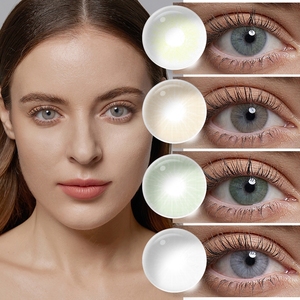
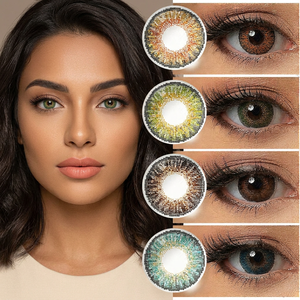
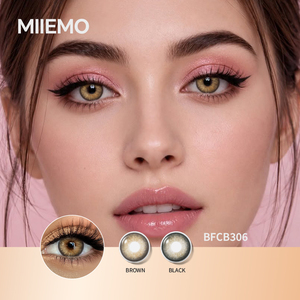
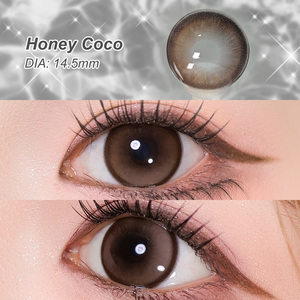
High-Performance HEMA Contact Lens Collections
Explore our wholesale-ready and fully customizable product lines engineered for optical clarity, hydration stability, and exceptional wear comfort.
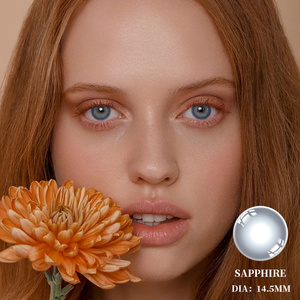
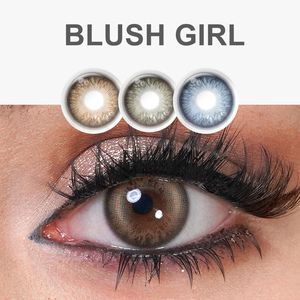
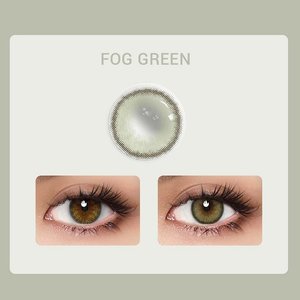
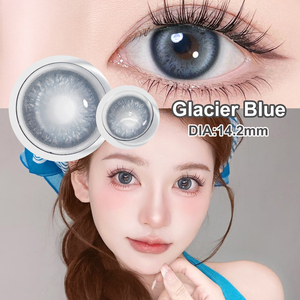
Manufacturing Rigor
Vertical Integration: The Chroma Lens Advantage
Why Tier-1 global distributors and optical brands transition from trading intermediaries to direct Chinese precision manufacturing partnerships.
In-House Mold Engineering
Optical consistency begins at the micrometer level. Chroma Lens operates an in-house tooling division producing ultra-precision stainless steel and polymer master molds. We control sagittal depth, base curve (8.5mm - 8.6mm), and smooth edge profiles without third-party delay.
Proprietary Non-Ionic Inks
Our internal chemical lab formulates biocompatible, medical-grade printing inks specifically tailored to pHEMA polymers. Resisting protein adsorption and optical fading, these pigments are locked completely within hydrogel layers, eliminating mechanical irritation.
Sandwich Encapsulation Matrix
We deploy a double-sided cast-molding encapsulation protocol. Pigment patterns sit strictly isolated between two clear layers of Poly-HEMA. Under microscopic analysis, 0% surface roughness is attributed to colorants, ensuring supreme corneal lubrication.
Verified Physical & Polymer Parameter Baselines
Standardized parameters for private label buyers. Custom baseline adjustments are supported through our in-house engineering team.
| Base Polymer | Poly-2-hydroxyethyl methacrylate (pHEMA) + NVP Options |
|---|---|
| Equilibrium Water Content | 38% - 42% (Optimal for Tear Film Preservation) |
| Standard Base Curve (BC) | 8.50mm – 8.60mm (Custom radii available) |
| Total Diameter (DIA) | 14.0mm, 14.2mm, 14.5mm (Up to 22.0mm Sclera) |
| Center Thickness (CT) | 0.07mm – 0.08mm (@ -3.00D) |
| Oxygen Permeability (Dk) | 8.5 – 10.5 × 10⁻¹¹ (cm²/s)·[ml O₂/(ml·mmHg)] |
| Refractive Index | 1.437 (Hydrated state) |
Clinical Osmolarity & Hydration Compliance
Unlike high-water hydrogels (>60%) which can extract moisture from the pre-corneal tear film in dry conditions, 38%-42% pHEMA preserves osmotic equilibrium. It provides consistent lubricity, high tensile resistance against tearing, and reliable dimensional stability across daily and monthly wear cycles.
Every single export lot undergoes automated visual inspection (AVI) for optical decentration, surface tears, and edging roughness before entering thermal sterilization (121°C autoclave cycle).
Request Full Quality Dossier
Market Outlook
Future Sourcing & Procurement Trends in HEMA Optics
How the global landscape for soft colored and therapeutic lenses is shifting—and how progressive brands can capture consumer market share.
TREND 01
Hyper-Natural Biomimetic Iris Textures
Solid edge rings and flat dot-matrix graphics are yielding to complex 3-tone micro-striae patterns. Buyers are seeking subtle limbal ring blending that enhances rather than masks natural iris pigmentation. Our CAD-driven micro-dot printing allows multi-gradient layering that mimics human corneal anatomy.
TREND 02
N-Vinylpyrrolidone (NVP) Hydrogel Blends
Procurement teams increasingly request HEMA+NVP copolymerization. Introducing NVP into the HEMA polymer matrix elevates water retention kinetics, mitigating contact lens-induced dry eye (CLIDE) symptoms without compromising the physical durability and dimensional stability that make pHEMA cost-efficient.
TREND 03
Shorter Disposable Cycles (Daily & Monthly)
While annual replacement remains a dominant volume driver in emerging regions, developed markets are shifting toward 1-Day and 1-Month modalities. Chroma Lens is expanding blister pack high-speed cleanroom packing lines to facilitate sterile, cost-competitive single-use beauty contacts.
TREND 04
Integrated HEV & UV400 Protection
Cosmetic lenses are evolving into protective wellness products. Future sourcing specifications demand built-in monomeric UV absorbing agents capable of blocking >90% of UVA and >99% of UVB radiation. This integrated molecular filtration protects internal eye structures without altering tinted pattern fidelity.
TREND 05
Cleanroom Automation & AVI Inspection
Manual slit-lamp checking is being replaced across Chinese factories by 360-degree machine vision cameras capable of detecting edge microrips and pigment offset below 5 microns. Importers are requiring automated batch certification to streamline custom clearance under updated MDR standards.
TREND 06
Sustainable Foil-Blister Packaging
Packaging innovation is moving toward reduced polypropylene (PP) plastic mass, biodegradable solution carriers, and recyclable foil lidding. Forward-thinking private label brands are leveraging eco-conscious outer secondary cartons to align with global ESG retail requirements.
Procurement Guidance
Frequently Asked Questions for HEMA Lens Importers
Clear, direct answers regarding minimum orders, international regulatory documentation, material specifications, and private label timelines.
What makes HEMA the standard choice over Silicone Hydrogel for colored contacts?
HEMA provides exceptional wettability, superior mechanical flexibility, and proven compatibility with pad-printing and sandwich encapsulation inks. Unlike Silicone Hydrogel, which often has higher surface hydrophobicity and requires expensive surface treatment to prevent lipid binding, HEMA maintains stable wettability at a significantly lower manufacturing cost, making it ideal for cosmetic distribution.
Can Chroma Lens formulate exclusive iris patterns and unique color shades?
Yes. Because we design and engineer our own optical molds and formulate our printing inks in our domestic laboratory, our R&D team can develop proprietary iris geometries, limbal ring intensities, and custom chromatic combinations from your sketches or reference mood boards without third-party IP reliance.
Which quality documentation and export compliance files do you furnish?
We supply comprehensive technical dossiers including Certificates of Analysis (COA) per batch, ISO 13485 quality management audit copies, CE compliance dossiers, biocompatibility cytotoxicity reports, packaging burst-strength test records, and accelerated aging stability verification files for medical device registration.
What are the standard Minimum Order Quantities (MOQ) for OEM/ODM orders?
Standard catalog items with in-stock packaging can be ordered with flexible trial MOQs starting at 50 to 100 pairs per SKU. For full OEM private label orders involving custom branded blister foil, bespoke color boxes, and distinct base curve parameters, standard MOQs typically begin at 500 to 1,000 pairs per power/colorway.
How is corneal safety guaranteed with vibrant, high-pigment lenses?
Our lenses utilize a verified sandwich encapsulation protocol. The ink formulation is layered strictly between two optical layers of HEMA polymer. This prevents the pigment particles from coming into direct physical contact with ocular tissue or the inner palpebral conjunctiva, completely eliminating mechanical abrasion risk.
What corrective power ranges are available across your colored lines?
We manufacture Plano (0.00D) lenses for purely cosmetic/fashion use, as well as a full spectrum of spherical corrective powers from -1.00D to -8.00D (in 0.25D increments from -1.00 to -5.00, and 0.50D increments from -5.00 to -8.00). Custom base curve adjustments can be provided for large-scale institutional contracts.
Initiate Your OEM Contact Lens Partnership Today
Whether you require fast-turnaround wholesale supply of proven high-demand collections or an exclusive private-label product line engineered from mold to packaging, our optical engineering team is at your disposal.
Get Catalog