Engineering Excellence in Large-Diameter Color Optics (14.2mm - 22.0mm)
For international eye-care distributors, private cosmetic brands, theatrical makeup suppliers, and retail optical chains, procuring large diameter contact lenses directly from China requires balancing physiological ocular tolerance with cutting-edge chromatic reproduction. This definitive whitepaper examines casting innovations, pigment safety matrices, regulatory documentation, and strategic procurement frameworks governing modern ophthalmic manufacturing.
Featured Large Diameter & Specialty Cosmetic Product Lines
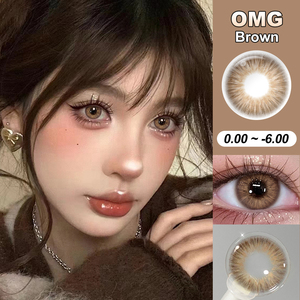
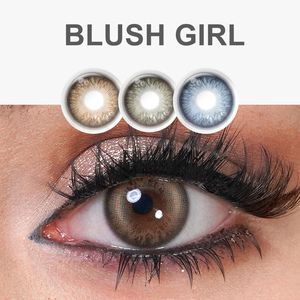
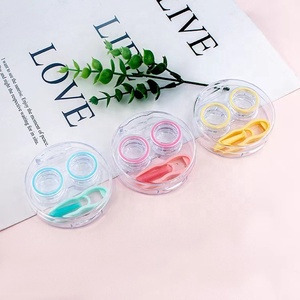
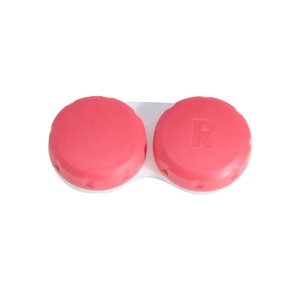
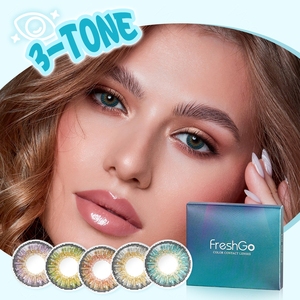
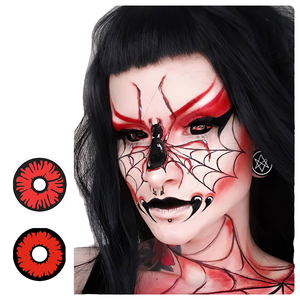
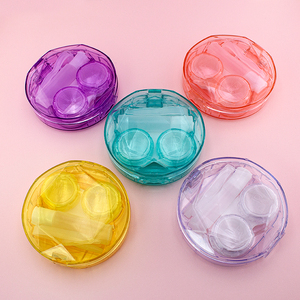
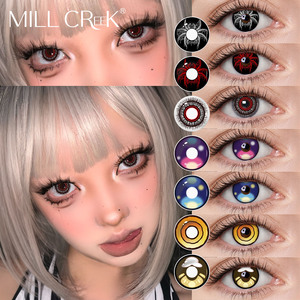
Explore our primary manufacturing outputs spanning everyday large iris enhancement (14.2mm–14.5mm), vivid multi-tone limbal rings, full 22.0mm scleral prosthetic lenses, and OEM medical-grade peripheral accessories.
Why Global Brands Consolidate Large Diameter OEM with Chroma Lens
Unlike trading intermediaries and contract packagers, Chroma Lens Technology Co., Ltd. operates a vertically integrated production campus spanning raw monomer synthesis, optical tooling, custom pigment suspension, and automated cleanroom packaging.
1. Independent Mold & Tooling Metallurgy
Large diameter lenses (14.2mm–15.0mm and 22.0mm sclerals) demand exact sagittal depth calculation to prevent edge fluting or limbal constriction. We engineer our ultra-precision steel and copper molds in-house using nano-lathe diamond tooling, eliminating third-party retooling delays and guaranteeing batch consistency within ±0.01mm.
2. Proprietary Medical-Grade Pigment Inks
Color brilliance must never compromise cellular biocompatibility. Our in-house chemical laboratories formulate proprietary reactive dyes and organic pigment pastes that match exact Pantone references while passing rigorous cytotoxicity (ISO 10993-5) and ocular irritation testing (ISO 10993-10).
3. Zero-Contact Sandwich Encapsulation
Pigment detachment is the leading failure point in cosmetic optics. Our three-layer cast molding technology traps the color layer completely between two inert hydrophilic polymer films. Pigments never make direct contact with either the cornea or palpebral conjunctiva, preventing dye migration and corneal abrasions.
4. Original Pattern CAD Development
To avoid market saturation and intellectual property disputes, our optical styling division designs original iris geometries: from multi-tone hyper-natural transition borders to high-saturation cosplay patterns, radial limbal enlargements, and custom anime motifs designed specifically for dark Asian and Latin ocular substrates.
5. Class 100,000 Cleanroom Automation
Our sterilization lines utilize medical autoclaves calibrated at 121°C for 20 minutes under saturated steam pressure. Automated vision inspection cameras audit 100% of lenses for optical concentricity, perimeter tear profiles, water equilibrium retention, and particulate containment before blister or glass vial crimping.
6. Turnkey Export & Regulatory Compliance
Exporting to the EU, Middle East, North America, Southeast Asia, or Latin America requires distinct dossier frameworks. We furnish full Technical Files, Stability Testing data (accelerated and real-time shelf life up to 5 years), sterilization validation reports, and localized multilingual secondary packaging artwork.
Information Gain: The Sagittal Height Equation in Large Diameter Contacts
Standard soft contact lenses measure between 14.0mm and 14.2mm in Total Diameter (TD) with a Base Curve (BC) of 8.6mm. When scaling to “Circle Lens” dimensions of 14.5mm–15.0mm or theatrical 22.0mm sclerals, standard corneal curvature models fail. Chroma Lens employs an aspheric posterior transition zone that stabilizes tears underneath the lens, ensuring continuous tear exchange across the limbus and eliminating the ocular hypoxia commonly experienced with substandard generic circle lenses.
Product Sourcing Trends Reshaping the Global Contact Lens Industry
Analyzing consumer purchasing telemetry, clinical optometry shifts, and cross-border e-commerce algorithms reveals four macro procurement trends that wholesale buyers must prepare for over the next 3 to 5 years.
1. Accelerated Migration to Silicone Hydrogel (SiHy)
Historically, cosmetic colored contact lenses relied strictly on 2-HEMA (hydroxyethyl methacrylate) polymers with oxygen transmissibility (Dk/t) hovering around 15–25 Fatt units. Global regulatory bodies and modern consumers now demand higher oxygen flux. Sourcing pipelines are transitioning toward third-generation silicone hydrogel monomers delivering Dk/t values above 65, drastically reducing conjunctival hyperaemia during extended daily wear of large 14.5mm lenses.
2. Daily Disposable ("1-Day") Dominance in Premium Beauty
While yearly and monthly modalities remain core volume drivers in theatrical, cosplay, and emerging regional markets due to consumer affordability, the premium lifestyle and beauty sectors in North America, Japan, Europe, and urban China are dominated by daily disposables. Buyers are shifting procurement allocations toward automated 10-pack and 30-pack daily blister production lines to reduce consumer compliance risks.
3. Hyper-Natural Limbal Blending & Asymmetric Prints
The "artificial doll eye" look is evolving. Modern generation-Z and millennial demographics demand nuanced eye enhancement. Factories capable of executing micro-dot screen matrices with stochastic dot placement (irregular pigment distribution that mimics real human stroma collagen fibrils) are capturing 70% of new private-label OEM contracts worldwide.
4. Tightened Cross-Border MDR & FDA Scrutiny
Cosmetic lenses are classified as Medical Devices worldwide, regardless of whether they correct vision (zero power / plano) or feature refractive correction. Sourcing managers are consolidating supplier rosters, divesting from small sub-tier workshop producers in favor of authenticated factories with verified ISO 13485:2016 management systems and comprehensive clinical evaluation reports.
Technical Parameter Comparison for Importers
Evaluate critical optical, biometric, and chemical specifications across our primary manufacturing formats before establishing SKU forecasts and placing bulk trial orders.
| Series Category | Total Diameter (DIA) | Base Curve (BC) | Water Content | Polymer Base | Pigment Method | Primary Target Channel |
|---|---|---|---|---|---|---|
| Natural Cosmetic (Blush / 3-Tone) | 14.0mm – 14.2mm | 8.5mm – 8.6mm | 38% – 42% | PolyHEMA / NVP Hydrogel | Sandwich Encapsulation | Daily / Monthly Beauty |
| Large Diameter Enhancer (OMG Series) | 14.5mm – 14.8mm | 8.6mm – 8.7mm | 38% – 40% | Hydrophilic PolyHEMA | Dual-Layer Cast Sandwich | Fashion & Circle Eye |
| Theatrical Cosplay & Crazy Lens | 14.5mm – 15.0mm | 8.6mm | 40% | High-Density PolyHEMA | Opaque Reactive Print | Halloween / Anime / Retail |
| Full Sclera Prosthetic (Pseyeche) | 22.0mm | 9.0mm (Aspheric Vault) | 38% | Cross-linked Soft Polymer | Full-Coverage Micro-Coat | SFX / Film / Subculture |
| Optical Clear Prescription Core | 14.0mm – 14.2mm | 8.4mm – 8.6mm | 42% – 58% | Hydrogel / Silicone Hydrogel | N/A (Optical Monomer) | Optometric Clinics |
The Importer's 5-Stage Verification Playbook
How experienced procurement directors audit contact lens factories in China to ensure frictionless customs clearance and zero consumer liability.
Stage 1: Raw Material DMF Check
Verify that the factory utilizes monomers with Drug Master Files (DMF) or registered medical biocompatibility dossiers. Inquire about the source of HEMA, EGDMA (crosslinking agent), and initiator compounds to guarantee residual unpolymerized monomer levels stay strictly under 0.1%.
Stage 2: Rubbing Test (Color Bleed)
Conduct standard mechanical abrasion rub tests. A cotton swab saturated with 70% isopropyl alcohol or sterile physiological saline must be vigorously rubbed over both anterior and posterior lens surfaces for 30 cycles. Any color transfer onto the swab indicates exposed surface printing and grounds for immediate batch rejection.
Stage 3: Optical Power & Sagittal Height
Use a focal lensometer with a wet cell chamber to confirm back vertex power across diopter spreads from 0.00D down to -10.00D. Check sagittal height and base curve with a projection optical comparator to verify true stability on cornea without lateral sliding.
Stage 4: Packaging Seal Integrity
Inspect polypropylene blisters and foil lids for burst pressure strength under dye penetration vacuum leak tests (ASTM F2096). Verify glass vials for aluminum crimp tension, stopper elasticity, and absence of glass delamination flakes following 121°C autoclave cycles.
Stage 5: Traceability & Lot Serialization
Every secondary box and primary blister must bear a readable GS1-standard 2D DataMatrix code, LOT number, manufacturing date, expiry date, sterilization indicator, and medical device classification marks aligned with national health agency directives.
Stage 6: Cold-Chain & Humidity Logistics
Hydrophilic soft lenses must avoid extreme freeze-thaw cycles during transit. Ensure your freight forwarder provides temperature-monitored shipping, especially during sea freight crossings or northern winter air corridors, preventing buffer solution separation.
Frequently Asked B2B Procurement Questions
Clear, unambiguous answers addressing Minimum Order Quantities (MOQ), OEM custom pattern development, shelf stability, and international registration assistance.
What is your Minimum Order Quantity (MOQ) for custom private label orders versus in-stock catalog SKUs?
For in-stock catalog designs (such as Magister, Freshgo, and Haipurecon collections), our wholesale MOQ starts at just 50 pairs per style with mixed power diopters allowed. For exclusive OEM custom pattern production where new printing plates and custom CMYK ink matrices are synthesized, our standard production run starts at 500 to 1,000 pairs per colorway. Fully custom packaging boxes and foil blister film require an initial run of 5,000 units, which can be stored in our warehouse for phased call-off shipments.
How does Chroma Lens guarantee that large diameter contact lenses remain comfortable on eye?
Large diameter lenses (14.5mm to 15.0mm) increase coverage over the limbal stem cell zone. To prevent compression and localized hypoxia, our CAD lathe engineers design an intelligent edge lift profile with an aspheric back surface. This promotes steady tear circulation during natural blinking cycles. Furthermore, our balanced 40% water content material retains moisture throughout a 12-hour wear period without drawing water out of the wearer's precorneal tear film.
Can Chroma Lens formulate custom iris designs based on our private brand’s mood board or concept art?
Yes. We have an in-house design studio that translates graphic concept art, cosplay characters, or natural eye photography into high-resolution micro-pad printing steel plates (clichés). Because we develop our molds and printing inks internally, we can transition from digital vector vectorization to cast prototype samples within 15 to 20 working days.
What regulatory certificates and test reports do you supply for customs clearance?
Chroma Lens provides comprehensive documentation packages including ISO 13485:2016 Quality Management Certification, Medical Device CE certificates, Certificates of Analysis (COA) per batch, Sterility Validation Reports (ISO 11137 / ISO 17665), Accelerated Aging & 5-Year Shelf Life Stability Test Reports, and Biocompatibility Safety Dossiers (Cytotoxicity, Ocular Irritation, and Systemic Toxicity).
Are prescription diopters (myopia powers) available for large diameter and cosplay lines?
Yes. While decorative lenses are frequently ordered in Plano (0.00 power), our factory produces corrective powers ranging from -1.00D to -8.00D in 0.25D increments, and up to -10.00D in 0.50D increments. Custom toric powers (astigmatism correction) can also be manufactured via specialized mold sets upon custom request.
What packaging formats do you offer for export orders?
We supply two core packaging systems: (1) Standard pharmaceutical-grade glass vials sealed with butyl rubber stoppers and tamper-evident flip-off aluminum caps, ideal for yearly cosplay and long-term collections; and (2) Automated polypropylene thermoformed blister packs sealed with medical foil membranes, packaged in branded 2-pack, 10-pack, or 30-pack folding cartons with serialized labels and localized user manuals.
Accelerate Your Contact Lens Supply Chain Today
Whether you are planning an exclusive 14.5mm cosmetic line, scaling seasonal 22mm sclera distribution, or seeking a compliant OEM/ODM manufacturer with in-house mold and ink capabilities, our engineering team is ready to review your specifications.