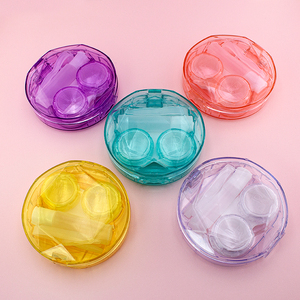
Curated Portfolio
High-Performance Six Month & Cosmetic Contact Lens Formulations
Engineered for high oxygen transmissibility, biocompatible tear retention, and dynamic edge designs. Explore our primary OEM/ODM export lines below.
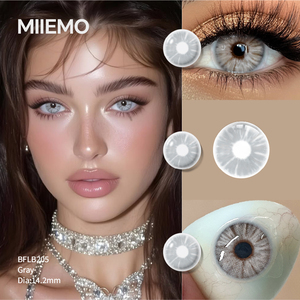
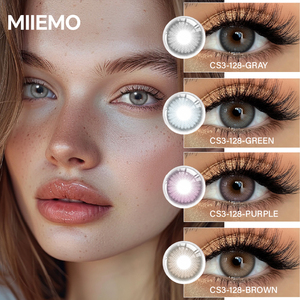
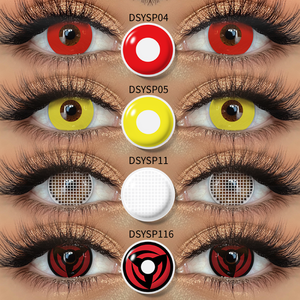
Comprehensive Strategic Sourcing: Why Six-Month Replacement Modalities Dominate Global Distribution
In the international contact lens landscape, replacement modality represents a critical strategic pivot for brand positioning, unit margins, and consumer compliance. While single-use daily disposables dominate mature metropolitan healthcare chains, the six-month (half-year) colored contact lens modality remains the absolute workhorse across high-growth cosmetic sectors, Latin America, Southeast Asia, Eastern Europe, and the Middle East. It resolves a systemic economic problem: balancing premium consumer aesthetic durability with highly viable consumer price elasticity.
Unlike 1-day or 30-day lenses that prioritize rapid replacement at the expense of cumulative unit cost, the six-month lens delivers maximum return on investment for end-users while offering B2B distributors sustainable reorder velocity. However, manufacturing six-month colored lenses requires vastly superior mechanical resilience, higher tear-film deposit resistance, and exceptional pigment encapsulation integrity compared to short-term disposable variants. As global buyers look toward Chinese manufacturing ecosystems, understanding polymer architecture, mold micron tolerances, and biocompatible color fixation is essential for maintaining supply chain superiority.
1. Polymer Architecture: HEMA, NVP, and Hydrogel Mechanics
The standard composition for a bi-annual cosmetic lens is rooted in Poly-2-hydroxyethyl methacrylate (pHEMA) copolymers, frequently augmented with N-vinylpyrrolidone (NVP) or Methacrylic Acid (MAA) to achieve optimal equilibrium water content (typically 38% to 42%). In an extended 180-day wearing cycle, lower to mid-range water content (38%-40%) is often technically superior to high-water content hydrogels. High-water hydrogels tend to dehydrate rapidly in conditioned indoor environments, drawing moisture out of the pre-corneal tear film and causing late-day ocular discomfort and corneal desiccation.
Furthermore, six-month lenses demand elevated modulus elasticity (tensile strength) to withstand daily cleaning regimens, friction disinfection, and repeated mechanical manipulation without micro-tearing or edge deformation. Chinese facilities engineered for medical-grade optics utilize cast-molding polymerization ovens regulated under nitrogen blankets, preventing ambient oxygen inhibition and ensuring uniform cross-linking density throughout the three-dimensional polymer network.
2. Color Entrapment: Micro-Encapsulation & Sandwich Printing Architecture
A non-negotiable benchmark in global procurement is biocompatibility—specifically, preventing direct contact between synthetic pigments and corneal or conjunctival epithelial cells. Substandard colored lens manufacturers print inks directly onto the outer anterior or posterior surface of the lens via tampo printing, which risks pigment leaching, abrasive friction, and giant papillary conjunctivitis (GPC).
Leading China factories, including Chroma Lens OEM operations, operate proprietary sandwich encapsulation technology. Under this manufacturing methodology, the primary color layer (consisting of non-toxic medical pigments like iron oxides, titanium dioxide, and phthalocyanine blue) is embedded entirely between two polymerized layers of optical hydrogel. The colored matrix is locked within the core matrix; surface profilometry verifies that both the anterior and posterior surface finishes maintain atomic flatness, retaining friction-free lubricity throughout the 180-day life cycle.
| Technical Parameter | Export Specification Standard | Clinical & Procurement Relevance |
|---|---|---|
| Base Curve (BC) | 8.50 mm – 8.70 mm (±0.02 mm tolerance) | Dictates sagittal depth and corneal alignment; avoids mechanical pinching or edge lift. |
| Total Diameter (DIA) | 14.0 mm – 14.5 mm (±0.05 mm) | Enables natural cosmetic coverage while maintaining adequate limbal clearance and tear exchange. |
| Center Thickness (CT) | 0.06 mm – 0.08 mm (@ -3.00D) | Engineered for optimized Dk/t oxygen transmission without compromising handling stiffness. |
| Water Content | 38% – 42% | Balances surface wettability with prolonged mechanical hydration retention over 6 months. |
| Power Range (Spherical) | 0.00D (Plano) up to -8.00D | Addresses both cosmetic enhancement and refractive vision correction markets worldwide. |
| Sterilization Protocol | Moist Heat Autoclave (121°C, >20 mins) | Guarantees Sterility Assurance Level (SAL) 10−6; validated under ISO 11137 & ISO 17665. |
3. Global Procurement Trends: The Next 3–5 Years
The colored contact lens sector is experiencing an unprecedented structural convergence between high-fashion cosmetic aesthetics and ophthalmic clinical hygiene. Buyers navigating wholesale contracts must align their inventories with emerging structural trends:
- Hybrid Silicone Hydrogel Penetration: While conventional HEMA continues to hold the bulk of six-month orders due to superior processing ease and ink bonding properties, next-generation fluoro-silicone macro-monomers are entering the multi-month replacement space, boosting base oxygen transmissibility (Dk) above 80 Fatt units.
- Hyper-Realistic Iris Biomimicry: Consumer demand has pivoted away from stark, opaque cartoon rings toward multidimensional 3-tone and 4-tone dot matrices. Factories with in-house color research teams utilize sub-micron micro-dot printing, mimicking natural human stroma architecture, radial furrows, and pupillary collarettes.
- Regulatory Hardening & Supply Chain Traceability: Regulatory agencies (including US FDA, EU MDR 2017/745, and regional health ministries) are categorizing cosmetic contacts strictly as medical devices. Importers are divesting from small, unaccredited workshops in favor of Tier-1 Chinese automated factories equipped with automated Cleanroom Class 100,000 facilities, automated optical inspection (AOI) machines, and batch-traceable raw materials.
Enterprise Superiority
End-to-End Manufacturing Excellence: Chroma Lens Factory Edge
Unlike trading entities or secondary assemblers, Chroma Lens Technology Co., Ltd. controls every critical vector of lens synthesis, tooling, and aesthetic formulation under one centralized industrial roof.
In-House Mold Development
By engineering ultra-precision casting molds on high-speed CNC diamond-turning machines, we control base curve consistency and edge profiles down to the sub-micron level, ensuring immediate sampling speed and zero tooling bottlenecks.
Proprietary Inks & Pigment Lab
Our dedicated chemical synthesis laboratory develops proprietary medical-grade printing inks with customized spectral transmission, exceptional thermal stability during autoclaving, and high refractive indices for vivid contrast on dark irises.
Original Pattern Design Library
Avoid commoditization with our expansive IP portfolio. Our creative design unit models over 200 bespoke annual patterns spanning natural, cosplay, theatrical, and toric designs, protecting your brand from generic market saturation.
Rigorous Quality & Cleanroom System
Every single manufactured production lot is governed by ISO 13485 protocols. From automated dimensional vision systems to bioburden assessment and cytotoxicity testing, our QA ecosystem protects distributors from recall liabilities.
Professional Buyer’s Verification Guide: Evaluating China Lens Manufacturers
For procurement directors, optical supply chains, and private-label brand owners, auditing overseas contact lens factories requires verification beyond polished catalogs. Contact lenses are invasive Class II or Class III medical devices subject to strict legal scrutiny. The following audit checklist should govern every request for proposal (RFP):
- Examine Sterilization Validation Dossiers: Confirm whether the facility utilizes validated ethylene oxide (EtO) cycles or moist heat steam autoclaving. Verify biological indicator challenge logs and lethality values (F0 ≥ 15 minutes) to ensure complete sterility assurance across every blister or glass vial batch.
- Audit the Pigment Fixation Methodology: Require microscopic cross-section imaging of the lens structure. If pigment particles reside on the external envelope, the lens fails contemporary international safety standards for extended wear. Insist on true embedded sandwich matrix manufacturing.
- Assess Parameter Reproducibility: Request statistical process control (SPC) data for Base Curve and Power accuracy. For a six-month lens, poor diopter or sagittal consistency leads to high end-user return rates, poor optical centration, and dry eye sensations.
- Review Packaging Integrity Testing: Half-year lenses are routinely shipped in glass vials with butyl rubber stoppers and aluminum tear-off caps, or deep-well polypropylene blisters. Ensure the factory provides real-time and accelerated shelf-life stability reports confirming package seal integrity over 3 to 5 years.
Knowledge Base
Frequently Asked Questions: Sourcing Six Month Colored Lenses
Essential technical, commercial, and operational insights for global B2B procurement managers.
What makes a six-month colored lens chemically distinct from a 1-day lens?
A six-month lens is synthesized with a higher cross-linking density and slightly lower equilibrium water content (approx. 38%-40% HEMA) to optimize tensile strength, resist mechanical tearing, and prevent protein and lipid deposit adhesion during extended daily cleaning cycles. Daily disposables use thinner, softer hydrogels engineered only for a single 12-hour cycle.
Can Chroma Lens formulate exclusive colors and custom iris prints for my brand?
Yes. Because we operate our own mold tooling center and proprietary pigment blending facilities, we can convert your digital design concepts, pantone references, or hand-drawn motifs into functional photolithographic printing plates within 10 to 14 business days, guaranteeing unique market exclusivity.
What primary packaging configurations are available for export?
We supply six-month colored contact lenses in medical-grade borosilicate glass vials (ideal for traditional distribution, optical practices, and clinical inspection) as well as high-barrier aluminum foil blister packs housed in custom-branded retail boxes, paper sleeves, or multipacks.
What certifications are provided for customs clearance and medical licensing?
We supply full technical files including ISO 13485 Quality Management System certificates, Certificates of Free Sale (CFS), CE conformity documentation, Certificate of Analysis (COA) per production lot, biocompatibility reports (ISO 10993), and sterilization validation dossiers.
What is the typical Minimum Order Quantity (MOQ) for OEM/ODM private labels?
Standard catalog shade batches typically begin at low MOQ thresholds (50 to 100 pairs per power step for existing styles). Fully custom private label projects with bespoke packaging and unique printed iris patterns generally require an initial order of 1,000 to 5,000 pairs depending on the complexity of the diopter spread.
How does your factory ensure the embedded color doesn't irritate the cornea?
Our sandwich printing methodology ensures that medical-grade cosmetic dyes are totally encapsulated between two transparent polymer layers. Pigment is never exposed on the anterior or posterior surfaces, completely eliminating frictional irritation and pigment contact with corneal tissues.
Scale Your Contact Lens Brand with Factory-Direct Engineering
Whether you require turn-key OEM private labeling, custom mold development, or bulk wholesale supply of certified six-month colored contact lenses, Chroma Lens delivers dependable technical precision and competitive factory pricing.