Natural Enhancer
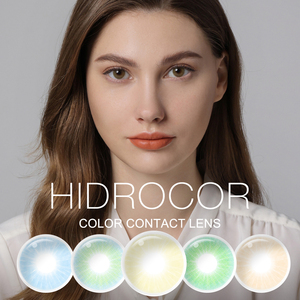
Explore standard OEM/ODM reference models engineered with proprietary color embedding, optimized base curves, and certified bio-compatible materials.
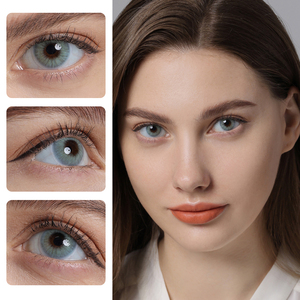

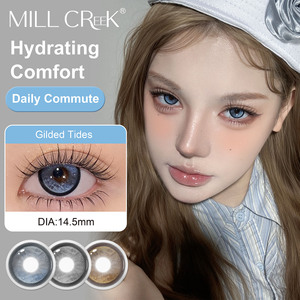
For medical device importers and aesthetic brand owners, shifting regulatory boundaries, evolving materials science, and digitalized supply chains demand informed procurement decisions.
While early cosmetic markets favored oversized 14.5mm+ doll-eye formats, current global consumer preference decisively centers on 14.2mm overall diameter (DIA). Clinical studies indicate 14.2mm provides optimal corneal clearance, preventing edge-lift, reducing mechanical friction on the conjunctiva, and ensuring adequate tear fluid exchange during 8 to 12 hours of wear.
Global regulatory agencies, including the US FDA and EU MDR, increasingly scrutinize pigment migration. Sourcing strategies now strictly disqualify traditional surface pad printing. Modern suppliers must demonstrate sandwich encapsulation (embedding dye safely between two micro-thin hydrogel matrices) to eliminate direct pigment-to-cornea exposure completely.
Market volume is dynamically transitioning from yearly vials to monthly blisters and daily disposable daily-pack formats. Although annual lenses yield strong margin profiles in developing territories, established markets require hydrogel formulations with high equilibrium water content and anti-protein deposition properties suited for shorter replacement intervals.
Our complete control over the production ecosystem delivers substantial competitive advantages in cost, lead times, and biometric quality.
Unlike contract packagers relying on standard commercial tooling, our tooling division manufactures proprietary high-precision optical molds. This guarantees base curve tolerances within ±0.02mm and prevents the visual aberration commonly caused by worn third-party tooling.
We synthesize certified, biocompatible organic pigments in our specialized optics laboratory. Our inks demonstrate superior light fastness, remain completely insoluble under thermal autoclave cycles, and maintain distinct 3-tone iris depth across high optical density ranges.
Our creative graphics team utilizes anatomical human eye scans to build layered radial textures. Whether creating hyper-realistic limbal transitions for daily corporate wear or fully opaque anime cosplay effects, pattern accuracy is replicated exactly across high-volume production lots.
Every single contact lens undergoes high-resolution Automated Optical Inspection (AOI) checking for edge tears, surface pits, micro-bubbles, and pigment dispersion irregularities before proceeding to cleanroom packaging and final steam sterilization.
Technical parameters engineered to maintain ocular equilibrium while maximizing retail aesthetic impact.
| Evaluation Parameter | Industry Standard Norm | Chroma Lens Manufacturing Tolerance | Clinical / Procurement Significance |
|---|---|---|---|
| Nominal Diameter (DIA) | 14.0mm – 14.5mm (±0.2mm) | 14.2mm (±0.08mm) | Universal limbal ring framing; prevents movement irritation. |
| Base Curve (BC) | 8.4mm – 8.8mm (±0.1mm) | 8.50mm / 8.60mm (±0.02mm) | Accommodates >93% of Asian and Caucasian corneal sagittal depths. |
| Center Thickness (CT) | 0.08mm – 0.12mm | 0.075mm – 0.080mm | Ultra-thin profile maximizes oxygen transmissibility (Dk/t). |
| Water Content (WC) | 38% – 55% | 38% (Yearly) / 42% (Monthly/Daily) | Resists evaporation; diminishes end-of-day contact dry-eye symptoms. |
| Color Layer Protection | Single-side print or encapsulated | Cast-Molding Micro-Sandwich | Pigment never touches the corneal epithelium or tarsal plate. |
| Available Power Spectrum | Plano only or limited steps | 0.00D to -8.00D (0.25D/0.50D increments) | Seamlessly converts cosmetic shoppers to corrective vision clients. |
Understanding the engineering leap from classic color contacts to intelligent ophthalmic medical devices.
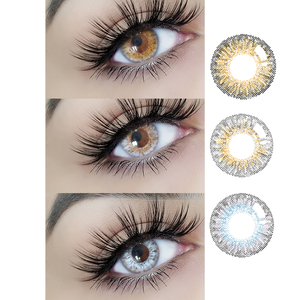
The next generation of natural contact lenses avoids solid dot matrices. Through stochastic micro-dot pattern dispersion, iris patterns match natural trabecular networks. The transition across brown, amber, and hazel eye backgrounds appears authentic even under direct 4K macro photography.
Modern consumers expect dual utility. Leading OEM specifications incorporate functional monomer additives directly into the hydrogel mixture, absorbing up to 90% of UVA and 99% of UVB rays, and reducing high-energy visible (HEV) screen blue light without tint distortion.
Medical blister packaging is experiencing rapid green reform. Factory supply chains are transitioning from heavy, wasteful secondary boxes to lightweight, recyclable aluminum foils and biodegradable polymer shell configurations that lower logistics costs and satisfy corporate ESG mandates.
Authoritative answers addressing regulatory compliance, sample prototyping, packaging, and custom mold lead times.
Because our mold shop and pigment mixing labs are completely in-house, standard artwork proofing takes 5–7 business days. Fully hydrated cast-molded physical evaluation samples are completed within 14–21 days, saving 4 to 6 weeks compared to standard brokerages.
A 14.2mm lens strikes an exact balance between aesthetic pupil enlargement and physiological safety. It covers the cornea without excessive overhang over the limbal stem cell zone, preserving normal metabolic gas exchange and lubricating tear film circulation.
We supply buyers with complete Batch Certificates of Analysis (COA), ISO 13485 audit dossiers, biocompatibility cytotox evaluation reports, accelerated aging stability records, and sterilization validation documentation suitable for global health authority filings.
Yes. Wholesale orders can blend plano (0.00) aesthetic units alongside corrective diopters (-1.00 to -8.00D). We assist brands with predictive myopia curve modeling to ensure production volume precisely mirrors clinical vision correction demand.
Partner with an integrated manufacturer offering certified cleanroom production, custom pattern design, rapid mold tooling, and compliant private label packaging.
Get Catalog