10+
Years Manufacturing Excellence
100%
In-House Cast Molding Precision
3-Layer
Patented Color-Lock Encapsulation
65+
Destination Import Regions
Factory Wholesale Portfolio
High-Performance Contact Lenses & Optical Devices
Engineered to international biocompatibility standards, spanning everyday aesthetic enhancement, dramatic theatrical formulations, and advanced maintenance devices.
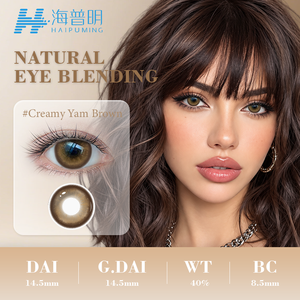
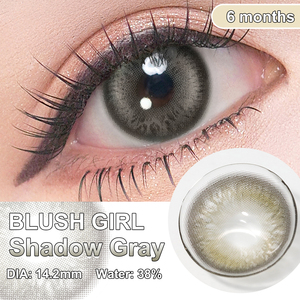
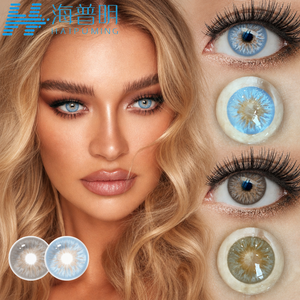
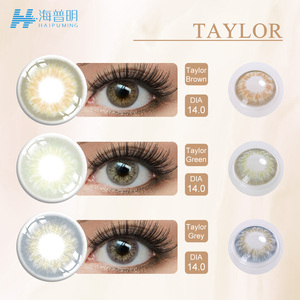
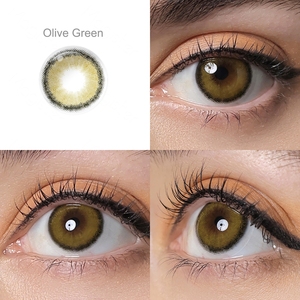
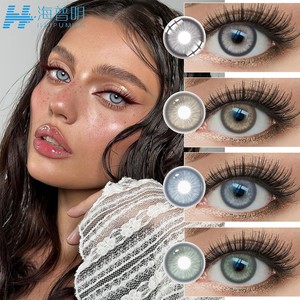
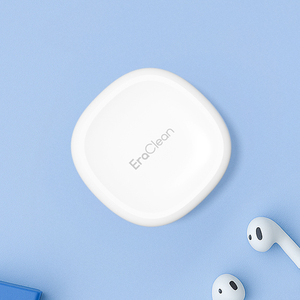
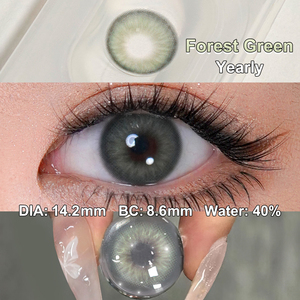
Engineered Precision
Why Tier-1 Importers Partner With Chroma Lens
By owning every link in the value chain—from tool design to polymer synthesis—we eliminate third-party delays, stabilize unit costs, and assure uncompromising clinical purity.
In-House Mold Engineering
Unlike factories relying on shared off-the-shelf tooling, our proprietary CNC tooling facility designs customized optical molds down to micron tolerances, guaranteeing stable sagittal depth and zero edge burrs.
Proprietary Biocompatible Inks
Color consistency begins in the chemistry lab. Our dedicated ink formulation ensures unmatched spectral vividness, exceptional light-fastness, and zero pigment migration across accelerated shelf-life testing.
Sandwich Color-Lock Embedding
Pigment layers are molecularly sealed between two micro-thin layers of hydrogel material. Cornea and palpebral conjunctiva tissues never touch print pigments, maximizing ocular safety and prolonged comfort.
Stringent Multi-Tier Inspection
Each production run undergoes refractive index mapping, edge profile laser interferometry, and high-temperature autoclave sterilization validation, ensuring consistent lot-to-lot bio-burden clearance.
Technical Whitepaper
Comparative Analysis of Color Contact Lens Manufacturing Methodologies
Understanding the fundamental engineering differences between legacy surface printing and advanced sandwich cast molding is vital for brand defense and regulatory acceptance.
| Evaluation Parameter | Legacy Surface Pad Printing | Traditional Spin-Casting | Advanced Semi-Cast / Fully-Cast Sandwich Tech |
|---|---|---|---|
| Pigment Enclosure | Pigment printed on rear or front surface; subject to mechanical wear. | Pigment dispersed into liquid monomer; variable depth control. | Hermetically sealed between hydrogel membranes. |
| Corneal Oxygen Permeability (Dk/t) | Pigment barrier restricts transmissible gas diffusion. | Inconsistent crosslinking can create hypoxic hot-spots. | Micro-porous matrix channels sustain high oxygen diffusion. |
| Edge Configuration & Comfort | Often irregular, leading to foreign-body sensation. | Prone to feathered edge tapering with variable fit. | Sub-micron rounded bevel for dynamic tear exchange. |
| Pattern Fidelity & Realism | Flat dot patterns, prone to optical distortion. | Limited radial detail; chromatic aberrations common. | Multi-tone 3D iris stratification matching human morphology. |
| Regulatory Approval Compliance | Faces stringent barrier tests in regulated jurisdictions. | Moderate compliance risk due to thickness variance. | Meets strict global biocompatibility and extraction standards. |
Procurement Intelligence
Future Sourcing Trends in the Global Cosmetic Contact Lens Sector
Actionable market insights for category directors, institutional buyers, and private label vision enterprises preparing for 2025–2030 demand cycles.
1. Shift Toward Daily Disposables
While yearly disposable HEMA lenses maintain solid demand in emerging markets due to cost efficiency, Tier-1 regions show double-digit annual migration toward daily disposable modalities, driven by hygiene compliance and consumer convenience.
2. High-Dk Silicone Hydrogel Formulations
Cosmetic lenses are breaking free from historical oxygen transmission limits. Next-generation hybrid silicone hydrogel matrices offer prolonged wearing times without neovascularization risks, bridging cosmetic demand with clinical optical standards.
3. Digital Traceability & MDR Rigor
With global enforcement of strict medical device directives, importers demand validated technical files, complete biocompatibility dossiers, and serial batch level verification to safeguard their distribution licenses against regulatory seizures.
4. Holistic Eye Care Ecosystems
Leading retailers increasingly cross-merchandise colored contacts with high-frequency ultrasonic cleaning hardware and targeted ocular hygiene products, driving multi-tiered basket sizes and extending end-user retention.
Procurement Knowledge Base
Frequently Asked Sourcing & Manufacturing Questions
Critical operational answers for supply chain directors, brand founders, and wholesale purchasing teams.
What is the standard lead time for bespoke OEM lens pattern development?
Because Chroma Lens operates its own precision mold engineering workshop and color ink formulation lab, custom iris sample prototypes can be cast, hydrated, and ready for buyer evaluation within 10 to 15 business days, accelerating time-to-market compared to standard contract packagers.
How does your factory ensure pigment stability and ocular safety?
We deploy full sandwich cast-molding encapsulation. Pigment particles are enclosed between two medical-grade poly-HEMA layers, eliminating any direct contact with the ocular surface. Every lot undergoes cytotoxic extraction testing to guarantee no bio-chemical leaching.
What documentation accompanies OEM/ODM export consignments?
All bulk orders include Certificates of Analysis (COA), ISO 13485 compliant lot inspection logs, sterilization indicator certificates, and parameter uniformity data sheets covering base curve, diameter, center thickness, and diopter accuracy.
Can we specify custom packaging, power spreads, and replacement intervals?
Yes. We support blister foil customization, glass vial formats, secondary carton labeling, and barcoding for automated warehousing. Power configurations can range from plano (0.00D) to high corrective myopic powers (-0.50D to -10.00D) across daily, monthly, and yearly cycles.
Ready to Scale Your Color Contact Lens Line?
Consult with our optical engineers to discuss custom iris pattern development, mold design, or volume wholesale contract manufacturing pricing.
Get a Quote