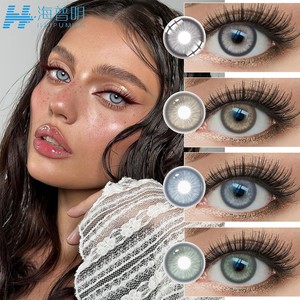
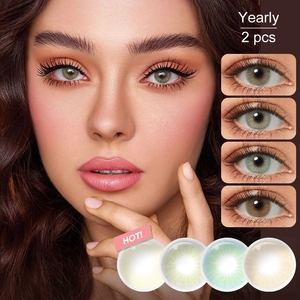
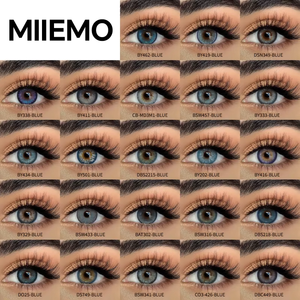
Engineered for international ophthalmic distributors, optical retail chains, beauty conglomerates, and private-label e-commerce brands. Complete ISO 13485 and CE compliance.
In contrast to trading intermediaries and toll assembly packagers, Chroma Lens retains full operational sovereignty over the critical physics and chemistry of colored lens manufacturing.
We design, mill, and validate injection cast-molds in our own tooling centers. This eliminates external optical tooling deviations and guarantees base curve repeatability down to ±0.02 mm.
Our pigment chemists formulate non-ionic, pharmaceutical-grade polymer colorants internally. This guarantees intense color saturation without monomer migration, leaching, or optical haze.
Using advanced micro-encapsulation, colored layers are permanently locked between two clear hydrogel polymer envelopes, preventing direct pigment friction against corneal epithelium or palpebral conjunctiva.
We provide full analytical documentation: physical parameter validations, ISO 10993 cytotoxicity assays, accelerated real-time stability metrics, and customized packaging label adaptation for FDA, CE, and MHRA clearances.
A rigorous breakdown of physical and chemical parameters required by medical device procurement officers, optical optometrists, and regulatory compliance auditors.
| Parameter Dimension | Standard Commercial Specification | Chroma Lens Manufacturing Tolerance | Clinical / Functional Significance |
|---|---|---|---|
| Hydrogel Material Class | PolyHema (Group I Low Water) / Etafilcon A | Pharmaceutical High-Purity Monomer Blend | Resists proteinaceous deposits, tear lipids, and environmental debris; optimal dimensional stability. |
| Hydration (Water Content) | 38% – 42% (or 55% High Hydration) | Nominal Target ± 1.5% | 38% water minimizes end-of-day eye drying in arid air-conditioned environments; prevents corneal dehydration. |
| Total Diameter (DIA) | 14.00 mm, 14.20 mm, 14.50 mm (Up to 22.0mm Sclera) | ± 0.05 mm (Laser Optical Micrometer) | Determines anatomical corneal coverage, limbal transition, and cosmetic iris magnification dynamics. |
| Base Curve Radius (B.C.) | 8.50 mm, 8.60 mm, 8.70 mm | ± 0.02 mm (Spherometer / Non-contact) | Crucial for tear meniscus exchange, appropriate post-blink lens movement (0.2–0.4mm), and mechanical centration. |
| Center Thickness (C.T.) | 0.06 mm – 0.08 mm (@ -3.00D) | ± 0.005 mm | Optimizes oxygen permeability (Dk/t) while providing structural integrity to prevent edge curl and inversion. |
| Optical Power Range (Spherical) | Plano (0.00D) to -8.00D (0.25D/0.50D steps) | ± 0.12D conforming to ISO 18369 | Crisp focal geometry, aberration-free aspheric optics reducing spherical aberrations under mesopic conditions. |
| Color Printing Technology | Pad Printing / Inkjet Micro-Dot Embedment | Full Polymer Sandwich Encapsulation | Zero surface pigment contact. Color layers sealed completely inside hydrogel core matrix. |
| Sterilization Assurance Level | SAL 10⁻⁶ Steam Moist Heat Autoclave | Automated High-Pressure Steam (121°C / 30 min) | Meets global pharmacopeia standards for sterile ophthalmic medical devices; complete bacterial/viral inactivation. |
Market intelligence for commercial brand directors and procurement executives navigating supply chain evolution, consumer behavioral shifts, and regulatory tightening worldwide.
While yearly lenses remain strong in cost-conscious volume distribution channels, global demand across North America, Europe, and East Asia is rapidly rotating toward 1-Day and 1-Month modalities. Driven by consumer focus on ocular hygiene and reduced contact lens-induced dry eye (CLIDE), B2B buyers must structure inventory toward multi-pack blister configurations with fast-turn supply agreements.
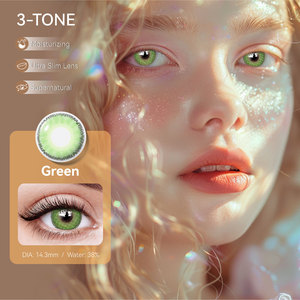
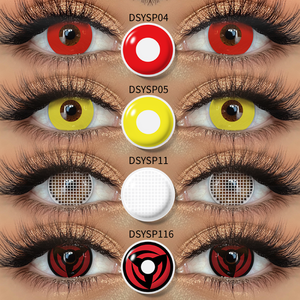
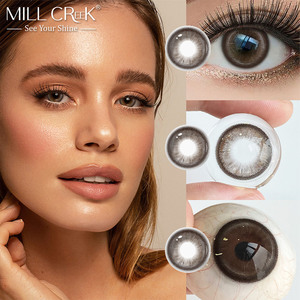
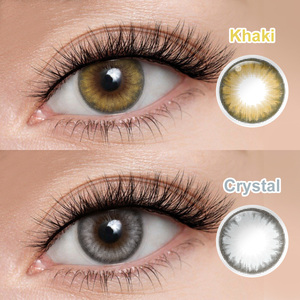
Flat, opaque cosmetic lenses are being supplanted by multidimensional biomimetic designs. Modern aesthetics demand lenses that simulate the human collarette, trabecular meshwork, and contraction furrows. Utilizing 3-tone and 4-tone micro-dot matrix printing with variable transparency gradients, today's top-selling SKUs allow the wearer’s natural eye color to fuse organically with the cosmetic pigment.
Customs authorities worldwide (US FDA 21 CFR Part 820 / QMSR, EU MDR 2017/745, and UKCA) are enforcing stricter validation criteria for cosmetic eye products. Tier-1 buyers are actively ditching non-certified white-label traders in favor of vertically integrated manufacturers holding authenticated technical documentation, biocompatibility testing records, and transparent supply routes.
An inside look at our engineering pipeline: How Chroma Lens integrates material science, optical ray tracing, and surface chemistry to redefine cosmetic contact lens comfort.
Traditional PolyHema polymers provide high flexibility but moderate oxygen permeability (Dk ~8.5–10). Chroma Lens R&D is pioneering cosmetic silicone hydrogel formulations yielding Dk/t values over 80. By overcoming pigment bonding challenges on fluorosilicone surfaces, we achieve high oxygen delivery, extended daily wearing times (12+ hours), and dramatically lower corneal hypoxia rates.
Cosmetic lenses are evolving from purely aesthetic fashion accessories into multifunctional protective devices. We incorporate copolymerized UV-absorbing monomers and high-energy visible (HEV) blue-blocking spectral filters into the lens substrate. This blocks over 95% of UVA and 99% of UVB rays while maintaining true color transmission and visual contrast acuity.
Modern cosmetic lenses must deliver crisp vision correction alongside striking color transformations. Using ultra-precision CNC lathe machining and freeform mold fabrication, our aspheric posterior and anterior surfaces compensate for natural corneal aberrations. This gives wearers crisp, high-definition visual acuity in dim light, reducing glare, halos, and flare artifacts.
Clear, direct answers regarding minimum order quantities, private labeling, mold customization, regulatory files, and global shipping logistics.
Yes, absolutely. We offer full-cycle custom pattern engineering. Our in-house digital art and optical tooling team can translate your mood board, Pantone swatches, or competitor benchmark samples into proprietary production artwork. Because we produce our own precision cast-molds and formulate printing inks in-house, we can create pilot production samples in as little as 10 to 15 business days without relying on outside subcontractors.
For catalog styles packaged under your custom private label (customized blister foil and outer branded paper boxes), our MOQ starts at 500 to 1,000 pairs per color design, with flexibility across prescription powers. For fully bespoke, custom-molded iris patterns requiring new pad-printing tooling plates, the standard MOQ typically ranges from 3,000 to 5,000 pairs per design. We also maintain stock catalog SKUs available for low-volume distributor trials.
Our sandwich printing (encapsulation) process isolates the cosmetic color layer inside the hydrogel polymer. The outer surface and the inner base curve are cast with transparent, biocompatible medical hydrogel, locking all pigments inside. This means colorants never touch the corneal epithelium or palpebral conjunctiva, completely eliminating mechanical abrasion, pigment flaking, and chemical leaching.
We supply complete compliance dossiers for our global buyers, including ISO 13485:2016 Quality Management certification, CE Mark certificates, Certificate of Free Sale (CFS), comprehensive Certificate of Analysis (COA) per production lot, accelerated real-time shelf life stability studies, and ISO 10993 biological evaluation reports (cytotoxicity, ocular irritation, systemic toxicity). We also assist clients with target-market registrations.
We manufacture Daily (1-Day), Monthly (30-Day), Quarterly (3-Month), and Yearly (12-Month) disposable contact lenses. Primary sterile packaging options include polypropylene medical blister packs sealed with medical-grade foil laminate, as well as classic USP Type I borosilicate glass vials with rubber septums and tamper-evident aluminum tear-off seals. Secondary packaging covers branded luxury cartons, multi-pack retail boxes, and eco-friendly sugarcane fiber shells.
Every production batch undergoes strict multi-stage quality control. First, automated optical inspection (AOI) cameras scan 100% of lenses for pattern alignment, pinhole voids, pigment splatter, and edge defects. Second, random statistical lot samples are verified for base curve, center thickness, diameter, refractive power, and water content in strict compliance with ISO 18369. Finally, sealed products undergo moist-heat autoclave cycle validation at SAL 10⁻⁶.
For existing catalog designs in stock packaging, orders dispatch within 3 to 7 business days. For customized OEM private label orders involving custom packaging printing and specific power distribution curves, production turnaround is typically 25 to 35 business days following final artwork sign-off and deposit confirmation. Repeat replenishment runs operate on fast-track schedules of approximately 20 business days.
Connect with our technical engineering group today. Share your target retail market, projected volumes, preferred replacement cycles, and custom packaging requirements for an immediate quote and sampling evaluation.
Contact Us