Anime Series
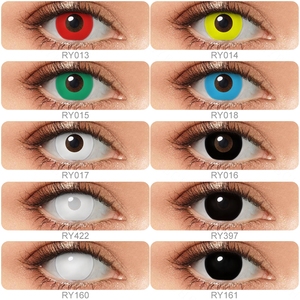
Precision-engineered anime iris lines, multi-tone Halloween lenses, and high-opacity cosmetic hydrogels manufactured to rigorous optical standards.
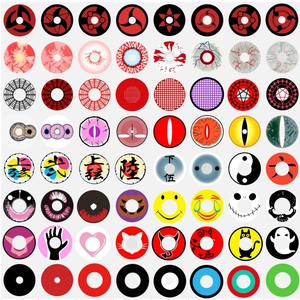
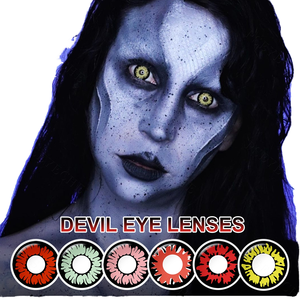
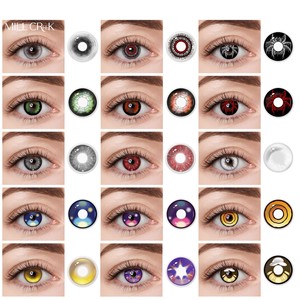
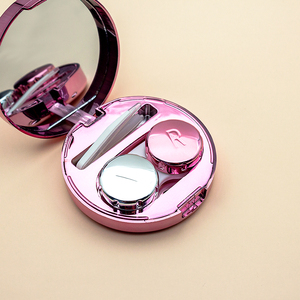
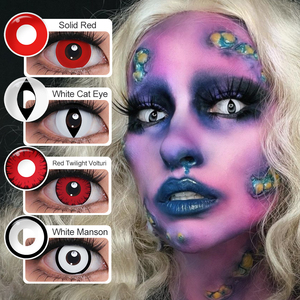
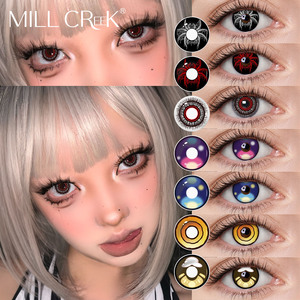
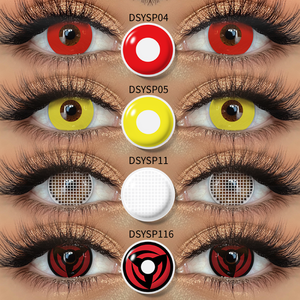
The manufacturing of theatrical, anime, and cosplay colored contact lenses is one of the most demanding sub-disciplines within medical device engineering. Unlike ordinary clear corrective lenses, theatrical color matrices incorporate dense micro-pigment layers to achieve vivid opacity over natural dark brown or black irises. For institutional buyers, optical distributors, and cross-border brand owners, sourcing from a certified manufacturer that owns the full vertical lifecycle—from precision tooling mold development to biocompatible color ink formulation—is the baseline for global market compliance.
Critical Safety Standard: Chroma Lens strictly enforces a multi-layer cast molding encapsulation architecture. Organic medical color pigments are sealed inside the hydrogel matrix, ensuring zero physical contact with the corneal endothelium and conjunctiva while retaining full oxygen permeability.
Modern cosplay lens formulations utilize optimized poly-HEMA (Hydroxyethyl Methacrylate) and N-Vinylpyrrolidone (NVP) copolymers. This guarantees tear film exchange and high hydration equilibrium (38% to 42% nominal water content), preventing optical distortion, edge flaking, and hypoxic stress during long-duration cosplay photoshoots, theatrical conventions, and Halloween events.
Direct from our state-of-the-art facility: eliminating intermediaries to deliver consistent mold tolerances, stable pigment fidelity, and streamlined international regulatory clearance.
We do not rely on public, third-party mold brokers. Our dedicated CNC tooling workshop machines proprietary steel and aluminum master cores, ensuring base curve (BC 8.5–8.7mm) and diameter (DIA 14.0–14.5mm) precision with micron-level tolerances.
Our internal chemistry lab synthesizes biocompatible, high-chroma printing inks. Engineered specifically for high covering power on darker ethnic eyes, our inks prevent color bleeding and resist autoclave heat degradation.
Avoid intellectual property conflicts. Our visual designers create authentic, high-impact iris patterns—spanning Sharingan iterations, cybernetic patterns, fantasy dolly tones, and dramatic horror themes tailored for western and Asian demographics.
Operating inside cleanroom manufacturing suites, each production lot undergoes optical power verification, moisture hydration testing, tensile stretch resistance analysis, and terminal steam sterilization before dispatch.
How progressive wholesalers, optical retailers, and e-commerce platforms are future-proofing their supply chains for 2025–2030.
While traditional HEMA accounts for majority of annual cosplay lenses, procurement demands are shifting rapidly toward third-generation silicone hydrogel compounds. Brands are requesting higher oxygen transmissibility (Dk/t > 45) to satisfy rigorous daily-wear optical licensing across North America and the EU.
Impact: Reduces user dryness complaints during extended convention wear and strengthens retail pharmacy placement.
Historically dominated by 1-year glass vial packaging, European and North American consumers now prioritize daily disposable blister packs for hygiene. Sourcing teams are shifting bulk volumes toward 10-pack and 30-pack daily disposables for seasonal peaks like Comic-Con and Halloween.
Procurement Strategy: Consolidating orders early in Q2 for autumn delivery to avoid seasonal factory overcapacity.
Border authorities and customs agencies worldwide have heightened inspection protocols on theatrical lenses. Importers are bypassing drop-shipping aggregators in favor of documented OEM factories capable of furnishing full technical files and biocompatibility assays.
Advantage: Eliminates seizure risks, accelerates customs processing, and ensures consumer protection.
Before placing volume OEM/ODM commitments, procurement officers can evaluate factory capabilities against standard engineering specifications:
| Technical Metric | OEM Standard Cosmetic Lens | Chroma Lens Theatrical Specification | Clinical / Procurement Significance |
|---|---|---|---|
| Base Curve (BC) | 8.50mm – 8.60mm | 8.50mm – 8.70mm (Custom Available) | Prevents lens tightness and corneal abrasion. |
| Diameter (DIA) | 14.0mm – 14.2mm | 14.0mm – 14.5mm (Enlarging Cosplay) | Achieves dramatic anime pupil and dolly eye enlargements. |
| Water Content | 38% Hydrogel | 40% – 42% Poly-HEMA/NVP Complex | Maintains oxygen hydration without dehydrating native tear film. |
| Center Thickness | 0.09mm – 0.12mm | 0.08mm Ultra-Thin Precision | Increases wearer comfort and natural blink tolerance. |
| Pigment Enclosure | Surface Pad Print (High Risk) | Double-Sandwich Polymer Encapsulation | Pigment never touches ocular tissues; 100% rub-resistant. |
| Diopter Range | Plano Only (0.00) | 0.00 to -8.00 (Myopia Corrective Available) | Accommodates cosplayers requiring simultaneous refractive correction. |
| Packaging Options | Vial Only | Medical Blister Packs or Sealed Glass Vials | Supports both economical wholesale and modern retail shelves. |
How experienced brand aggregators evaluate factory capabilities before signing international supply contracts.
Verify that the factory utilizes verified optical-grade HEMA, EGDMA cross-linkers, and medical pigments that are certified non-cytotoxic and biocompatible according to international eye health standards.
Ensure your supplier supplies comprehensive specification sheets, including edge profile geometry, oxygen permeability measurements, water evaporation profiles, and aging stability reports.
Examine physical seal integrity, blister peel resistance, labeling compliance in your destination jurisdiction, and test wearable stability on human dark irises to evaluate opacity performance.
Direct answers to common technical, logistics, and private label OEM questions for our engineering team.
Partner directly with an authentic manufacturer. Request our complete wholesale catalog, technical whitepaper, and evaluation samples today.
Inquire Now