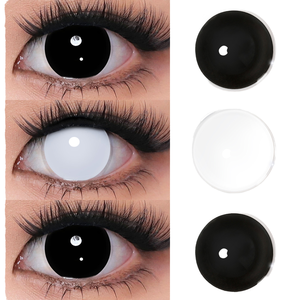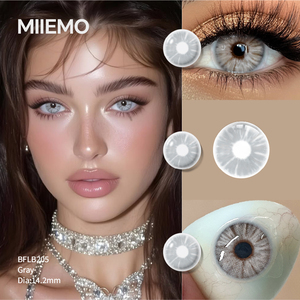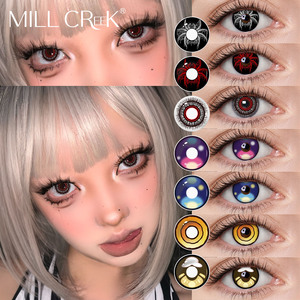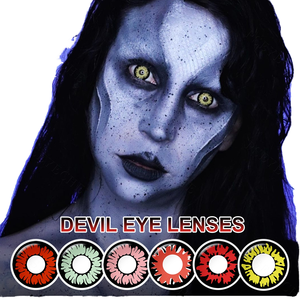
Direct manufacturer-certified production lines spanning hyper-realistic natural iris tones, ISO 13485-compliant semi-annual casts, and high-opacity specialty cosmetic lenses tailored for global wholesale procurement.
While standard trading vendors broker mass-market catalog runs, an authoritative natural colored contact lenses manufacturer exercises full sovereign ownership over the physical tooling, biological raw materials, and precision ink formulation.
We eliminate sub-contracted mold tooling deviations. By producing optical master molds internally with micron-level CNC machining, our factory achieves an exact base curve (8.5mm to 8.7mm) and edge taper consistency that directly prevents corneal staining and limbal compression.
Generic industrial colorants degrade upon autoclaving. Chroma Lens develops proprietary non-leaching, biocompatible cosmetic pigments in our internal photochemistry laboratory. Our organic reactive dyes chemically bond with polymer matrix chains without releasing toxic aromatic amines.
Color safety is non-negotiable. Our patented dual-cladding sandwich process embeds the microscopic chromatic patterns entirely within the internal HEMA/hydrogel layer. Pigments never directly touch the human corneal endothelium or palpebral conjunctiva.
From dynamic equilibrium water content verification (38%–42%) to real-time laser diffraction optical center alignment, every finished unit undergoes 100% automated optical inspection (AOI) to eliminate edge burrs, surface vacuoles, and off-axis printing artifacts.
In modern ophthalmic optometry, sourcing natural colored contact lenses demands an analytical balance between visual aesthetics and corneal physiology. The human cornea has no vascular supply; it absorbs ambient oxygen directly dissolved in tears. Inferior cosmetic contact lens suppliers produce products by surface-printing pigments on cheap lathe-cut blanks. This disastrous practice blocks oxygen passage and risks microbial keratitis through pigment shearing.
As an authoritative manufacturer, Chroma Lens engineers lenses using cast-molding synthesis with hydrophilic Poly-HEMA (2-hydroxyethyl methacrylate) and advanced silicone hydrogel polymers. By utilizing intralamellar micro-encapsulation, we isolate color granules within a 0.015mm intermediate structural zone. This technique safeguards a central optical clear zone of 3.8mm to 4.2mm, preventing peripheral field obstruction or scotoma in low-light environments when the wearer’s pupil dilates.
Furthermore, our advanced edge contouring system implements an asynchronous beveled peripheral curve. This enables dynamic tear pumping with each eyelid blink, ensuring continuous metabolic exchange between the posterior lens surface and the corneal epithelium. Importers and pharmacy chains can confidently provide end-users with all-day wearability free from ocular dryness, red-eye syndrome, or persistent giant papillary conjunctivitis (GPC).
Strategic analysis for brand directors, optometry buying syndicates, and cosmetic importers planning multi-year inventory and private label collections.
The global retail market is decisively migrating from yearly vials toward daily (1-Day) and monthly disposable blister formats. Hygiene-conscious Gen-Z and millennial consumers prioritize high oxygen transmissibility (Dk/t > 25) combined with moisturizing lubricating agents like Hyaluronic Acid (HA) in the saline blister bath.
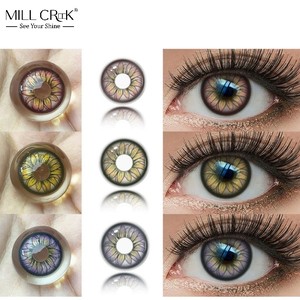
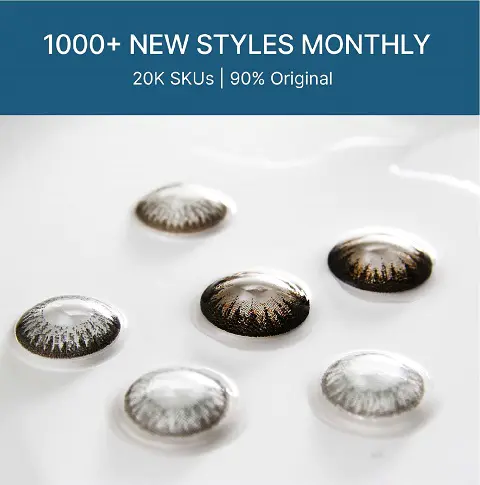
Unnatural, opaque block-color printing is obsolete. Modern buyers demand 3-tone and 4-tone feathering techniques that replicate natural stromal crypts, pupillary margins, and collarette gradients. Patterns must seamlessly blend against dark brown irises without looking artificial under bright natural sunlight.
Global customs authorities (EU MDR 2017/745, US FDA 510(k), Saudi SFDA, and Southeast Asian NMPA equivalencies) have classified cosmetic colored lenses as Class IIa/IIb medical devices. Sourcing exclusively from audited, ISO 13485-certified manufacturers is now mandatory to avoid seizure at import ports.
Key technical parameters every commercial buyer must mandate in OEM/ODM production agreements and purchase orders.
| Critical Parameter | Standard Clinical Range | Manufacturing Standard (Chroma Lens) | Procurement Risk / Commercial Impact |
|---|---|---|---|
| Base Curve (BC) | 8.4 mm – 8.8 mm | 8.50 mm ± 0.05 mm (Controlled by steel tool insert) | Improper BC causes lens tight syndrome, corneal hypoxia, or lens de-centering. |
| Total Diameter (DIA) | 14.0 mm – 14.5 mm | 14.0 mm / 14.2 mm / 14.5 mm standard options | Mismatch causes limbal irritation or inadequate natural iris coverage. |
| Center Thickness (CT) | 0.06 mm – 0.10 mm | 0.08 mm @ -3.00D (Optimized for balance) | Excessive thickness lowers Dk/t; ultra-thin lenses tear during handling. |
| Water Content (Hydration) | 38% – 58% | 38% – 42% (Hydrophilic equilibrium polymer) | Low-water prevents rapid evaporation & tear-stealing in dry office spaces. |
| Color Encapsulation | Sandwich / Dual-cladding | 100% Intralamellar Micro-sandwich Sealed | Surface printing allows friction rub-off, causing chemical keratitis. |
| Sterilization Method | Moist Heat Autoclave | 121°C Overpressure Steam, F0 ≥ 15 mins | Substandard sterilization leads to Acanthamoeba or Pseudomonas infections. |
Clear, direct answers regarding customized iris design, regulatory compliance, Minimum Order Quantities (MOQ), and contract manufacturing workflows.
Initiate your OEM/ODM private label collection or request our complete medical-grade contact lens product catalog, sample rings, and wholesale price sheets directly from our engineering team.