Global Procurement Executive Briefing: The Plano Cosmetic Contact Lens Market
The international market for cosmetic contact lenses—commonly referred to in clinical and commercial trade as non-prescription colored contact lenses (plano 0.00D power)—has transformed from a niche novelty into a core driver of modern optical retail, prestige beauty, theatrical production, and social commerce ecosystems. However, because contact lenses remain classified as Class IIa or Class IIb medical devices across major sovereign regulatory frameworks (including the European Union Medical Device Regulation 2017/745 MDR, US FDA 21 CFR Part 860, and China NMPA), brand managers and optical procurement professionals cannot approach cosmetic lens sourcing as ordinary consumer fast-moving goods.
Successful private label and wholesale programs hinge upon choosing verified manufacturing partners who exercise total vertical control over polymer formulation, proprietary pigment chemistry, precision mold tooling, and closed-loop sterile validation. Chroma Lens Technology Co., Ltd. provides comprehensive OEM/ODM solutions engineered to balance vivid physiological iris aesthetics with uncompromising ocular micro-environmental safety, elevated oxygen transmissibility (Dk/t), and friction-free edge geometry.
Verified Catalog: Commercial & Private-Label Plano Lens Formulations
Explore our laboratory-certified cosmetic, natural-enhancement, theatrical, and optical care formulations available for custom brand packaging, contract bottling, and container-scale wholesale.
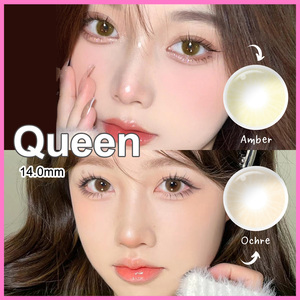
Free Shipping Magister Colored Contact Lenses Custoom Brand 2PCs Amber Ochre Topaz Prescription Lens HIDROCOR Color Contacts
- Polymer: PolyHEMA (Hydrophilic)
- Diameter / BC: 14.0mm / 8.5mm - 8.6mm
- Water Content: 38% - 40%
- Power Available: Plano (0.00) up to -8.00D
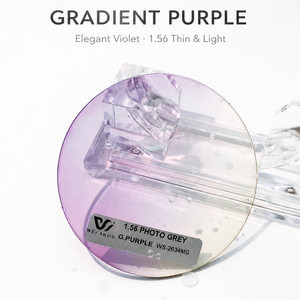
1.56 Dyed Gradient Photochromic UV400 Two-piece Lens Purple Color Changing Turns Gray Outdoors Fashion Eyewear Wholesale
- Substrate: 1.56 High Index Polymer
- Photochromic: Spun Gradient Active Matrix
- UV Attenuation: 100% UV400 Protection
- Form Factor: Bespoke Eyewear Blanks
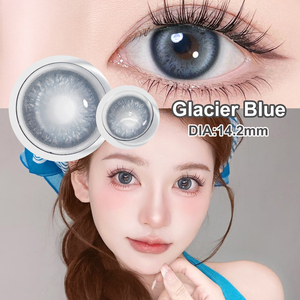
Free Shipping Magister Colored Contacts Blush 14.2mm Soft HEMA Cosmetic Contact Lenses Big Eyes Makeup Wholesale Eye Color Lens
- Design: Soft Blush Limbal Halo
- Diameter / BC: 14.2mm / 8.6mm
- Replacement: Monthly / Yearly Disposable
- Encapsulation: Bi-layer Sandwich Print
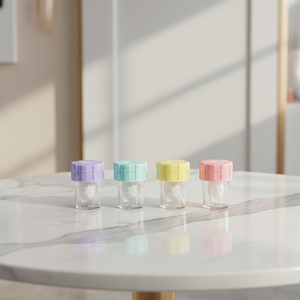
High Transparency Clean Without Worry Positive and Negative Cleaning Four Colors Available
- Resin: Medical-grade Polycarbonate
- Function: Dual-Chamber Deposition Washer
- Variants: 4 Pastel Tinted Housings
- Compliance: BPA-Free / Cytotoxic Safe
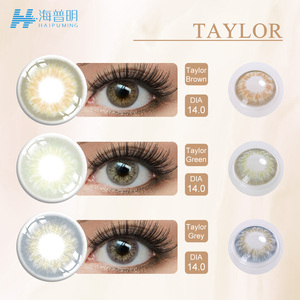
Natural Contact Lenses Contact Lenses Prescription Colored Contact Lenses Wholesale Soft Contact Lenses Bulk 14.0mm Custom Label
- Optic Type: Natural Melanin Blending
- Diameter: 14.0mm Compact Iris Profile
- Packaging: Individual Sterilized Blisters
- MOQ: Custom Label from 500 Pairs
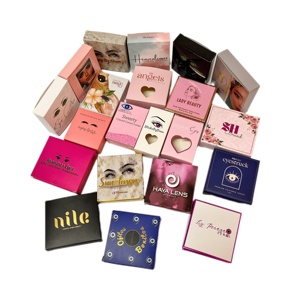
High Quality Wholesale Natural Color Eye Lens Packaging Box New Design Hot Sale Eye Contact Lenses Color Contact Lens Box
- Board: 350gsm FSC Certified Art Paper
- Finishing: Soft-Touch Matte & Spot UV
- Format: Double-vial & Multi-blister
- Customization: Full Brand Artwork / Die-cuts
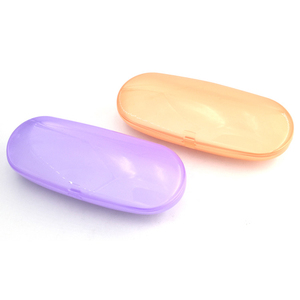
Hot Selling Designs Color Lens Soft Customized Logo Contact Lenses
- Pattern: Proprietary Dot-matrix Radial
- Edge Profile: Laser-lathed Rounded Bevel
- Wear Plan: Plano Cosmetic Daily / Monthly
- Branding: Foil-stamped Aluminum Seals
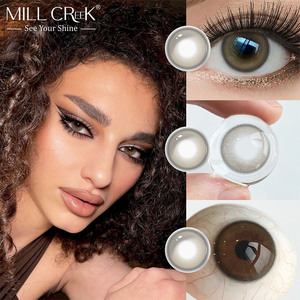
Natural Colored Contact Lenses 14.2mm 14.5mm 4 Soft Shades Yearly Disposable Wholesale Oem Odm Factory Supply for Resellers
- Shade Variety: 4 Tone Natural Chromatics
- Diameter Options: 14.2mm and 14.5mm Graphic DIA
- Sterility: Moist Heat Autoclave (121°C)
- Traceability: Individual QR Matrix Batch Codes
Enterprise Engineering Advantages: Total Vertical Manufacturing Integrity
Contract manufacturing of non-prescription cosmetic lenses suffers when factories outsource molds to tertiary casting workshops and purchase generic printing inks on the open chemical market. Chroma Lens Technology Co., Ltd. operates under an integrated industrial architecture where critical production parameters are held under rigorous internal audit.
In-House Precision Mold Engineering
Curvature tolerance (Base Curve ±0.02mm) and edge profiles are crafted in our internal CNC nano-machining department. This eliminates batch-to-batch fit variation and avoids cornea pinch syndrome often caused by imprecise third-party mold erosion.
Proprietary Bio-Safe Ink Formulation
Our dedicated chemical synthesis laboratory develops medical-grade pigments conforming to strict heavy-metal and cytotoxicity thresholds (ISO 10993-5). High pigment stability ensures complete zero-leaching during steam sterilization and continuous wear.
Original Iris Pattern Library
With over 1,200 proprietary radial graphic designs spanning hyper-realistic three-tone melanin gradients, doll-eye limbal halos, and anime-grade opaque theatrical designs, brand owners avoid copycat IP disputes and capture high visual shelf appeal.
Cleanroom Production & Closed-Loop QC
Operating inside Class 100,000 cleanrooms with automated optical inspection (AOI) stations, every plano lens is scanned for micro-bubbles, peripheral edge flash, concentric dye displacement, and dimensional adherence before hermetic sealing.
Technological & Engineering Paradigms in Plano Cosmetic Contact Lenses
Historically, cosmetic color lenses were criticized for poor oxygen permeability, corneal hypoxia, and mechanical irritation resulting from surface-applied color pigments. Over the past five years, advanced polymer chemistry and micro-fluidic tooling have completely revolutionized plano lens manufacturing:
1. Sandwich Multi-Layer Pigment Encapsulation
State-of-the-art non-prescription lenses utilize a micro-sandwich embedding structure. Rather than stamping dyes directly onto the surface matrix, color pigments are sealed within two ultra-thin layers of PolyHEMA or cross-linked hydrogel material. This prevents pigments from ever contacting corneal endothelial cells or palpebral conjunctiva, while maintaining a smooth, micro-polished outer surface that minimizes lipid and protein deposition.
2. Transition toward High-Dk Silicone Hydrogel Formulations
While traditional 2-HEMA lenses offer baseline oxygen permeability (Dk ~8.5 to 11), next-generation cosmetic lines integrate fluorosilicone macromers, elevating oxygen transmissibility (Dk/t) beyond 65–85 × 10-9. This technological leap prevents neo-vascularization and ocular redness, permitting extended daily wear times (up to 12–14 hours) for demanding fashion consumers and content creators without corneal physiological compromise.
3. Micro-Dot Radial Printing & Pupillary Aperture Blending
Natural eye coloring requires visual depth. Utilizing 16-color high-resolution dot-matrix pad printing, manufacturers can emulate the crypts of Fuchs, contraction furrows, and variable collarette rings of the human iris. In plano lenses, particular engineering focus is placed on the clear optical pupillary zone (typically 4.2mm to 4.8mm in diameter), ensuring unhindered peripheral vision and scotopic (nighttime) pupil dilation without the wearer experiencing colored peripheral haze.
| Evaluation Parameter | Standard HEMA Cosmetic Lens | Advanced Sandwich HEMA Lens | Next-Gen Silicone Hydrogel Plano |
|---|---|---|---|
| Dk/t (Oxygen Transmissibility) | 8.5 – 12 Fatt Units | 12 – 18 Fatt Units | 65 – 100+ Fatt Units |
| Pigment Location | Sub-surface or surface print | Fully encapsulated polymer core | Inter-polymerized cross-linked core |
| Water Content | 38% – 42% | 40% – 45% | 48% – 56% |
| Recommended Wear Time | 4 – 6 Hours | 8 – 10 Hours | 12 – 14+ Hours |
| Optimal Target Channel | Cosplay & Party Wholesale | Beauty Retail & Private Label | Premium Optical & Clinical Boutiques |
B2B Sourcing Trends: Strategic Forecasting for Optical Importers (2025–2030)
B2B brand developers, international distributors, and chain retail buyers must align their procurement cycles with emerging structural market shifts:
Rapid Transition to Daily Disposables (1-Day)
While yearly disposable vials historically dominated traditional distribution, regulatory authorities and hygiene-conscious millennial and Gen-Z consumers are rapidly transitioning to daily disposable blisters. Daily disposables eliminate the need for cleaning solutions and yield the highest customer lifetime value (LTV) through monthly replenishable subscription models.
Sustainable & Lightweight Blister Engineering
Importers face increasing carbon tariff scrutiny and packaging EPR (Extended Producer Responsibility) taxes across the European Union and North America. Procurement trendsetters demand ultra-compact polypropylene (PP) blister trays with recycled aluminum peelable foils that reduce plastic volume per box by up to 35%.
Stringent Post-MDR Global Compliance Verification
With the full enactment of EU MDR 2017/745, non-prescription cosmetic lenses without medical corrective intent are explicitly regulated under Annex XVI (products without an intended medical purpose). Importers must ensure that suppliers possess certified Clinical Evaluation Reports (CER) and active Notified Body audit trails.
Agile Micro-Batch Customization (Omnichannel SKU Velocity)
Social-driven beauty brands require shorter time-to-market. Instead of forcing rigid 50,000-unit minimum orders on single shades, progressive manufacturers offer modular MOQ frameworks (e.g., 500–1,000 units per color) combined with pre-printed serialized packaging to facilitate agile seasonal capsule drops.
Commercial & Technical Procurement FAQ for B2B Importers
Key questions and operational criteria addressed by our international contract manufacturing department for wholesale buyers and brand procurement directors:
Are non-prescription (plano 0.00) colored contact lenses legally regulated as medical devices?
Yes. Across virtually all developed optical markets, plano colored lenses are categorized under medical device statutes because they rest directly upon the cornea. In the European Union, they are governed under EU MDR 2017/745 Annex XVI. In the United States, the FDA regulates all contact lenses—including decorative and cosmetic lenses—as Class II prescription medical devices under 21 CFR 886.5925, requiring 510(k) premarket notification. Chroma Lens supplies complete compliance documentation dossiers, technical construction files (TCF), and testing verifications to satisfy customs clearance and medical device authority audits.
How do you verify that colored pigments will not leach onto ocular tissues?
We implement the Sandwich Encapsulation Method where pigments are embedded within the hydrogel substrate. Batch qualification includes rigorous solvent extraction testing (using saline, isopropyl alcohol, and artificial tears) under accelerated temperature and mechanical agitation. Optical microscope rub tests and spectrophotometric analysis confirm zero pigment transfer or dye extraction, fully conforming to ISO 10993 cytotoxicity standards.
Can Chroma Lens engineer custom, proprietary iris patterns and Pantone colorways?
Yes. Because we own in-house precision steel mold manufacturing and computerized color ink formulating units, private label partners can provide mood boards, Pantone references, or graphic vectors. Our optical engineering team prototypes physical lens samples within 14–21 business days, providing exclusive territorial design protection contracts for qualified private label volume programs.
What are the standard Minimum Order Quantities (MOQ) and lead times for OEM private-label orders?
For existing catalog colors in stock bulk vials/blisters with custom secondary packaging, MOQs start as low as 500 to 1,000 pairs. For completely bespoke graphic patterns and exclusive packaging die-cuts, standard MOQs are typically 3,000 to 5,000 pairs per SKU. Standard mass production timelines range from 25 to 35 business days following final sample approval and packaging artwork sign-off.
What packaging formats are supported for wholesale delivery?
We supply both pharmaceutical-grade borosilicate glass vials (crimp-sealed with medical aluminum caps) commonly chosen for yearly replacement cycles, and sterile thermoformed blister packs (PP cups with peelable foil seals) optimized for daily, weekly, and monthly replacement lines. Secondary retail carton production, multi-language patient information leaflets (PIL), and barcode serialization (GS1 / UDI / EAN) are fully managed in-house.
How is product stability and shelf-life validated for international sea and air shipping?
Our sealed blister and vial products undergo real-time and accelerated aging stability studies under ISO 11987 standards, validating a sterile shelf life of up to 5 years from the date of manufacture. All shipping master cartons are reinforced with internal humidity barriers and impact shock buffers to withstand containerized sea freight temperature fluctuations.
Accelerate Your Brand's Optical Sourcing Strategy
Connect directly with Chroma Lens Technology engineering and OEM sales specialists. Request technical specification sheets, sample packs for clinical review, or customized private-label manufacturing quotes.
Inquire Now