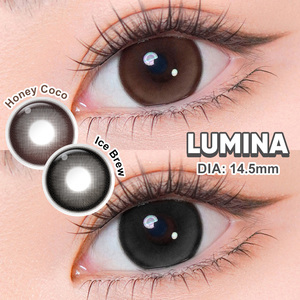
10+
Years Manufacturing Mastery
100%
In-House Cast Molding
0%
Direct Surface Pigment Contact
ISO/CE
Medical Device Certified
Factory Catalog Selection
Export-Ready Wholesale Colored Contact Lenses
Engineered for high comfort, exceptional opacity over dark natural irises, and stable multi-temperature shelf lives suitable for the South African climate.
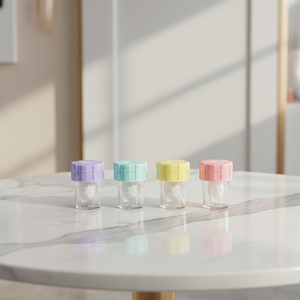
High Transparency Clean Without Worry Positive and Negative Cleaning Four Colors Available
Accessories | Medical Grade
View Details →
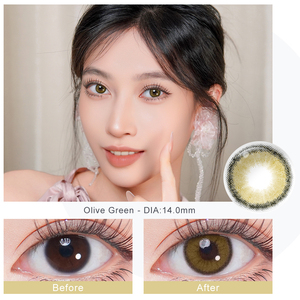
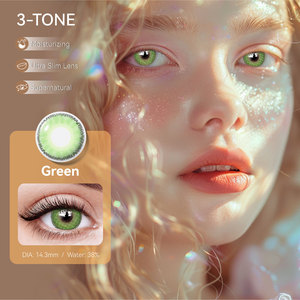
OEM ODM Private Label Soft Colored Contact Lenses Wholesale Custom Contact Lens Manufacturer
Private Label | Custom Curvature
View Details →
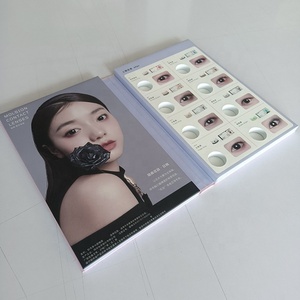
Factory Customized Luxury Eye Shadow Box Contact Lens Lenses Packaging Box Eyelash Blush Mascara Gift Box
Turnkey Luxury Sets | Retail
View Details →
Market Intelligence Whitepaper
South Africa Colored Contact Lens Dynamics: Clinical & Commercial Insights
A comprehensive technical brief examining pigmentation architecture, climate resilience, and import regulatory structures in Southern Africa.
1. The Phototypic Imperative: Pigment Layering on Dark Irises
The demographic profile of the South African consumer base spans Fitzpatric skin phototypes III through VI, characterized by deep melanin concentration in the anterior border layer of the iris (predominantly dark brown to near-black tones). Sourcing standard Western or East Asian low-density translucent colored lenses frequently leads to commercial failure in South Africa, as these patterns rely on light iris pigmentation to reflect incidental light. Chroma Lens integrates a tri-layer micro-dot encapsulation matrix: an opaque white reactive foundation underlayer, a multi-chromatic striated middle pigment layer, and an adaptive limbal boundary. This technical morphology completely masks intense natural eumelanin without exhibiting the unnatural "doll-eye" flat appearance, providing vibrant Hazel, Honey, Sapphire, and Emerald transformations that are in intense demand across Gauteng, Western Cape, and KwaZulu-Natal.
Crucially, this color vibrancy is achieved without compromising physiological safety. Through Chroma Lens’s specialized cast-molded sandwich printing protocol, cosmetic pigment particles are locked strictly between micro-thin sheets of biocompatible hydrogel polymer (HEMA / Polymacon). No pigment directly contacts either the corneal epithelial surface or the inner palpebral conjunctiva, virtually eliminating the hazard of mechanical keratitis, abrasive pigment leaching, or toxic dye leaching under intense UV exposure.
2. Bioclimatic Adaptation: High UV Indices and Arid Ambient Conditions
Distributing optical devices across Southern Africa presents severe climatological variables. Metropolises like Johannesburg (elevated at 1,753 meters above sea level) combine low atmospheric humidity, high dust particulate counts, and exceptional ultraviolet (UV) radiation index ratings, while coastal hubs such as Durban experience sustained sub-tropical humidity. Ordinary contact lenses featuring high nominal water content (e.g., 55% or greater) paradoxically cause accelerated dry eye symptoms in arid inland regions because environmental evaporation forces the hydrogel matrix to draw vital tear film fluid directly from the wearer's cornea.
Chroma Lens formulates lenses engineered with an optimized 38% to 42% equilibrium water content balance coupled with built-in Class II UV filtration (blocking >70% UVA and >95% UVB). This balanced hydration profile preserves dimensional stability, prevents lens dehydration shrinkage, and maintains all-day tear exchange over extended 12-hour wear cycles, even within dry interior environments or air-conditioned corporate and festive venues.
Afro-Centric High-Glamour & Bridal Retail
Traditional and modern South African wedding celebrations (such as Umembeso ceremonies) and end-of-year matric dances stimulate massive seasonal demand for luminous, authentic warm color profiles (Pure Hazel, Warm Caramel, and Forest Green). Retailers and boutique salon distributors require zero-diopter cosmetic blister packs ready for immediate over-the-counter sales.
Send an InquiryPop-Culture, Comic-Con Africa & Film Sets
With the exponential expansion of Comic-Con Africa in Johannesburg and the booming film/commercial production industries in Cape Town, the requirement for hyper-pigmented theatrical lenses, anime cosplay designs, white-out, and sclera optics has surged. Chroma Lens provides fully certified, sterile crazy lenses engineered for maximum character contrast.
Send an InquiryOptical Practices & Prescription Blends
Discerning optometrists throughout South Africa increasingly offer colored corrective solutions to patients seeking both refractive correction (from -0.50D to -8.00D) and cosmetic enhancement. Our precision-lathed optical centers ensure unobstructed pupil clearance, eliminating visual field shadowing or peripheral color blur in low-light driving conditions.
Send an Inquiry
Strategic Growth Vectors
Emerging Trends Shaping the RSA Contact Lens Sector
Market shifts creating immediate margin opportunities for importers, pharmacy chains, and direct-to-consumer brands.
Transition Toward Monthly Disposables
While yearly lenses have historically dominated emerging B2B wholesale markets due to low unit acquisition costs, urban South African consumers are rapidly migrating toward monthly and quarterly replacement modalities. Driven by heightened consumer awareness of ocular hygiene and convenience, multi-pack monthly blister programs represent the fastest-growing revenue segment in retail pharmacy distribution.
E-Commerce & Social Selling Expansion
Platforms such as TikTok Shop, Instagram, and specialized Shopify stores operating via PayFast and Ozow payment gateways are transforming distribution across SA. Fast fulfillment, compact blister packaging, and eye-catching unboxing presentation kits allow digital native brands to capture high recurring margins with manageable minimum order quantities.
Regulatory Formalization (SAHPRA Alignment)
South Africa’s regulatory authority (SAHPRA) is actively tightening oversight on cosmetic medical devices. Gray-market non-certified imports face seizure at maritime entry points (Durban, Cape Town) and OR Tambo International Airport. Sourcing from an OEM partner with comprehensive ISO 13485 and CE documentation is now a competitive prerequisite for sustainable operations.
Factory Integration
Why Major Importers Partner with Chroma Lens Technology
Direct from our state-of-the-art facility: in-house mold engineering, proprietary ink chemistry, and total process governance under one roof.
Proprietary In-House Mold Tooling
Unlike factories that purchase generic third-party plastic molds, we design, tool, and maintain our cast molds internally. This ensures an exact 8.5mm to 8.6mm base curve precision, ultra-smooth beveled edge geometry, and consistent 14.0mm - 14.5mm total diameter accuracy from trial samples to 100,000-unit production runs.
Patented Biocompatible Printing Inks
Our in-house chemical engineering laboratory develops non-cytotoxic, highly stable organic pigments. These inks deliver absolute color repeatability across production lots, preventing fading or shade drift during terminal steam autoclave sterilization (121°C) and multi-year sterile warehouse storage.
End-to-End OEM / Private Label Services
From custom iris matrix illustrations to complete packaging development (blister foils, secondary cartons, barcoding, and localized instructional inserts), we provide complete turnkey branding. Empower your business with high brand equity and customer loyalty across Southern Africa.
Procurement Guidance
South Africa Colored Contact Lenses: B2B Sourcing FAQ
Direct, pragmatic answers addressing regulatory compliance, shipping logistics, and commercial terms for South African importers.
◆ What are the regulatory requirements for importing colored contacts into South Africa?
In South Africa, contact lenses (both corrective and cosmetic/plano) fall under medical device classifications regulated by the South African Health Products Regulatory Authority (SAHPRA). Importers must hold a valid Medical Device Establishment License (MDEL). Chroma Lens provides all mandatory supporting dossiers: ISO 13485 certification, CE Declaration of Conformity, biocompatibility assay reports, and Certificate of Free Sale (CFS) to ensure seamless regulatory clearance.
◆ What is the typical shipping lead time and customs route to Johannesburg or Cape Town?
Sample batches and urgent wholesale consignments are dispatched via international air couriers (DHL, FedEx, UPS) directly to OR Tambo International (JNB) or Cape Town International (CPT) with transit times averaging 4 to 7 business days. High-volume bulk shipments move via sea freight to Durban (Port of Durban) or Cape Town Harbor, typically requiring 22 to 30 days port-to-port transit. We prepare precise HS Codes (9001.30) and commercial documentation to facilitate rapid SARS customs clearance.
◆ How do you guarantee that colors will look natural on very dark brown African eyes?
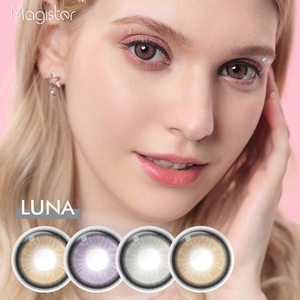
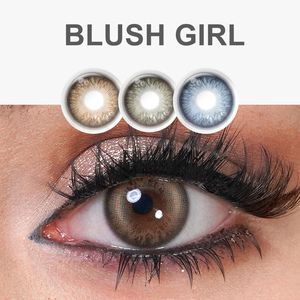
We specifically engineer our cosmetic patterns with high-density opaque backing micro-matrices. Unlike standard translucent lenses that look dark or muddy on dark brown eyes, our specialized ranges (including Hidrocor, Magister, and Blush Girl series) use layered multi-tonal stippling that completely covers natural dark pigmentation while preserving a soft, natural pupil transition gradient.
◆ What are your Minimum Order Quantities (MOQs) for wholesale and custom private labeling?
For factory-standard catalog stock (Magister and brand series), wholesale MOQs start as low as 50 pairs with flexible color and power assortment. For full custom private label production (bespoke pattern designs, custom branded blister foil, and exclusive retail packaging), our standard project minimum begins at 500 to 1,000 pairs, lowering the barrier to entry for ambitious beauty and optical startups.
◆ Can we order mixed diopter powers within a single wholesale cosmetic batch?
Yes. We support custom power breakdowns spanning from Plano (0.00D) down to -8.00D (in 0.25D increments up to -6.00D, and 0.50D increments to -8.00D). We assist buyers in structuring diopter distribution curves that reflect actual market prevalence ratios, preventing overstocking of uncommon corrective strengths.
◆ What shelf life and storage conditions are required for shipping to South Africa?
Our lenses are sealed in medical-grade buffered saline within polypropylene blister packs or glass vials and subjected to terminal steam autoclave sterilization, providing a guaranteed shelf life of up to 5 years from manufacture date. Lenses withstand standard cargo shipping temperatures, provided they are stored in dry conditions away from direct sunlight upon arrival.
Ready to Scale Your Contact Lens Brand in South Africa?
Connect directly with our international export department. Request a comprehensive product catalog, sample kit evaluations, and a structured wholesale price schedule tailored for Southern African distribution.
Send an Inquiry