Curated Medical-Grade & Cosmetic Contact Lens Lines
Engineered to withstand the hyper-arid climatic conditions of the Sultanate of Oman while delivering exceptional cosmetic vividness and ocular comfort.
1. Executive Whitepaper: The Omani Contact Lens Market Landscape
The Sultanate of Oman represents one of the most discerning and rapidly expanding cosmetic ophthalmic markets within the Gulf Cooperation Council (GCC). Driven by rising disposable incomes across the governorates of Muscat, Dhofar, and Al Batinah North, the demand for medical-grade colored contact lenses has surged well beyond conventional fashion accessories into mainstream lifestyle and bridal cosmetology. Among the diverse spectrum of aesthetic hydrogel optics, violet and deep amethyst tones have emerged as top-tier performers, offering striking chromatic contrast against deep brown and dark hazel Middle Eastern irises without sacrificing natural optical graduation.
However, penetrating the Omani ophthalmic marketplace demands an uncompromising standard of regulatory compliance, biocompatibility, and specialized material science. The Directorate General of Pharmaceutical Affairs and Drug Control (DGPA&DC) under the Ministry of Health (MOH) of the Sultanate of Oman categorizes plano cosmetic and prescription contact lenses strictly as regulated medical devices (Class IIa/Class IIb equivalents). Suppliers and local distributors must provide traceable CE certification under the European Medical Device Regulation (EU MDR 2017/745 or MDD 93/42/EEC) along with full ISO 13485:2016 Quality Management System accreditation. Chroma Lens Technology Co., Ltd. serves as an authoritative manufacturing partner, bridging high-volume precision mold engineering with direct compliance readiness for Omani importers, chain pharmacies, and independent optical boutiques.
2. Material Science for the Arabian Gulf: Combating Thermal & Desiccation Stress
Oman’s environmental topography presents severe meteorological challenges to soft contact lens wearers. Ambient summer temperatures regularly exceed 42°C to 48°C in interior and coastal zones such as Muscat and Sohar, coupled with intensely desiccant ambient air or harsh maritime humidity. Furthermore, constant transitioning between scorching outdoor environments and heavily refrigerated, dry air-conditioned indoor spaces causes accelerated pre-lens tear film evaporation, culminating in end-of-day dryness, foreign body sensation, and corneal hypoxia.
Chroma Lens engineers proprietary hydrogel and silicone-hydrogel matrices explicitly calibrated to overcome these environmental stress vectors:
| Physiochemical Parameter | Chroma Lens Omani Standard | Conventional Commodity Lenses | Clinical Advantage for Oman Wearers |
|---|---|---|---|
| Base Material Matrix | PolyHEMA + NVP Hydrophilic Copolymer | Standard Monomeric HEMA | Superior moisture retention; prevents ocular dehydration in arid heat. |
| Nominal Water Content | 38% – 42% (Low to Mid Equilibrium) | 55% – 58% (High Water Content) | Minimizes tear film depletion. High-water lenses pull tears from the eye in low humidity. |
| Oxygen Transmissibility (Dk/t) | 28 – 35 × 10⁻⁹ (Hydrogel) / 100+ (Si-Hy) | 12 – 18 × 10⁻⁹ | Prevents limbal hyperemia and neovascularization during extended 12-hour social wear. |
| Pigment Lock Technology | Cast Molding Sandwich Micro-Encapsulation | Surface Pad-Printing / Direct Coating | Zero pigment shedding; no ocular surface contact; velvety smooth blink sensation. |
| UV Radiation Protection | Class II UV-Blocker (>85% UVA, >95% UVB) | Untreated / None | Shields sensitive intraocular tissue from intense Arabian Peninsula solar UV irradiance. |
| Edge Profile Profile | Tri-Curve Comfort Bevel | Standard Squared / Flat Edge | Optimized tear exchange across the cornea with minimal conjunctival friction. |
By intentionally balancing equilibrium water content around 38% to 42%, our violet lenses mitigate the rapid dehydration typical of high-water lenses in desiccating environments. The moisture remains tightly bound within the cross-linked polymeric matrix, ensuring all-day lubrication across dry air-conditioned corporate suites, shopping malls, and outdoor celebrations.
3. Localized Application Scenarios & Demographics Across Oman
Understanding consumer intent is paramount for commercial success in the Sultanate. The demand for violet and exotic chromatic contact lenses in Oman is concentrated across distinct sociocultural contexts:
Bridal & Royal Wedding Couture
Omani weddings and formal private banquets (Milcha & Zaffah) demand rich, expressive eye aesthetics. Violet lenses provide radiant depth when framed by traditional Omani Kohl and dramatic bridal smokey eyeshadow, transforming naturally dark eyes into vibrant amethyst focal points.
Youth Lifestyle & Modern Abaya Fashion
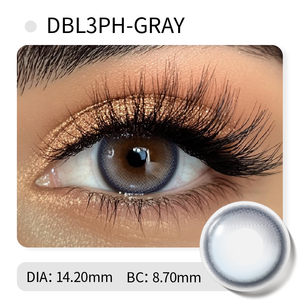
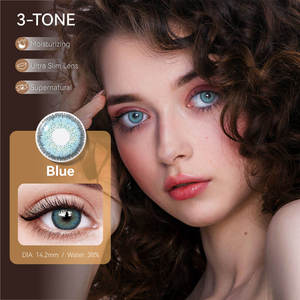
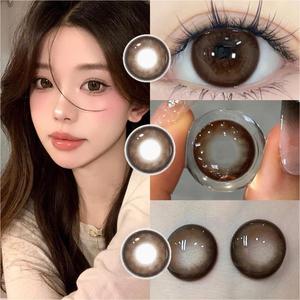
Among university students and young female professionals in Muscat (Al Khuwair, Qurum, Al Mouj), cosmetic lenses are staple beauty items. Subtle 3-tone violet blends that incorporate a soft honey or amber inner ring offer an everyday chic look that elevates modest modern attire.
Clinical Prescription Correction
Over 35% of cosmetic contact lens wearers in Oman require concurrent myopic spherical correction (ranging from -0.50D to -8.00D). Chroma Lens manufactures fully matched plano and prescription violet ranges, enabling optical dispensaries to capture cosmetic and corrective margins simultaneously.
4. Localized Strategic Trends Shaping the Omani Eyecare Sector (2025–2030)
The ophthalmic distribution sector in Muscat, Salalah, and Nizwa is undergoing a fundamental structural transition driven by digital connectivity, healthcare formalization, and shifting consumer demographics:
Social-Commerce Boom
Instagram, TikTok, and Snapchat driving direct influencer marketing. Omani beauty micro-influencers spotlighting purple, violet, and hazel transformations.
Shorter Replacement Cycles
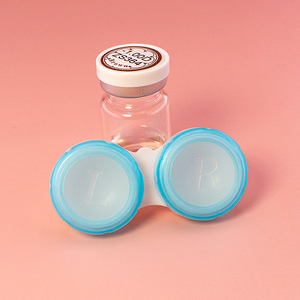
Gradual movement from conventional 1-year vials to sterile daily disposables and monthly blister packs to reduce airborne dust contamination.
Private Label Differentiation
Omani regional optical groups moving away from generic multinational brands to curate exclusive private label lines with localized Arabic branding.
Strict MOH Inspection
Enforcement of tamper-proof packaging, Arabic-English dual instructions for use (IFU), and standardized batch sterility documentation at Port Sultan Qaboos.
Why Tier-1 Importers Partner With Chroma Lens
Unlike trading intermediaries, Chroma Lens owns the critical technical milestones defining color fidelity, ocular safety, and structural consistency.
In-House Mold Engineering
We design, mill, and calibrate our own optical steel and resin molds in-house, ensuring micron-level base curve accuracy (8.5mm to 8.7mm) and flawless edge repeatability.
Proprietary Biocompatible Inks
Our cleanroom laboratory synthesizes proprietary medical-grade printing inks with pharmaceutical non-toxic pigments, providing vibrant opacity over dark irises with zero leeching.
Original Iris Pattern Library
Our ophthalmic design team develops exclusive 1-tone, 2-tone, and 3-tone violet radial striations that blend seamlessly into dark brown eyes without artificial pixelation.
End-to-End Traceability
Every blister and vial carries lot numbers, expiration tracking, sterile indicator records, and complete technical documentation aligned with GCC and European MDR directives.
5. Omani Importers & Opticians: Frequently Asked Procurement Questions
Direct answers for procurement managers, medical distribution houses, and retail optometry chains sourcing soft colored lenses into the Sultanate of Oman:
What documents are required by Oman MOH (DGPA&DC) to import CE-certified violet lenses?
How do Chroma Lens violet contact lenses achieve high vibrancy on dark Middle Eastern eyes?
What is the GCC Customs Tariff for soft contact lenses entering Omani ports?
Can Chroma Lens develop private label packaging featuring Arabic typography and local branding?
How do the lenses perform under the extreme desert heat and air-conditioned offices in Oman?
What packaging formats and shelf-life ratings are provided for Middle Eastern distribution?
6. Cold-Chain & Air-Freight Logistics to Muscat International Airport (MCT)
Given the thermal sensitivity of ophthalmic medical devices, Chroma Lens maintains strict export logistics protocols for Middle Eastern destinations. Shipments to Muscat, Salalah, or free trade zones (such as Sohar Freezone and Al Mazunah) are dispatched via temperature-monitored air freight (via DHL Global Forwarding, Emirates SkyCargo, or Oman Air Cargo). Each master carton is insulated with thermal shielding blankets to prevent acute temperature spikes during apron tarmac handling, ensuring that saline buffering and polymer structural integrity remain uncompromised from factory gate to clinic shelf.
Expand Your Omani Eyewear Portfolio with Certified Optics
Connect directly with Chroma Lens Technology Co., Ltd. engineering specialists. Request physical trial samples, clinical evaluation kits, technical dossiers, and volume wholesale pricing for Oman and the GCC.