Engineering Excellence for the US Contact Lens Sector
A rigorous examination of Chinese optical manufacturing capabilities, material hydration dynamics, sandwich-encapsulation safety, and regulatory compliance serving top-tier American brand owners.
Why Chroma Lens Dominates the Monthly Disposable Color Sector
By bringing mold fabrication, proprietary biocompatible inks, and precision cast molding under one roof, we eliminate third-party supply risks for American B2B procurement teams.
In-House Mold Engineering
Unlike assemblers who purchase generic third-party inserts, our master toolmakers fabricate proprietary micro-injection molds with sub-micron surface polishing. This ensures our monthly replacement lenses consistently maintain 8.5 mm and 8.6 mm sagittal heights across millions of units, preventing corneal hypoxia and peripheral decentration.
Proprietary Non-Cytotoxic Inks
Our in-house chemical formulation laboratory synthesizes medical-grade pigments certified under ISO 10993 cytotoxicity and ocular irritation guidelines. The pigment particles stay below 5 microns, enabling crisp gradient dots and natural limbal transitions that remain completely inert within the polymer matrix throughout the 30-day wear cycle.
Original Design Pattern Library
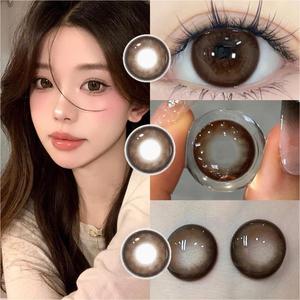
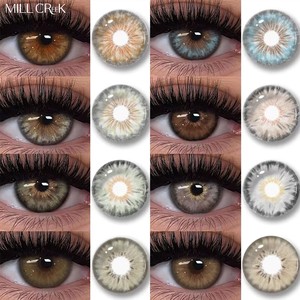
With more than 3,000 active SKU formulations, including 1-tone soft enhancements, 2-tone depth blends, 3-tone hazel/honey combinations, and cosplay theatrical pigments, our creative team custom-tailors iris patterns specifically calculated for Caucasian and diverse North American eye colors, delivering unmatched depth.
True Sandwich Encapsulation
Every monthly colored lens is processed through dual-surface casting, embedding the pigment layers cleanly between two hydrophilic HEMA/NVP layers. Zero pigment ever touches the corneal epithelium or palpebral conjunctiva, virtually eliminating friction, lens staining, or microbial adherence throughout 30 days of daily care.
Monthly Modality: Optical Parameters and Material Comparison
A technical evaluation of why the monthly replacement cycle delivers the highest commercial ROI and patient compliance in the United States aesthetic contact lens market.
| Evaluation Parameter | Chroma Lens Hydrogel Monthly | Chroma Lens SiHy Monthly (Next-Gen) | Conventional Yearly Lenses | Daily Disposable Color Lenses |
|---|---|---|---|---|
| Polymer Matrix | Poly-HEMA + NVP Co-polymer | Fluorosilicone Hydrogel | Conventional HEMA 38% | 2-HEMA / Glycerol Methacrylate |
| Oxygen Permeability (Dk/t) | 24 × 10-9 (@ -3.00D) | 88 × 10-9 (@ -3.00D) | 12 – 15 × 10-9 | 20 – 26 × 10-9 |
| Equilibrium Water Content | 40% – 42% Optimized | 48% Balanced | 38% Low Water | 55% – 58% High Water |
| Modulus (Elasticity MPa) | 0.45 MPa (Ultra-Comfort) | 0.70 MPa (Easy Insertion) | 0.60 MPa | 0.35 MPa (Fragile handling) |
| Pigment Entrapment Tech | Dual-Layer Cast Sandwich | Interpenetrating Matrix Encapsulation | Surface Dot Coating (Outdated) | Micro-Pad Matrix Print |
| US Consumer Cost per Month | $14.00 – $22.00 / pair | $24.00 – $32.00 / pair | $35.00+ amortized (High risk) | $45.00 – $75.00 / month |
| Protein & Lipid Resistance | High (Non-ionic Group I) | Plasma-treated hydrophilization | Prone to surface buildup | Single-use disposal |
*Note: All Chroma Lens monthly parameters comply with ANSI Z80.20 ophthalmic standards and are fully batch-traceable according to 21 CFR Part 820 Quality System Regulations.
Localized US Application Scenarios for Monthly Color Contacts
How American retail chains, direct-to-consumer digital powerhouses, and optometrists deploy our monthly color lens catalog to unlock high-margin revenue streams.
DTC Beauty Subscription Brands
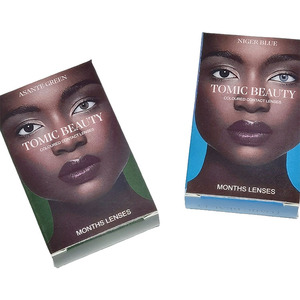
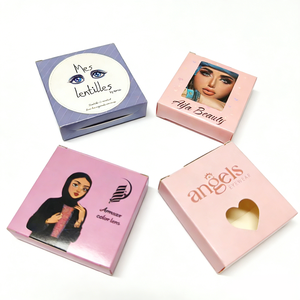
The monthly disposable modality is the golden standard for digital-native beauty brands across North America. With a predictable 30-day lifecycle, DTC brands configure replenishment subscriptions that yield an Average Order Value (AOV) above $48 with over 65% annual customer retention. Our blister multi-packs and custom mailer boxes fit seamlessly into domestic shipping envelopes, minimizing USPS parcel freight.
Aesthetic Optometry & MedSpas
Independent US eye care professionals (ECPs) and integrated aesthetic clinics utilize monthly colored lenses as an entry gateway for cosmetic refraction. By prescribing comfortable, breathable monthly color lenses in plano and corrective powers (-0.50D to -8.00D), practices capture cosmetic spend that previously leaked to unlicensed web sellers, guaranteeing annual patient visits.
Cosplay, Festival & Halloween Omnichannel
From San Diego Comic-Con to Coachella and seasonal Halloween retail, the demand for striking eye color transformations in North America surges cyclically. Monthly disposable lenses represent the safest, most cost-effective alternative for festival-goers: offering dramatic theatrical transformation alongside proper hydration that prevents the ocular irritation common in budget yearly lenses.
US Market Dynamics & Strategic Sourcing Trends
Navigating the convergence of FDA regulatory oversight, prescription verification automation, and clean-label cosmetic expectations.
Automated FCLCA Prescription Compliance
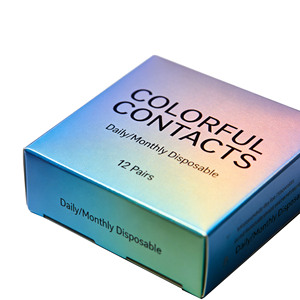
The Fairness to Contact Lens Consumers Act (FCLCA) and FTC Contact Lens Rule mandate that all contact lenses—even purely cosmetic non-corrective lenses—require valid doctor verification in the US. Forward-thinking American brands are integrating robotic automated verification APIs at checkout. Chroma Lens supports this ecosystem by printing standardized GS1 barcodes, UDI (Unique Device Identification), and accurate base curve / diameter labeling on all OEM retail cartons.
Supply Chain Near-Shoring & Agile Batches
Given recent volatility in trans-Pacific logistics and trade tariffs, US importers avoid locking capital into unmanageable 100,000-unit production runs. Chroma Lens operates an agile OEM model: fast-track prototyping in 10 working days, flexible trial batch MOQs of 500 to 1,000 pairs per color shade, and localized inventory buffering through consolidated air-express freight straight to West Coast and East Coast 3PL fulfillment hubs.
Demand for "No-Makeup" Limbal Architecture
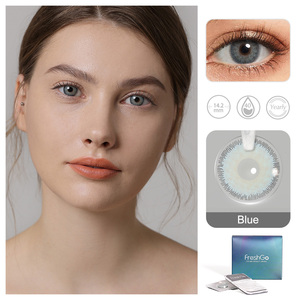
The US cosmetic aesthetic has shifted decisively from aggressive cartoon enlargement toward subtle, hyper-realistic iris reproduction. American wearers favor 14.0 mm to 14.2 mm outer diameters with feathered, semi-transparent limbal rings that let natural hazel, brown, or blue undertones shine through. Our digital multi-layer printing mimics human trabecular meshwork to produce undetectable enhancement under harsh daylight.
Frequently Asked Questions by US Contact Lens Importers
Essential guidance covering customs clearance, FDA device registration, sterile barrier validation, and private label customization.
Are cosmetic colored contact lenses classified as medical devices in the United States?
How does Chroma Lens guarantee that color pigments never leach into the wearer's ocular surface?
What is the minimum order quantity (MOQ) for custom private label packaging for the US market?
What documentation is supplied with each commercial export shipment to clear US Customs (CBP)?
What replacement cycle offers the best balance of safety and margin for American retail brands?
Can you create custom lens diameters and base curves tailored specifically to North American anatomical standards?
Ready to Launch or Expand Your Monthly Color Lens Brand in the US?
Partner directly with China's premier contact lens manufacturer. Access our full OEM master catalog, request factory-direct sample packs, and review complete compliance documentation with our optical engineers.