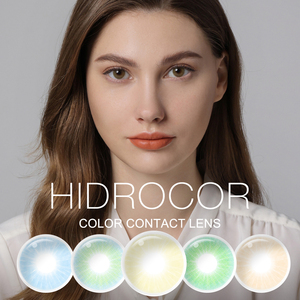
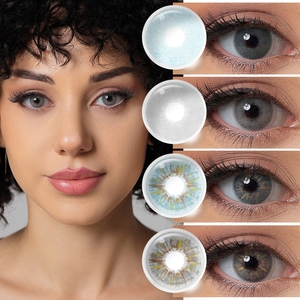
Featured Natural Gray & Cosmetic Optical Series
Precision hydrogel formulations engineered for warm undertones, dark brown irises, and humid climate wearability across India's optical and beauty retail channels.

Why Tier-1 Indian Importers Partner With Chroma Lens
Owning the critical supply chain bottlenecks guarantees color batch uniformity, corneal health safety, and prompt lead times for volume distributions.
In-House Mold Tooling
We eliminate third-party tooling variance. Our computerized CNC steel mold facilities establish uniform 8.5mm and 8.6mm base curves with rounded edge profiles, preventing foreign body sensation in warm climates.
Proprietary Encapsulated Inks
Our biocompatible pigment synthesis isolates dye molecules inside hydrogel polymers using genuine 3-layer sandwich printing. Zero color direct contact with the conjunctiva ensures full corneal epithelial safety.
Original Melanin Iris Matrices
Specifically calibrated for Indian dark irises (T2 to T5 scale). Featuring micro-dot radial striations in graphite, pearl, and charcoal that lighten dark eyes without an artificial or opaque 'reptilian' visual flaw.
Export QA & CDSCO Readiness
Every single batch undergoes automated spectrophotometer and optical center verification. We provide complete technical documentation, CE certificates, and ISO 13485 data packs for Indian customs clearance.
Engineering Natural Gray Lenses for the Indian Eyecare Market
A comprehensive examination of optical density, pigment blending, ocular physiology, and regional compliance factors.
1. The Optical Paradigm: Overcoming Deep Melanin Baselines
The ocular anatomy of the typical South Asian consumer is characterized by high concentrations of eumelanin throughout the stroma of the iris. When standard European cosmetic lenses—designed to tint light blue or hazel bases—are worn on dark brown or near-black eyes, the color payoff invariably collapses into a muddy, unnatural hue or produces a glaring flat aperture known in the cosmetic optometry field as the "doll-eye" or "fish-eye" artifact.
As a leading Chinese contact lens manufacturer and exporter to Mumbai, Delhi, Bengaluru, and Hyderabad, Chroma Lens solves this photometric hurdle through multi-layered micro-dot matrix printing. Instead of utilizing flat opaque pigments, our natural gray series utilizes three concentric zones of varied optical transmittance: a feather-edge translucent charcoal limbal ring to add anatomical depth without enlarging the iris artificially, a variable-density stroma zone utilizing cool slate and ash tones to refract ambient light, and a golden-hazel transition ring near the pupillary zone that prevents harsh boundary lines during pupil constriction.
2. Localized Consumer Application Scenarios Across India
The uptake of natural gray cosmetic contact lenses across Tier-1 and Tier-2 Indian hubs is currently outpacing traditional color channels such as sapphire blue and emerald green. The modern Indian consumer demands subtle chromatic sophistication suited for professional environments, luxury events, and digital media appearances.
Bridal & Destination Weddings
The Indian wedding industry drives massive seasonal volume. Brides and bridal parties favor natural gray lenses because the muted slate contrast compliments intricate warm-toned lehengas, gold jewelry, and intense kohl eye cosmetics without clashing in high-definition 4K photography.
Corporate & Executive Daily Wear
In multinational tech hubs like Gurugram, Bengaluru, and Pune, female and male professionals increasingly select monthly and quarterly natural gray lenses as subtle lifestyle enhancers that align with corporate dress codes without drawing undue attention.
Bollywood, OTT & Social Content
Influencers, Instagram creators, and production houses in Mumbai require rapid visual transformation with complete stability under heavy set lights. Our high-water hydrogel matrices prevent dryness under studio airflow conditions.
3. Market Trends & Regulatory Shifts in the Indian Eyewear Industry
The Indian optical market is experiencing significant transformation due to retail consolidation and regulatory enforcement. B2B buyers must evaluate three pivotal developments:
A. Transition to Medical Device Classification under CDSCO: The Central Drugs Standard Control Organisation (CDSCO) has brought contact lenses strictly under Medical Device Rules. Indian importers can no longer treat cosmetic lenses as general beauty accessories. Chinese suppliers must provide traceable documentation, cleanroom validation certificates (Class 100,000), ISO 13485:2016 quality system audit reports, and complete accelerated aging test data. Chroma Lens provides Indian distributors with comprehensive Regulatory Dossiers to streamline the MD-14 import licensing process.
B. Replacement Cycle Diversification: While yearly disposable lenses have historically represented 68% of cosmetic lens imports into India due to retail affordability, there is a distinct surge in demand for Monthly Disposable and Daily Disposable modalities in metro areas. Rising consumer awareness regarding tear film health and protein buildup makes shorter replacement intervals the fastest growing segment among chain opticians.
C. Private Labeling for D2C Brands: Fast-growing Indian beauty labels are seeking OEM/ODM partnerships with factory-direct Chinese manufacturers to establish proprietary brand identity rather than reselling standard market brands. Our tailored OEM packaging solutions—complete with regional barcode integration, localized warning inserts, and luxury box treatments—empower partners to build lasting brand equity.
| Physical Parameter | Standard Factory Spec | Relevance for Indian Retail Market | Compliance Standard |
|---|---|---|---|
| Base Curve (BC) | 8.50mm – 8.60mm | Fits over 94% of South Asian corneal sagittal depths smoothly | ISO 18369-3 Optical Tolerances |
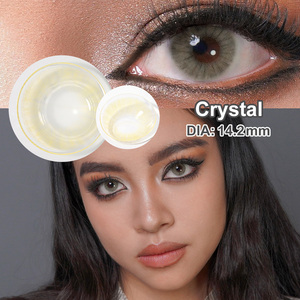
| Diameter (DIA) | 14.0mm to 14.2mm (Natural) / 14.5mm (Glam) | Provides subtle limbal definition without causing limbal compression | Precision Precision-lathe Tested |
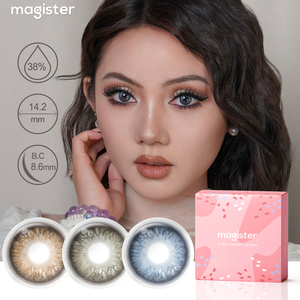
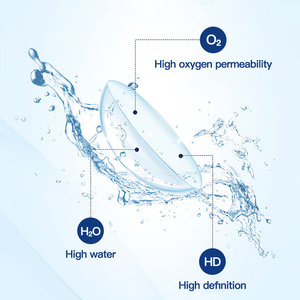
| Water Content | 38% – 42% HEMA Copolymer | Lower dehydration rate in air-conditioned or dusty dry settings | ISO 18369-4 Hydration Profile |
| Center Thickness | 0.08mm (@ -3.00D baseline) | Optimal oxygen flux (Dk/t) while resisting mechanical tearing | Sub-micron Precision Checked |
| Encapsulation Method | Cast Molding with Dual Sandwich Film | Prevents color rubbing or dye leaching into tear film completely | Biocompatibility ISO 10993 |
Frequently Asked Questions by Indian Importers & Optical Retailers
Clear, direct answers regarding custom clearances, minimum order quantities, private labeling, and regional wear comfort.
What regulatory documentation does Chroma Lens supply for CDSCO import registration in India?
Why do natural gray lenses sometimes look blue or cloudy on dark brown Indian eyes, and how does your factory fix this?
What is the Minimum Order Quantity (MOQ) for custom private labeling and packaging for the Indian market?
How do our lenses withstand high ambient temperatures and dusty conditions in Indian metropolitan centers?
What are the available packaging formats and logistics turnaround times to Indian seaports and air hubs?
Ready to Scale Your Contact Lens Brand in India?
Partner with an authentic Chinese manufacturer that owns mold production, ink synthesis, and pattern engineering. Request our wholesale B2B price catalog, request sample kits for clinical evaluation, or initiate your custom private label project today.