The Epicenter of K-Beauty Color Optics & Medical Device Manufacturing
Strategic analysis of Seoul’s cosmetic contact lens engineering ecosystem, evaluating cast molding methodologies, pigment lock integrity, and OEM/ODM private-label supply chains.
The international contact lens industry has undergone an unprecedented paradigm shift over the past decade. Where colored contacts were once treated purely as novelty or theatrical accessories, they are now recognized as high-precision ophthalmic cosmetic medical devices requiring strict bio-tolerability, exact oxygen permeability (Dk/t), and ultra-fine chromatic resolution. Seoul, South Korea, stands at the absolute epicenter of this evolution. Serving as both the aesthetic incubator for global East Asian cosmetic trends and the home to premier ocular research facilities, Seoul’s manufacturing landscape sets the benchmark for international brands aiming to produce premium cosmetic hydrogel and silicone-hydrogel lenses.
Global distributors and brand aggregators sourcing from or collaborating with Seoul ophthalmic factories benefit from advanced manufacturing techniques, such as automated high-precision cast molding, multi-layer micro-dot printing, and proprietary pigment-sandwich containment technology. Unlike cut-rate lens manufacturing paradigms where dye is pad-printed directly onto exterior polymer surfaces—presenting risks of corneal abrasion and pigment migration—Korean and top-tier OEM foundries enforce strict entrapment protocols. With over a decade of core technological accumulation, our production infrastructure integrates in-house optical mold fabrication with proprietary biocompatible inks, ensuring regulatory compliance across the South Korean Ministry of Food and Drug Safety (MFDS), US FDA, and European CE MDR standards.
Precision-Engineered Color Formulations for Global Procurement
Curated cosmetic and optical contact lens lines engineered with high water retention, smooth edge profiles, and zero pigment exposure.
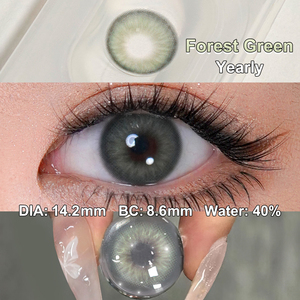
Freshgo Soft Black Eye Contact Lenses 14.20mm
View Product Details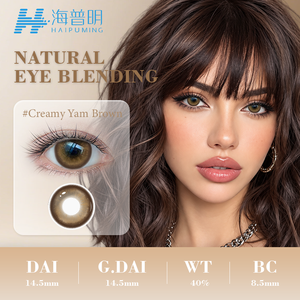
Brown Full Coverage Yearly Disposable Color Lenses 14.5mm
View Product Details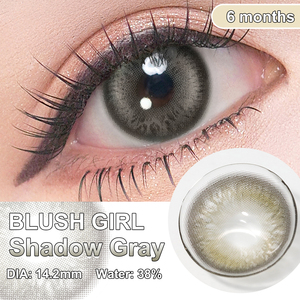
Magister Soft Lens Factory Price Gray Contact Lenses
View Product Details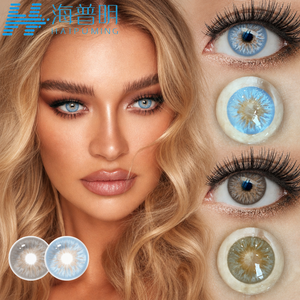
Natural Color Blue Contact Lenses 14.2mm HEMA Supply
View Product Details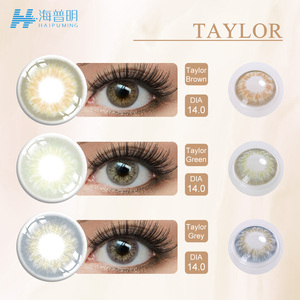
Prescription Colored Contact Lenses 14.0mm Custom Label
View Product Details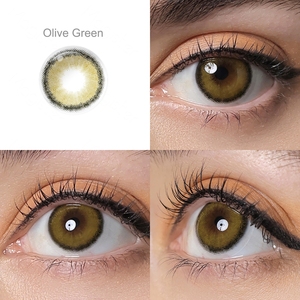
Magister Wholesale Cosmetic Eye Contact Lenses
View Product Details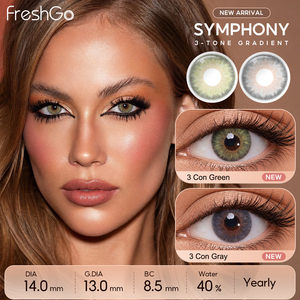
Freshgo Yearly Green Contact Lenses Wholesale Cosmetics
View Product Details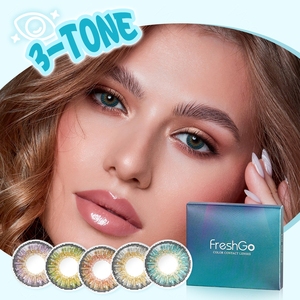
Freshgo 3 Tone Natural Colored Contact Lenses
View Product DetailsLocalized Application Scenarios Across Seoul’s Commercial Ecosystem
Analyzing high-conversion application channels from Gangnam medical beauty clinics to K-pop entertainment staging.
Gangnam Aesthetic & Dermatological Clinics
In Seoul's premier aesthetic medical clusters (Apgujeong, Sinsa, and Gangnam Boulevard), cosmetic contact lenses serve as the finishing component of facial restructuring regimens. Patients seeking non-invasive beauty optimization combine micro-aesthetic procedures with neutral-toned, low-saturation limbal lenses to enhance iris proportion without visual artificiality.
Hallyu Entertainment & Idol Broadcast Production
The Seoul entertainment hub—anchoring Mapo-gu digital media centers and broadcast networks in Yeouido—relies heavily on custom high-definition chromatic optics. Studio lighting requires specialized lenses that preserve ocular hydration during 14-hour shoots while delivering reflective luminance that registers cleanly on 4K digital cinema cameras.
Myeongdong & Hongdae Omnichannel Retail
Seoul’s vibrant retail belts represent high-density point-of-sale environments where international tourists and local fashion consumers procure daily disposables. Here, packaging design, compact blister formats, and immediate shelf appeal demand tight chromatic consistency and instant comfort upon insertion.
Emerging Technological Trends in Korean Ocular Foundry Manufacturing
From Phosphorylcholine (PC) hydrogel formulations to biometric graphic diameter engineering.
Phosphorylcholine (PC) & Silicone Matrixes
Foundries operating within or partnered with Seoul optical developers are aggressively transitioning away from conventional poly-HEMA hydrogels toward biomimetic Phosphorylcholine (PC) polymers and Silicone Hydrogel matrixes. PC structures mimic cellular membrane polar heads, reducing protein and lipid deposition and ensuring ocular surface lubricity during extended metropolitan screen exposure.
Subtle Graphic Diameters (G.DIA 13.0mm – 13.2mm)
Historical trends favored dramatic dolly-eye enlargement with graphic diameters spanning 13.8mm to 14.2mm. In contrast, current Seoul fashion aesthetics emphasize hyper-realistic enhancement. Foundries now engineer gradient feather-dot printing patterns with G.DIA profiles between 13.0mm and 13.2mm, matching natural East Asian limbal rings without hard edge boundaries.
Multi-Tier Aspheric Base Curve Engineering
Modern automated cast-molding systems incorporate continuous aspheric posterior curvature. This design minimizes spherical aberration, optimizes tear film circulation beneath the optical zone, and reduces the sensation of dry-eye syndrome caused by atmospheric particulate matter common in dense urban corridors.
Comprehensive Sourcing Specification Benchmark
Key architectural variables buyers must audit when evaluating color contact lens foundries.
| Technical Parameter | Standard Commercial Grade | Seoul / Advanced OEM Benchmark | Significance to Brand Importer |
|---|---|---|---|
| Encapsulation Method | Pad Printing / Direct Surface Ink | Double-Sided Fully Casted Sandwich Tech | Guarantees 0% pigment contact with cornea; eliminates corneal staining liabilities. |
| Polymer Formulation | Standard Poly-HEMA (38% Water) | HEMA + Phosphorylcholine (PC) / Si-Hy | Drastically elevates tear retention and biocompatibility for dry-eye demographics. |
| Posterior Edge Design | Single Chiseled Edge | Smooth Rounded Beveled Contour | Maximizes lacrimal tear pump action, preventing lens adherence and irritation. |
| Mold Precision | Outsourced Cast Matrix (±0.05mm) | In-House CNC Nanometer Mold Tooling | Guarantees batch-to-batch repeatability and eliminates optical distortion. |
| Chromatic Layering | Single/Dual Tone Coarse Ink | 3 to 4 Multi-Tier Micro-Dot Gradation | Generates organic iris depth suited for high-definition photography and retail scrutiny. |
Why Tier-1 Global Distributors Partner With Our Foundries
Combining integrated manufacturing control, in-house tooling, and international compliance agility.
In-House Mold Development & Tooling
By engineering and manufacturing our own optical casting molds internally, we bypass third-party tooling bottlenecks. Our engineering team achieves micron-level base curve accuracy and can execute custom base curves (8.5mm, 8.6mm, 8.7mm) and custom edge profiles within accelerated prototyping windows.
Proprietary Biocompatible Inks
Color brilliance and safety are governed by ink rheology. Our in-house chemical formulation lab designs proprietary, non-cytotoxic, medical-grade colorants that bond irreversibly within the polymer matrix. This delivers rich chromatic vibrancy without degrading oxygen permeability.
Exclusive Original Pattern Library
We do not rely on generic, public-domain catalog designs. Our pattern studio develops proprietary dot distributions, limbal blends, and multi-chromatic transitions that allow our private label clients to stand out in competitive domestic and global marketplaces.
Comprehensive Regulatory Dossiers
Exporting contact lenses requires exhaustive technical documentation. We supply complete Technical Files (TF), Certificates of Analysis (COA), biocompatibility cytotoxicity assays (ISO 10993), stability test reports, and sterilization validation documentation for rapid local registration.
Automated Vision Inspection (AVI)
Every single hydrogel lens undergoes high-resolution CCD optical surface scanning to detect periphery chips, edge tears, chromatic displacement, and particulate inclusions before reaching the automated autoclave sterilization staging.
Turnkey Private Label Packaging
We provide full packaging support, including polypropylene blister packaging, glass vial sealing, multi-lingual outer carton printing, anti-counterfeiting holographic serialization, and barcode compliance tailored to target jurisdictions.
Frequently Asked Questions: Sourcing from Seoul & Korean Foundries
Critical procurement intelligence for medical device importers, brand directors, and optical distributors.
What regulatory approvals are mandatory when procuring lenses from Seoul factories?
How do Korean manufacturers ensure color pigments do not bleed into the eye?
What are typical Minimum Order Quantities (MOQs) for custom OEM patterns?
What is the standard production lead time for private-label production runs?
Can contact lenses formulated for East Asian corneas fit Western populations?
How are diopter powers distributed in a wholesale commercial order?
Step-by-Step OEM Sourcing Protocol for International Brands
A proven verification framework to move smoothly from initial design concepts to market launch.
Phase 1: Optical Specification Definition
Determine target parameters: replacement schedule (Daily Disposables vs. Monthly vs. Yearly), polymer material (Standard HEMA, HEMA-PC, or Silicone Hydrogel), diameter (14.0mm to 14.5mm), and base curve (8.5mm to 8.7mm).
Phase 2: Pattern Sampling & Wear Trials
Request physical production samples to audit micro-dot dispersion, chromatic opacity on dark vs. light irises, edge comfort, and tear film wettability across sample user cohorts.
Phase 3: Regulatory & Packaging Sign-off
Review factory batch sterilization records, validate blister foil heat-seal integrity, and approve translated IFU (Information for Use) inserts before greenlighting commercial batch runs.
Connect With Our Technical Foundry Engineering Team
Whether you are establishing a new private-label cosmetic brand in Seoul or expanding an existing international distribution network across North America, Europe, or Asia, our sales engineers can provide immediate quotes, pattern catalogs, and technical consultation.