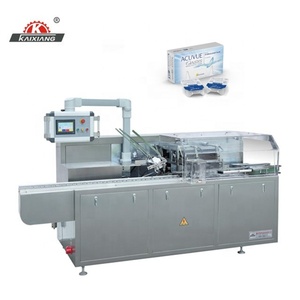
Packaging Automation
From micro-encapsulated daily cosmetics to anime theatrical lenses and full automated cartoning lines, our manufacturing base powers international distributors with high scalability and consistent batch stability.
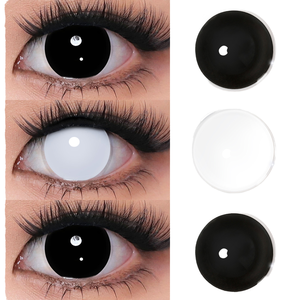
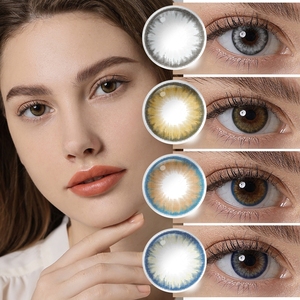
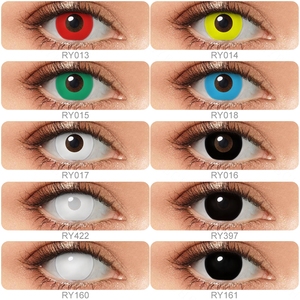
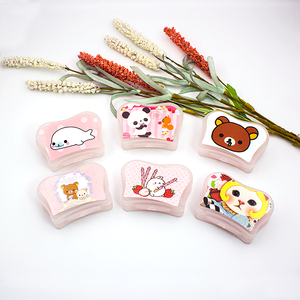
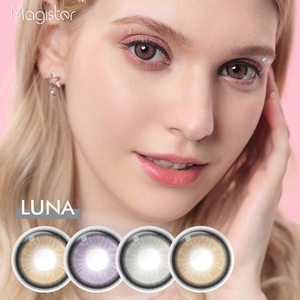
Australia's distinctive climatic patterns, regulatory rigor, and vibrant subcultural dynamics dictate specific engineering parameters for hydrogel and silicone-hydrogel colored lenses.
Given Australia’s extreme UV radiation index and arid summer heat across regions like Queensland and Western Australia, our colored contact lenses incorporate Class 1 and Class 2 UV-blocking monomers. These polymers absorb over 90% of UVA and 99% of UVB rays, preventing photokeratitis while preserving hydration across prolonged outdoor beachwear and active outdoor lifestyles.
Events such as Supanova Comic-Con, Oz Comic-Con, and SMASH! Sydney generate seasonal demand surges for high-opacity anime eyes. Standard mass-market prints fail on dark eyes or present rough surfaces; our proprietary sandwich-printing method ensures completely opaque pigments like our Pseyeche Sharingan lines maintain a mirror-smooth bio-compatible barrier for full-day event wear.
Modern Australian consumers increasingly purchase cosmetic enhancement lenses through optical chains (such as Specsavers or OPSM franchisees) and aesthetic studios. We engineer precision base curves (8.5mm to 8.6mm) and balanced 38%-42% water content to maximize oxygen permeability (Dk/t) while mitigating tear-film evaporation in air-conditioned office and urban environments.
A frequent challenge reported by Australian optometrists is end-of-day dryness induced by low indoor humidity and active lifestyles. As a direct OEM factory, we synthesize our soft lenses using high-purity Poly-HEMA and Methafilcon polymers modified with non-ionic hydrophilic groups. By stabilizing the lens surface with low-friction edge profiling, we prevent protein and lipid accumulation, ensuring that fashion lenses offer medical-grade ocular safety whether worn during Melbourne's variable winters or Perth's dry heat waves.
Regulatory compliance, consumer demographic evolution, and packaging automation represent the defining growth vectors for Australian distributors and optical retail groups.
Under the Therapeutic Goods Administration (TGA), contact lenses in Australia are legally classified as Class IIa or IIb medical devices, even if they have zero corrective power (plano). Importers face strict penalties for unregulated products. Chroma Lens supplies full technical files, biological safety test reports (ISO 10993 cytotoxicity, ocular irritation), and ISO 13485 audits to empower Australian sponsors to secure fast Australian Register of Therapeutic Goods (ARTG) inclusion.
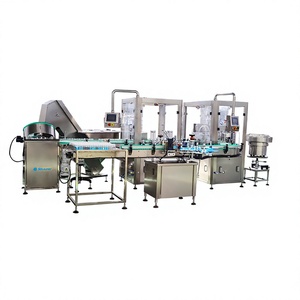
While yearly lenses traditionally dominated cosmetic segments, Australian consumers increasingly prioritize ocular hygiene and zero-maintenance convenience. Daily disposable colored lenses are exhibiting a 18.4% year-on-year market expansion. Our factory offers high-speed PP blister sealing, fully automated saline filling, and sterile cartoning lines capable of producing tens of millions of blister packs per quarter.
DTC beauty disruptors in Sydney and Melbourne demand minimalist, sustainable packaging formats that resonate with eco-conscious Gen Z buyers. By utilizing recyclable medical aluminum foil lids, low-waste blister trays, and FSC-certified cartoning machinery, we assist Australian brands in building premium, eco-compliant cosmetic eye lines that command elevated retail gross margins.
Many trading brokers outsource different facets of lens casting, resulting in edge delamination, unstable color hues, and corneal micro-scratches. At our factory, we refuse to outsource core competencies.
| Physical / Chemical Parameter | Natural Daily / Monthly Cosmetic Series | Theatrical & Cosplay High-Opacity Series | Australian Regulatory Reference Standard |
|---|---|---|---|
| Base Curve (BC) | 8.50 mm – 8.60 mm (±0.02 mm tolerance) | 8.60 mm (Optimized universal fit) | ISO 18369-3 Corneal Conformance |
| Total Diameter (DIA) | 14.0 mm – 14.2 mm (Natural iris ring) | 14.5 mm – 14.8 mm (Doll-eye / Enlarging) | Calibrated optical projection profiling |
| Water Content | 38% – 42% (Low dehydration index) | 40% (Balanced dimensional stability) | Gravimetric Karl Fischer hydration validation |
| Center Thickness | 0.07 mm – 0.08 mm (@ -3.00D) | 0.085 mm (Ensures pigment encapsulation) | High Dk/t oxygen transmission profiles |
| Power Range (Spherical) | 0.00 (Plano) to -8.00D (0.25D / 0.50D steps) | Plano (0.00D) or Custom Prescription Rx | Focimeter power certification to ±0.12D |
| Sterilization Methodology | High-Pressure Steam Autoclave (>121°C) | High-Pressure Steam Autoclave (>121°C) | Sterility Assurance Level (SAL) 10⁻⁶ |
Clear, documented answers addressing regulatory clearance, private label lead times, custom shade developments, and cleanroom supply reliability.
Decade-long manufacturing excellence defined by end-to-end technological vertical integration.
We do not use generic off-the-shelf tooling. By engineering our own ultra-precision nano-surface molds, we eliminate perimeter flashing, maintain identical optical geometry across million-lens runs, and ensure that initial design samples match mass production runs with 100% fidelity.
Developed in our dedicated synthesis facility, our reactive dyes resist fading, autoclave thermal degradation, and saline dissolution. Color opacity is calibrated precisely so that subtle greys, hazels, and blues mask dark irises naturally under high-glare Australian daylight.
Each production batch undergoes 100% cosmetic inspection, center thickness verification, sagittal height verification, and spectral transmission profiling. Documented batch trace files accompany every export pallet to support comprehensive post-market traceability.
Consult with our senior optical manufacturing engineers for custom design samples, full TGA compliance dossiers, competitive container pricing, or automated blister packaging machinery specifications.