Precision Engineered Enlarging & Cosmetic Optical Series
CE-marked, ISO 13485 compliant contact lenses and ophthalmic accessories ready for distribution across Sofia, Plovdiv, Varna, and Burgas.

Source Directly from Chroma Lens Precision Factory
Request comprehensive OEM/ODM pricing, Bulgarian regulatory dossiers, sample blisters, and minimum order terms.
Executive Summary: The Bulgarian Market for Enlarging & Cosmetic Contact Lenses
The ophthalmic and cosmetic eyewear sector in Bulgaria (Република България) is witnessing a profound transition. Historically characterized by standard corrective clear hydrogels supplied by legacy multinational pharmaceutical houses, the market is undergoing double-digit expansion driven by enlarging contact lenses (frequently termed "circle lenses" or "големи очи лещи"). As young European consumers across Sofia, Varna, Plovdiv, and Burgas increasingly embrace beauty-tech enhancements, optical boutiques, aesthetic beauty clinics, and specialized e-commerce platforms are seeking stable, high-tier original equipment manufacturers (OEMs) capable of fulfilling stringent European Union Medical Device Regulation (EU MDR 2017/745) standards while maintaining commercial margin viability.
Chroma Lens Technology Co., Ltd. serves as an industry-leading manufacturing partner for Bulgarian importers, brand owners, and optometric chains. Operating high-precision cast-molding infrastructure, in-house optical mold fabrication workshops, and proprietary non-ionic hydrogel formulations, our manufacturing facility eliminates traditional trading middlemen. This technical white paper provides Bulgarian optical executives, category procurement managers, and private-label entrepreneurs with comprehensive engineering parameters, regulatory protocols under the Bulgarian Drug Agency (ИАЛ - Изпълнителна агенция по лекарствата), localized consumption behavior insights, and risk-mitigated supply chain pathways.
Core Engineering Advantages: Chroma Lens Factory Capabilities
Unlike conventional sourcing channels that rely on third-party aggregators in regional trade hubs, Chroma Lens Technology Co., Ltd. controls the complete vertical value chain. Sourcing enlarging contact lenses requires uncompromising precision: the limbal ring diameter must achieve optical enlargement effects without occluding the peripheral vision field or inducing corneal hypoxia.
In-House Mold Tooling
We construct sub-micron CNC steel and insert molds internally. This ensures strict curvature tolerances (±0.02 mm base curve fidelity) across high-volume production cycles.
Proprietary Biocompatible Inks
Our pigment laboratory synthesizes medical-grade, non-leaching cosmetic inks. Patterns maintain vibrant saturation without interacting with delicate conjunctival tissue.
Micro-Sandwich Technology
The colored graphic layer is permanently sealed within inner hydrogel matrix layers (Cast Molding Sandwich Process), guaranteeing zero direct pigment-to-cornea contact.
Full Lot Traceability
Manufactured under cleanroom ISO Class 8 protocols. Every batch undergoes automated spectrophotometric inspection, power verification, and edge contour analysis.
"For European distributors, product safety is not merely a marketing claim—it is a legal safeguard. By fully encapsulating our cosmetic inks between polymerized HEMA layers, Chroma Lens eliminates the risk of pigment shedding, chemical keratitis, and mechanical irritation."
Technical Specifications for OEM/ODM Bulgarian Orders
Bulgarian optometrists and end-consumers exhibit specific anatomical and clinical preferences. Below are the standard manufacturing tolerances and material matrices engineered for European distribution:
| Technical Metric | Standard Specification | Bulgarian Clinical Preference | Quality Verification standard |
|---|---|---|---|
| Base Curve (BC) | 8.50 mm – 8.70 mm (±0.02 mm) | 8.60 mm universal Caucasian fit | ISO 18369-3 Sagittal Height Analysis |
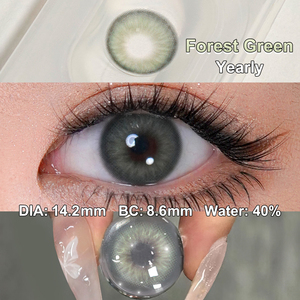
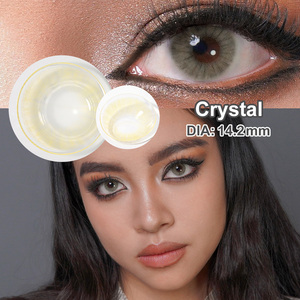
| Total Diameter (DIA) | 14.0 mm, 14.2 mm, 14.5 mm, 14.8 mm | 14.2 mm (Natural) / 14.5 mm (Enlarging) | Optical Projection Comparator |
| Graphic Diameter (GDIA) | 13.0 mm to 14.0 mm | 13.4 mm – 13.8 mm limbal emphasis | Multi-axis Vision Metrology System |
| Equilibrium Water Content | 38% to 43% PolyHEMA / NVP Copolymer | 38% Low-Water (Retains eye moisture) | Gravimetric Hydration Profiling |
| Oxygen Transmissibility (Dk/t) | ≥ 18.0 × 10⁻⁹ (at -3.00D) | Optimal for 8-10 hour daily cosmetic wear | Polarographic Method (ISO 18369-4) |
| Center Thickness (CT) | 0.06 mm – 0.08 mm (at -3.00D) | Ultra-thin profile for immediate comfort | Electronic Thickness Gauge |
| Refractive Diopters | Plano (0.00D) to -8.00D (-0.25D / -0.50D steps) | Dual offering: 65% Plano / 35% Myopia | Automated Moiré Deflectometry Focimeter |
| Pigment Fixation Method | Full Cast-Molded Sandwich Encapsulation | Essential for EU Medical Device Compliance | ISO 10993 Cytotoxicity & Rub Resistance |
Localized Application Scenarios in Bulgaria
Bulgaria’s strategic position within Southeast Europe makes it both an agile domestic market and an emerging commercial transit gateway for neighboring Balkan territories (Romania, Serbia, North Macedonia, and Greece). To maximize commercial performance, distributors must align product styling with targeted domestic channels:
1. Urban Optical Boutiques & Chains
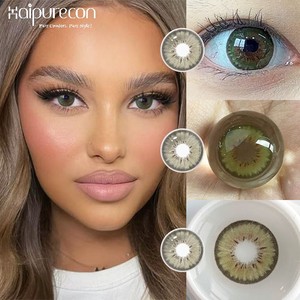
In high-density commercial strips such as Vitosha Boulevard in Sofia, Mall of Sofia, and Grand Mall Varna, traditional opticians are diversifying away from standard clear corrective lenses. Younger demographics demand subtle "doll-eye" enlarging lenses featuring natural chocolate, honey brown, and deep graphite halos. These customers require CE-certified lenses prescribed through optometric examinations, valuing daily or monthly modalities with proven corneal oxygenation.
2. D2C Digital Boutiques & Social Commerce
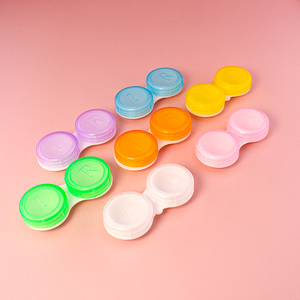
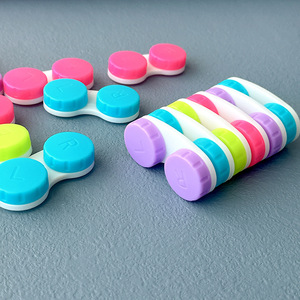
Bulgaria features a rapidly expanding social e-commerce ecosystem powered by Instagram, TikTok, and localized e-shops (using platforms like CloudCart and WooCommerce). Direct-to-consumer cosmetic brands target Gen-Z beauty enthusiasts seeking transformative cosmetic upgrades. Yearly and half-yearly blister/vial packaging with customizable branding, high-graphic-density lenses, and eye-catching candy cases represent the highest margin SKU cohort for digital merchants.
3. Cultural Events & Theatrical Cosplay
Bulgaria hosts major regional pop-culture gatherings, including Sofia's premier Aniventure Comic Con, alongside high-demand Halloween theatrical circuits in university centers. Importers require 14.5mm to 14.8mm exaggerated anime lenses, full-opacity cosplay patterns, and vibrant chromatic tints (red, vibrant violet, pure white, and cat-eye designs) that completely mask dark iris pigmentation while maintaining optical clarity.
Bulgarian & Regional Balkan Market Development Trends
Understanding shifting consumer sentiment in the Bulgarian optical retail market enables brand managers to build resilient inventory cycles. Several prominent market dynamics are currently reshaping demand:
From Exaggerated to Natural Halo
While early circle lens adoptions focused on dramatic 14.8mm outer rings, contemporary Bulgarian consumers favor the "Subtle Enlargement" aesthetic. Graphic diameters of 13.3mm–13.6mm with soft, feathered outer limbal zones provide a natural enlarging gradient that blends seamlessly with native European hazel, green, and brown irises.
Modalities Shifting Toward Daily & Monthly
While yearly disposable contact lenses maintain a large market footprint in Bulgaria due to cost-efficiency, urban consumers are rapidly migrating to 1-Day and 1-Month blister packs. Driven by ophthalmic recommendations emphasizing ocular hygiene and reduced lipid deposition, our OEM blister packaging lines give Bulgarian importers a turnkey platform to capture this premium segment.
Strict Enforcement of EU MDR Compliance
Bulgaria's regulatory authorities and customs directorates have intensified border scrutiny regarding CE markings on medical devices. Grey-market imports lacking designated EU Authorized Representatives (EC REP) or authentic Notified Body certifications face confiscation. Partnering directly with Chroma Lens provides legitimate, auditable compliance documentation.
Bulgarian Regulatory & Customs Importation Blueprint
Importing enlarging contact lenses into Bulgaria requires strict adherence to European Union health directives and Bulgarian national standards. As Class IIa Medical Devices under Rule 5 of EU MDR 2017/745, contact lenses are subject to structured statutory controls:
1. Bulgarian Drug Agency (ИАЛ - Изпълнителна агенция по лекарствата)
Distributors establishing wholesale operations in Sofia or Plovdiv must be registered medical device distributors with the Bulgarian Drug Agency. Chroma Lens supports partners by supplying technical documentation, including the Declaration of Conformity (DoC), ISO 13485:2016 manufacturing facility certifications, and full biocompatibility dossiers according to EN ISO 10993 series (cytotoxicity, ocular irritation, and systemic toxicity validation).
2. Mandatory Labeling & BDS EN ISO Standards
Packaging destined for retail distribution in Bulgaria must conform to European labeling mandates. Outer packaging and secondary blister cartons must incorporate clear instructions for use (IFU), batch numbers, expiry dates, sterile barrier symbols, and mandatory Bulgarian-language informational inserts (БДС EN ISO 18153 standards) specifying wear schedules and lens care warnings.
3. Customs Clearance & Logistics Hubs
Bulk shipments entering Bulgaria utilize two primary conduits: Air freight arriving via Sofia Airport Customs (Митница Аерогара София) for rapid replenishment cycles, or containerized sea freight arriving through the Port of Varna (Пристанище Варна) or Port of Burgas (Пристанище Бургас). All shipments are accompanied by precise HS Code classification (HS 9001.30.00: Contact Lenses), commercial invoices, packing lists, and Certificates of Origin.
Full-Service OEM & ODM Private Label Capabilities
For established Bulgarian optical groups or emerging cosmetic entrepreneurs seeking to introduce proprietary brands, Chroma Lens provides comprehensive end-to-end design and manufacturing support:
- Custom Iris Vector Artistry: Our optical graphic designers develop exclusive 1-tone, 2-tone, and 3-tone enlarging patterns tailored to your brand identity, guaranteeing regional territorial exclusivity.
- Flexible Packaging Modularities: Choose between medical-grade polypropylene (PP) foil blisters for premium daily/monthly disposable lines or classic USP Type I borosilicate glass vials for extended-wear applications.
- Turnkey Box Packaging & Barcoding: Complete offset printing for secondary outer cartons, including EAN-13 barcodes, Bulgarian translation overprints, and security tamper-evident seals.
- Low-Barrier Sampling Protocols: Accelerate your pre-market validation with physical production trial samples shipped directly to Sofia or regional corporate headquarters within 7–10 working days.
Frequently Asked Questions: Sourcing Enlarging Lenses for Bulgaria
What specific CE documentation do Bulgarian customs authorities require for contact lenses?
How does the Sandwich Printing Method safeguard eye health compared to surface-printed lenses?
What Graphic Diameter (GDIA) and Total Diameter (DIA) perform best in the Bulgarian market?
What are the typical Minimum Order Quantities (MOQ) for custom private label OEM orders?
Can Chroma Lens supply mixed power ranges (plano vs. prescription diopters) in a single wholesale batch?
What is the lead time for freight delivery to Sofia, Plovdiv, or Varna?
How should Bulgarian retailers instruct end-users regarding initial wear schedules?
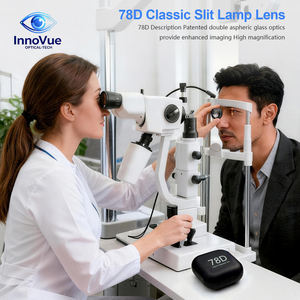
Slit-Lamp Verified Quality Assurance & Biocompatibility
Every single contact lens produced inside our cleanrooms is subjected to rigorous multi-stage physical and biological screening before export authorization:
100% Projection Inspection
Every lens profile is projected on high-magnification optical comparators to verify edge bevel smoothness, surface continuity, and center thickness symmetry.
Colorimetric Consistency
Automated spectrophotometric sensors measure color coordinates across chromatic lots, ensuring that replacement blister packs match original buyer purchases identically.
Hermetic Seal Verification
Blisters undergo pressure-decay chamber leakage testing and high-temperature steam autoclave sterilization at 121°C for 20+ minutes, guaranteeing a 5-year sterile shelf life.
Initiate Your Bulgarian Direct-Factory Sourcing Project
Connect with our technical export division to receive comprehensive wholesale price lists, sample kits, and European regulatory portfolios.