Precision-Engineered Lenses Serving the Melbourne Trade
Explore our export-ready contact lens catalog optimized for Australian optometric practices, cosmetic retailers, and seasonal entertainment distributors. Fully certified with CE, ISO 13485, and comprehensive technical documentation for seamless clearance via the Port of Melbourne.
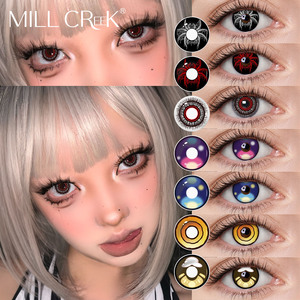
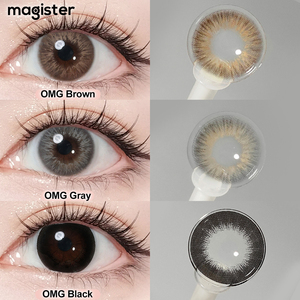
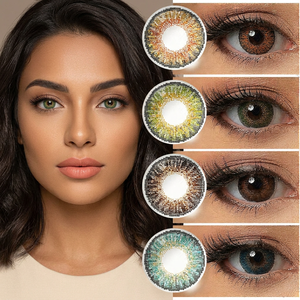
Strategic Guide: Sourcing Colored Contact Lenses for Melbourne & Greater Victoria
The cosmetic and prescription colored contact lens market across Victoria, anchored by Melbourne's vibrant retail strips in Chapel Street, Chadstone, and the inner-north creative precincts of Fitzroy and Brunswick, has entered an era of rapid maturation. For Melbourne optical dispensaries, aesthetic boutique owners, theatrical costume stockists, and fast-growing e-commerce brands, choosing an overseas colored contact lens manufacturer is no longer simply a price-per-unit negotiation. It is an intricate operational audit encompassing Australian regulatory classification, bio-compatible polymer science, pigment micro-encapsulation safety, and freight route continuity through the Port of Melbourne.
Under the regulatory framework governed by the Therapeutic Goods Administration (TGA) in Australia, contact lenses—whether corrective (plano or power) or purely cosmetic—are regulated as Class IIa or Class IIb medical devices under the Therapeutic Goods Act 1989. Importers operating within Melbourne must ensure that their manufacturing partners possess unassailable quality management credentials, including ISO 13485 certification, MDSAP (Medical Device Single Audit Program) alignment, and comprehensive technical batch documentation. A failure to inspect pigment fixation or edge geometry can precipitate severe corneal abrasions, regulatory recalls, and irreversible brand erosion.
Critical Regulatory Fact for Victorian Medical Importers
In accordance with Australian standards, non-prescription cosmetic lenses must uphold identical physiological tolerances to corrective lenses. This demands a strict base curve tolerance (typically 8.6mm ±0.1mm), total diameter precision (14.0mm to 14.5mm ±0.2mm), and an oxygen transmissibility rating (Dk/t) sufficient to prevent corneal hypoxia during extended wear in Melbourne's dry, variable seasonal climate.
Key Engineering Pillars for Selecting an Exporter
When procurement managers in Southbank, Box Hill, or Geelong evaluate foreign manufacturers, the following four engineering benchmarks must form the foundation of their vendor scoring matrix:
In-House Mould Development
Mould engineering directly dictates the sagittal depth, edge tapering, and tear-exchange dynamics of the lens. Exporters relying on outsourced third-party moulds often exhibit batch-to-batch variations exceeding 0.08mm in base curve curvature, leading to mechanical conjunctival irritation.
Proprietary Micro-Inks
Dye safety is non-negotiable. Advanced manufacturers formulate custom cosmetic inks using medical-grade organic and mineral pigments. Color layers must undergo high-stability molecular cross-linking to prevent chemical leach or discoloration when exposed to multipurpose disinfecting solutions.
Sandwich Encapsulation
Pigment printing must be sealed between dual layers of protective hydrogel (e.g., HEMA-NVP). This guarantees that color flakes never make physical contact with the corneal epithelium or palpebral conjunctiva, fully complying with Australian ophthalmic safety principles.
Localized Commercial Applications Across Greater Melbourne
Melbourne's commercial fabric is unique, characterized by sophisticated micro-demographics that demand tailored product configurations:
| Commercial Domain | Target Victorian Demographics | Recommended Optical Parameter | Compliance & Wear Profile |
|---|---|---|---|
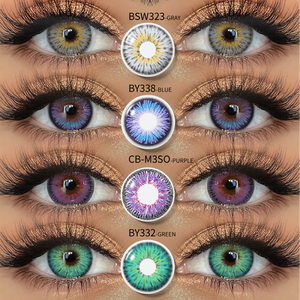
| High-End Fashion & Runway | South Yarra, Fitzroy, Melbourne Fashion Festival (MFF) creatives | Subtle 3-tone blends, 14.0mm - 14.2mm natural iris expansion | Daily / Monthly Disposables; 40%-42% water content; HEMA-NVP copolymer |
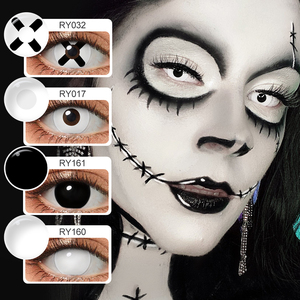
| Pop Culture & SFX Theatrical | Oz Comic-Con Melbourne (MCEC), Supanova, Carlton amateur theatre | Full-sclera & opaque cosplay whites, reds, vertical pupil animates | Plano zero-power; High pigment density; Maximum tear-flow bevel |
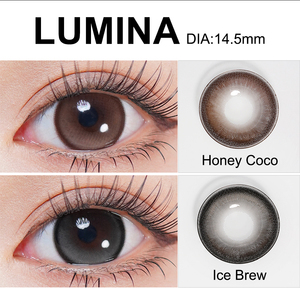
| Multicultural Beauty Retail | Box Hill, Glen Waverley, Springvale beauty dispensaries | Lumina natural greys, hazel tints, light-reflective 14.5mm designs | Corrective powers (-0.50D to -8.00D); UV-blocking class 2 hydrogel |
| Professional Optical Clinics | Melbourne CBD, Richmond, Camberwell independent optometrists | Controlled prescription cosmetic tinting with verified parameter sheets | Individual blister packaging with Australian-compliant GMDN labeling |
Local Consumer & Procurement Trends Shaping Melbourne (2025–2030)
Forward-thinking Victorian procurement officers are aligning their supply chains with three dominant shifts taking place within the local optical arena:
1. The Migration Toward Shorter Replacement Cycles: While yearly replacement lenses long dominated the cosmetic export pipeline due to low inventory carrying costs, Melbourne consumers increasingly favor daily and monthly modalities. Heightened health awareness and Victorian public hospital ocular health campaigns have made single-use blisters the fastest-growing sector in metropolitan salons and e-retail brands.
2. High Oxygen Permeability Copolymer Formulations: The atmospheric variability of Melbourne—notoriously oscillating between dry northerly winds and rapid marine temperature drops—accelerates contact lens dehydration. Importers are bypassing obsolete standard poly-HEMA materials in favor of HEMA combined with N-Vinylpyrrolidone (NVP) and advanced wetting agents, maintaining comfortable all-day hydration without stripping the tear film.
3. Private Label Customization for Boutique Brands: Rather than reselling generic mass-market brands available everywhere on cross-border marketplaces, Melbourne beauty retailers are commissioning bespoke iris patterns. Chroma Lens provides end-to-end OEM assistance, allowing local clients to own proprietary color palettes specifically mapped to brown, amber, and hazel eyes common across Australia's diverse multicultural population.
Why Chroma Lens Technology Is the Preferred Exporter for Victoria
With more than a decade of specialized soft contact lens fabrication, Chroma Lens Technology Co., Ltd. does not merely assemble catalog products. We control the entire critical manufacturing spectrum from our specialized cleanrooms to our overseas container staging bays.
Self-Engineered Tooling
All cast moulds are generated via sub-micron diamond turning lathes in-house, maintaining a radial tolerance within ±0.01mm for repeatable edge profiles.
Bio-Safe Color Chemistries
Proprietary polymer-bound organic pigments that undergo autoclave sterilization cycles without structural fading or toxic monomer elution.
Exclusive Design IP
Over 1,200 proprietary iris patterns designed in our optical labs, protecting Victorian private label partners from trademark conflicts.
Full Traceability Batches
Every blister and vial carries distinct lot numbers, allowing immediate retrieval of spectrometer, hydration, and bio-burden records.
Frequently Asked Questions by Melbourne & Australian Importers
How do our products align with Australian TGA import standards?
What shipping channels and transit timelines apply to shipments destined for Melbourne?
Can you create custom private label packaging for an Australian cosmetic brand?
What is the minimum order quantity (MOQ) for Melbourne boutique distributors?
How is pigment encapsulation verified to guarantee ocular safety?
Ready to Scale Your Contact Lens Program in Melbourne?
Initiate direct discussions with our technical optical engineering and export team. Receive material safety dossiers, physical sampling packs, and custom volume pricing tailored to your Victorian distribution targets.
Send an Inquiry