Precision Color Formulations Ready for Osaka Private Labeling
Engineered with micro-encapsulated sandwich printing, medical-grade HEMA / PolyHEMA substrates, and strict parameter calibration designed for seamless registration and fast commercialization.
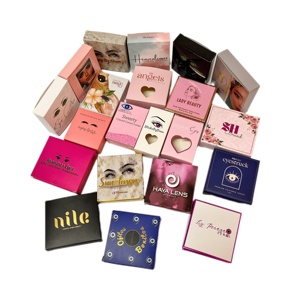
High Quality Wholesale Natural Color Eye Lens Packaging Box New Design Hot Sale Eye Contact Lenses Color Contact Lens Box
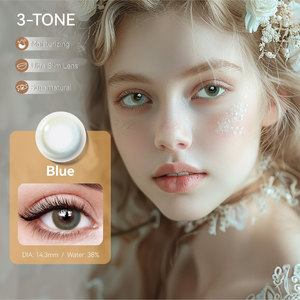
MIIEMO Stylish and Eye Catching New Look Contact Lens Manufacturer Lentes De Contacto Colored Contact Wholesale Contact Lens Eye
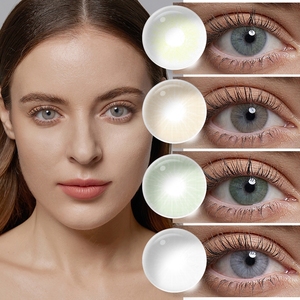
Free Shipping RIO Colored Contact Lenses For Eyes Freshgo Eye Contact Lenses Wholesale Color Contact Lens Lentes De Contacto
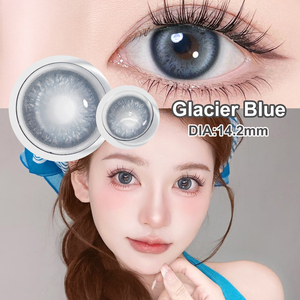
Free Shipping Magister Colored Contacts Blush 14.2mm Soft HEMA Cosmetic Contact Lenses Big Eyes Makeup Wholesale Eye Color Lens
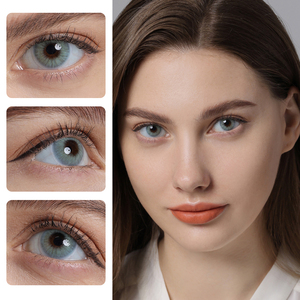
Free Sample MAGISTER Prescription Contact Lenses Myopia Natural Colored Emballage Lentille De Lunettes Contact Lenses with Power
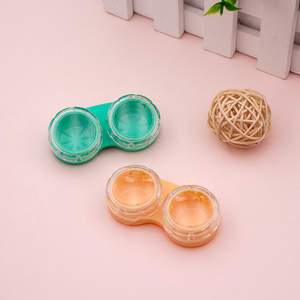
High Quality Durable Colorful Eco-Friendly Luxury Contact Lenses with Accessory Cases
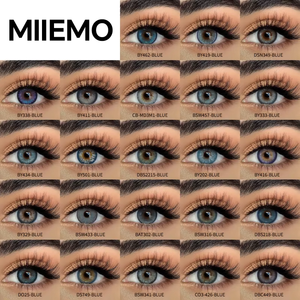
OEM Private Label Three Tone Colored Contact Lenses 38% Water Content Custom Logo Blister Pack Soft Comfortable Beauty
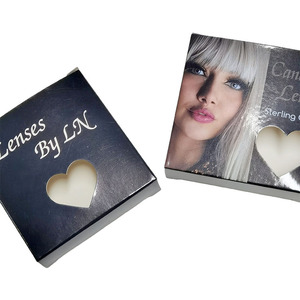
2025 New Trend Fashion Custom High Quality Love Window Design Colored Eye Contact Lenses Wholesale with High Quality Paper Boxes
Entering the Osaka Color Lens Ecosystem: The Kansai Gateway
Why Osaka represents the most commercially agile testing ground for emerging cosmetic and optical eye-wear brands in Northeast Asia.
Launching a colored contact lens brand in Japan requires navigating one of the most sophisticated, safety-conscious, and aesthetic-driven markets in the world. As the commercial epicenter of Western Japan, Osaka functions not merely as a regional retail hub, but as an indispensable incubator for beauty trends and subcultural fashion. From the youth-driven trend corridors of Shinsaibashi (心斎橋) and Amerikamura (American Village) to the subcultural anime, cosplay, and gaming density of Nipponbashi Denden Town, Osaka generates rapid consumer feedback loops that dictate nationwide retail adoption.
However, entering this lucrative space demands an authoritative understanding of the intersection between Japanese consumer psychology, strict medical device classification, and robust manufacturing pipelines. In Japan, colored contact lenses—regardless of whether they carry corrective diopters (prescription) or zero diopters (plano cosmetic)—are strictly classified as Class II or Class III Medical Devices under the Pharmaceuticals and Medical Devices Act (PMDA). Consequently, any entrepreneur, brand manager, or cross-border distributor targeting Osaka cannot rely on generic white-label trading companies. A brand's commercial viability hinges directly on securing a primary manufacturing partner that owns mold development, formulates certified biocompatible pigments, and maintains cleanroom facilities adhering to international medical standards (ISO 13485, CE, and Japan PMDA audit readiness).
High Retail Density
Kansai's extensive drugstore networks (Matsumoto Kiyoshi, Sugi Pharmacy, Don Quijote Dotonbori) dominate contact lens velocity, demanding shelf-ready blister packs with high barcode scannability and tamper-evident packaging.
Agile Consumer Turnover
Osaka's cosmetic lens demographics shift rapidly between 1-Day daily disposables for corporate subtlety and vibrant 1-Month designs for social-first streetwear, demanding flexible production MOQ allocations.
Uncompromising Safety Standards
The Kansai consumer prioritizes corneal oxygenation (Dk/t) and total pigment containment. Zero-tolerance for irritation is the baseline expectation for recurring subscription purchases.
Localized Application Scenarios: Mapping Osaka's Consumer Channels
A granular breakdown of demographic targeting, geographic retail epicenters, and optical design specifications needed to capture market share.
Umeda & Namba "Bare-Face" Office Wear
Designed for young professionals in Osaka's financial centers. Subtle limbal rings (13.8mm to 14.0mm diameter) with translucent olive, choco, and sepia tones that enhance eye clarity without violating conservative corporate grooming standards.
Amerikamura & Street Fashion Pop
Geared towards youth subcultures and street influencers. High-chroma three-tone optics, honey hazels, icy blues, and graphic diameters of 14.2mm to 14.5mm delivering high visual impact under flash photography and smartphone camera lenses.
Denden Town Anime & Cosplay Subcultures
Nipponbashi's vibrant cosplay community requires 100% opaque, vivid thematic pigments—such as pure white mesh, ruby red, anime violet, and cat-eye motifs—with zero pupil-hole misalignment and stable rotational weighting.
E-Commerce & Social D2C Subscriptions
Direct-to-consumer digital brands operating via LINE, Instagram, and Rakuten. These consumers expect slim 10-pack or 30-pack daily blister cartons that slide into standard Japanese mailbox slots (Yu-Packet compatible) to minimize logistics costs.
The Osaka Market Compliance Roadmap: Navigating Japanese Standards
A step-by-step structural breakdown of transitioning an OEM concept from raw monomer synthesis to full Japanese retail authorization.
Industrial OEM / ODM Execution Pipeline
ISO 13485 / GMP / PMDA AlignedOptical Formulation
Selection of hydrogel monomers (e.g., HEMA-EGDMA copolymer), establishing equilibrium water content (38% vs. 58%), and calibrating base curves (8.5mm - 8.7mm) suited to Asian corneal topography.
Pattern Lithography
Creating micro-dot graphic films via computer-aided design (CAD). Pigment colors are pre-mixed using proprietary inorganic and organic color additives thoroughly evaluated for non-cytotoxicity.
Cast Molding & Curing
Utilizing high-precision automated cast molding machines. Polymerization is induced via thermal or UV photo-initiation, embedding color layers permanently within the central lens matrix.
Sterilization & Release
Automated visual inspection for edge burrs and voids, saline blister filling, thermal foil induction sealing, and moist-heat steam autoclaving at 121°C for validated sterility assurance.
| Evaluation Parameter | Chroma Lens OEM Manufacturing Standard | Generic Commodity Factories | Osaka Commercial Advantage |
|---|---|---|---|
| Color Encapsulation Technology | Full Micro-Sandwich Embedding (Zero Surface Exposure) | Single-Surface Pad Printing / Decal Transfer | Meets Strict PMDA Biocompatibility |
| Mold Tooling Infrastructure | 100% In-House Optical Tooling & Micro-CNC Lathes | Outsourced Third-Party Commodity Casts | Instant Iteration & Zero Tooling Delay |
| Pigment Dispersion Stability | Proprietary Nanoscale Ink Formulation (Heavy-Metal Free) | Standard Industrial Pigments | Superior Color Fastness & Clarity |
| Optical Aberration Profile | Aspheric Surface Design with Optimized Tear Circulation | Basic Spherical Geometry | All-Day Moisture & Reduced Dry-Eye |
| Documentation & Traceability | Full Batch Records, DHF, Device Master Record (DMR) | Basic Commercial Invoice Only | Rapid Import Clearance at Port of Osaka |
Chroma Lens Manufacturing Advantages: Owning the Critical Steps
Built upon a decade of specialized research and manufacturing excellence, our fully integrated production facility eliminates intermediary vulnerabilities.
Most colored contact lens companies act as simple trading brokers who assemble third-party lenses into branded boxes. Chroma Lens Technology Co., Ltd. operates on an entirely distinct industrial model. By maintaining direct ownership over mold fabrication, pigment dispersion, pattern lithography, and high-speed packaging automation, we provide global and Japanese buyers with unmatched consistency, traceability, and speed-to-market.
In-House Mold Engineering
We design, mill, and polish our own optical injection molds. This enables us to maintain curvature tolerances within micro-millimeters and produce custom diameters (14.0mm to 14.8mm) without external supplier dependencies.
Proprietary Ink Synthesis
Our internal chemical engineering laboratory synthesizes our own printing inks. We achieve exceptional color saturation, razor-sharp dot gradients, and batch-to-batch repeatability that prevents noticeable color deviations across production runs.
Original Pattern Library
Our creative optics studio constantly tracks global fashion runways and Japanese street trends, generating proprietary iris patterns—from natural subtle limbal rings to complex cosplay vectors—that protect your brand from generic market clones.
Full-Chain Quality Assurance
Operating Class 100,000 cleanrooms equipped with automated high-resolution optical inspection machines, we verify every lens for diameter, base curve, center thickness, power profile, and cosmetic defects prior to sterilization.
Frequently Asked Questions: Procurement & Factory Partnerships
Critical operational answers for brand founders, procurement officers, and optical wholesalers importing into Osaka and across Japan.
What legal licenses are required to sell colored contact lenses in Osaka?
Under Japan's PMDA regulations, retail and distribution entities must hold a Specified Highly Managed Medical Device Distribution and Lease License (高度管理医療機器販売業・貸与業許可). As your manufacturing partner, Chroma Lens supplies complete technical files, Device Master Records, and sterilization validation documentation needed for product registration and cross-border customs clearance.
Can you manufacture exclusive iris designs and packaging specifically for our brand?
Yes. Our in-house pattern design and mold engineering teams can take your concept, mood board, or digital artwork and translate it into a fully industrial pattern within 10 to 14 days. We provide customized blister sealing foils, barcode-compliant folding cartons, and retail counter display units tailored specifically for Japanese drugstore chains.
How does your factory ensure the color pigment does not touch the wearer's cornea?
We exclusively utilize double-sandwich micro-encapsulation technology. Rather than printing inks on the external lens surface, our pigments are locked hermetically between two ultra-thin layers of polymer hydrogel. This guarantees zero direct pigment-to-cornea contact, eliminating irritation and friction during blinking.
What is the minimum order quantity (MOQ) and lead time for Osaka deliveries?
For standard catalog formulations, wholesale trial orders can begin at flexible batch sizes. For full private-label custom blister packaging and exclusive pattern lithography, standard MOQs start at 5,000 to 10,000 pieces per shade across power ranges. Sea freight to the Port of Osaka or air delivery via Kansai International Airport (KIX) ensures swift regional distribution.
Step-by-Step Strategic Launch Plan for Osaka Retailers & Brands
A proven operational roadmap to launch your private-label optical line with maximum speed and complete regulatory peace of mind.
Executing a successful launch in the Japanese market requires synchronizing manufacturing lead times with marketing collateral creation. Successful brands operating throughout the Kansai region follow a structured four-phase milestone methodology:
Phase 1: Sampling & Wearer Testing
Order physical pre-production samples across diopters (0.00D to -8.00D) to test optical centering, hydration retention over 8-hour wearing cycles, and visual color density against natural dark brown Asian irises.
Phase 2: Packaging Localization
Finalize outer box packaging and blister foil artwork conforming to Japanese medical device labeling laws. This includes mandatory Japanese legal address listings, expiration dates, lot numbering, and user warnings.
Phase 3: Logistics & Distribution
Shipment coordination directly to Osaka bonded warehouses or Kansai logistics hubs. Setup localized warehousing to supply e-commerce fulfillment centers or regional drugstore inventory hubs across the Keihanshin metropolitan area.
Ready to Build Your Colored Contact Lens Brand in Osaka?
Partner directly with Chroma Lens Technology Co., Ltd. Leverage our 10+ years of dedicated optical manufacturing, in-house mold engineering, proprietary bio-safe pigments, and comprehensive OEM/ODM services. Let's discuss your project specifications today.