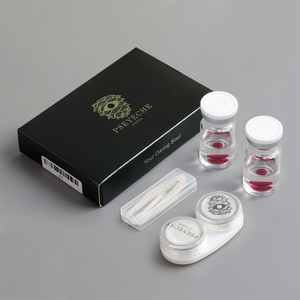
Engineered Optical Formulations
Featured Multi-Colored Contact Lens Product Portfolios
Direct OEM & bulk wholesale formulations engineered with biocompatible Poly-HEMA hydrogel, optimized for cold-climate ocular tear retention and deep Slavic iris pigmentation coverage.
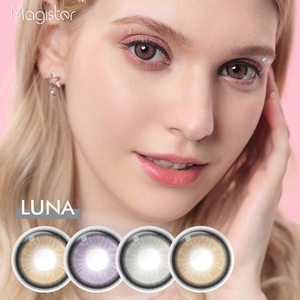
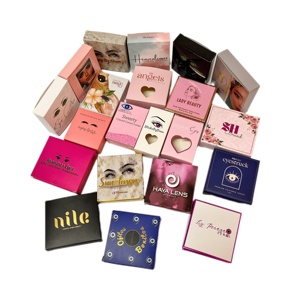
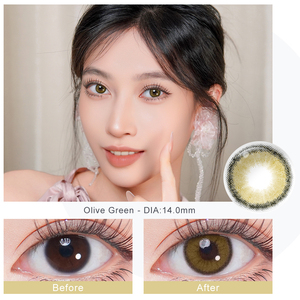
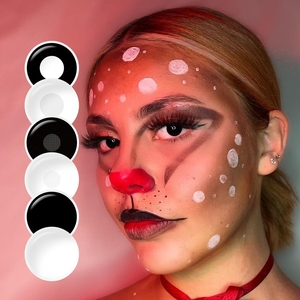
Executive Overview: Multi-Colored Contact Lens Manufacturing & Russian Import Dynamic
The ophthalmic cosmetic industry in the Russian Federation and the wider Eurasian Economic Union (EAEU) is undergoing a major structural transformation. Historically dependent on Western European and North American brand names, Russian medical distributors, cross-border e-commerce networks (Wildberries, Ozon, Yandex Market), and optical store chains (Optika) are aggressively expanding direct factory sourcing partnerships. As an established export-driven manufacturer operating advanced cast-molding infrastructure, Chroma Lens Technology bridges this operational divide by supplying high-precision, multi-colored cosmetic and corrective lenses tailored to cold-climate ocular physiological requirements and exacting Eurasian compliance frameworks.
Procuring multi-colored contact lenses for the Russian market requires deeper technical alignment than simple catalog procurement. End users across Moscow, Saint Petersburg, Novosibirsk, and Yekaterinburg exhibit distinct physiological and chromatic preferences: deep natural iris blending (such as transforming dark hazel irises to light Arctic blue, graphite gray, or emerald green), heightened demand for high-contrast theatrical cosplay lenses for youth gaming subcultures, and distinct mechanical requirements necessitated by long sub-zero winters where indoor radiant central heating induces dry eye syndrome (keratoconjunctivitis sicca).
"Strategic Russian ocular distributors are transitioning from trading intermediaries directly to proprietary OEM/ODM partnerships. Controlling the mold micro-geometry, water balance (38% to 42%), and bio-sandwich pigment isolation is the only sustainable mechanism to preserve retail gross margins above 62% in the modern Russian optical landscape."
Chroma Lens executes end-to-end production control: from micro-machining nano-level steel mold tooling in-house, to formulating non-leaching, biocompatible reactive dyes, down to automated vacuum blister sealing and multi-lingual Cyrillic compliant packaging. This paper breaks down the structural, physiological, regulatory, and logistics foundations that underpin successful high-volume colored contact lens distribution across the Russian Federation.
Geographic & Demographic Tailoring
Localized Application Scenarios Across Russian Retail Channels
Analyzing targeted consumer usage vectors to facilitate category mapping for regional wholesalers, beauty chains, and optical practices.
Natural Iris Transformation (Daily Wear)
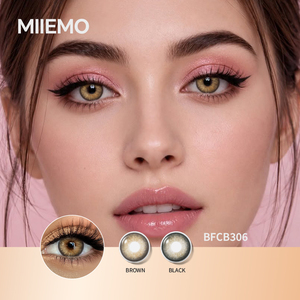
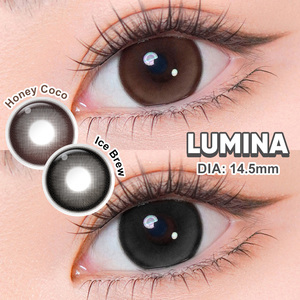
Over 74% of the Russian beauty lens demographic seeks realistic eye-color shifts over dark brown or light gray natural irises. Chroma Lens utilizes high-density 3-tone dot matrices—incorporating warm golden pupillary coronas, multi-layered color limbal rings, and fading feathering. This guarantees an authentic cosmetic alteration without artificial pixelation under direct natural sunlight, highly popular across cosmetics franchises like Rive Gauche, L'Etoile, and dedicated beauty salon chains.
Anime, Cosplay & Festival Subcultures
The Russian Federation hosts a vibrant youth fandom culture, celebrating major cosplay, gaming, and geek conventions across Moscow (Comic-Con Russia), Saint Petersburg, and Kazan. Chroma Lens engineers solid-tone opaque lenses (Pseyeche series, Black Out, White Mesh, Sharingan, and hyper-vivid biohazard stylings). Formulated with strict center-hole optical clearance (pupil diameter: 5.5mm), they ensure crystal-clear visual acuity while completely masking the wearer's real iris.
Corrective Beauty Lenses in Optometry
Unlike pure novelty novelty lenses, professional optical salons in Russia demand prescription myopic power (-0.50D to -8.00D in 0.25D/0.50D increments) paired with aesthetic color options. Chroma Lens matches optical refraction accuracy with cosmetic layering, offering dual-purpose corrective lenses that pass municipal optometrist inspections and serve consumers wanting both crisp refractive visual performance and aesthetic eye color transformation.
Macro-Market Trends: Navigating the Ophthalmic Shift in the EAEU
1. Dominance of Omnichannel Marketplace Fulfillment: E-commerce penetration across Russia has surged exponentially. The majority of colored contact lens retail GMV flows through marketplaces like Wildberries and Ozon. These platforms demand compact, shelf-stable, tamper-evident blister packaging with standardized GS1 barcodes, Cyrillic nomenclature, and high resistance to shipping temperature variances during long rail transit from Far East border hubs to central distribution warehouses in Podolsk and Kazan.
2. Preference for 38% Hydration Poly-HEMA in Heating Seasons: While high-water-content lenses (55%–58%) are frequently marketed as comfortable, Russian winter conditions invert this dynamic. In indoor environments heated by dry forced-air heating, ultra-high-water lenses rapidly lose moisture, leeching water from the corneal pre-lens tear film and causing acute ocular redness. Our Poly-HEMA formulations maintain a calculated 38%–40% water content, offering low dehydration rates and superior physical dimensional stability during extended 12-hour wear in low-humidity environments.
3. Rise of Contract Manufacturing & Private Labeling (DTC): Established distributors throughout Russia are abandoning commoditized generic imports to launch private-label brands. By leveraging Chroma Lens’s in-house tooling and industrial pattern design laboratories, Russian partners launch exclusive seasonal capsule collections (e.g., "Siberian Ice Blue", "Taiga Emerald", "Volga Amber"), safeguarding their brand equity and securing unilateral pricing authority in their domestic territories.
Manufacturing Supremacy
Industrial Edge: Why Chroma Lens Outperforms Competitors
Rooted in full-stack in-house manufacturing, proprietary dye chemistry, and strict quality control.
In-House Mold Tooling
We eliminate dependency on generic third-party mold factories. Our CNC tooling lab machines custom injection mold inserts in-house, ensuring base curves (8.5mm / 8.6mm) and edge taper tolerances are maintained within microscopic sub-micron limits for exceptional wearing comfort.
Proprietary Reactive Inks
Our dedicated chemical synthesis laboratory formulates high-stability ocular pigments. Unlike standard commercial dyes that fade or oxidize, our inks bind molecularly inside the hydrogel polymer network, completely immune to saline dissolution, peroxide sterilization, or UV deterioration.
Bio-Sandwich Encapsulation
Every cosmetic pattern is embedded cleanly between two micro-thin layers of clear Poly-HEMA hydrogel. Colored pigments never come into contact with corneal epithelial tissue or the palpebral conjunctiva, entirely eliminating foreign-body abrasions and allergic conjunctivitis.
Turnkey Export Readiness
From initial design artwork to Cyrillic box packaging, blister foil printing, and international ISO 13485 production documentation, Chroma Lens handles the end-to-end export lifecycle, ensuring seamless customs clearance and frictionless distribution across the Russian Federation.
Procurement Intelligence
Frequently Asked Questions: Sourcing Contact Lenses for Russia
Critical regulatory, packaging, formulation, and logistics guidance for commercial lens buyers.
What documentation does Chroma Lens supply for Russian import clearance and registration?
We provide full technical batch dossiers including Certificate of Analysis (CoA), ISO 13485 quality system certificates, biocompatibility test reports (cytotoxicity, systemic toxicity, ocular irritation per ISO 10993 series), and raw material safety data sheets (MSDS). For Russian partners conducting technical and clinical trials with local accredited laboratories or applying for state registration, we supply sample batches from dedicated validation runs with complete technical master file access.
How does Chroma Lens guarantee color stability and eye safety?
We utilize a proprietary "Bio-Sandwich" dual-cast molding technology. During the casting phase, the pattern is printed on a base layer of Poly-HEMA, cross-linked, and encapsulated by a top hydrogel boundary layer before polymerisation. This seals the dye in an inert cavity, preventing surface friction against corneal cells. Each production batch undergoes rigorous 121°C autoclave testing and mechanical rub tests to verify that pigment will never leak or rub off during wear or storage.
Can you provide customized Cyrillic blister foils, barcodes, and retail packaging?
Yes. Our packaging line supports private label customization: Cyrillic typography on blister foils, outer folding cartons, user instruction leaflets (инструкция по применению), EAN-13 barcodes, and batch/expiry serialization according to GOST and local marketplace retail requirements (Ozon and Wildberries specifications). We can produce either standard buffered saline blisters or medical-grade glass vial formats based on your distribution strategy.
What are the minimum order quantities (MOQ) and production lead times for Russian importers?
For catalog stock patterns under standard Chroma Lens or DSC branding, our minimum order quantity starts as low as 50 to 100 pairs per SKU for immediate dispatch. For bespoke private label (OEM) custom colors and exclusive pattern formulation, our typical production MOQ is 500 pairs per shade with mixed diopters. Standard production cycle is 20–30 business days following artwork confirmation, with flexible air or multimodal rail freight dispatch to Russian transit terminals.
How do your contact lenses perform under severe Russian winter transit conditions?
Our lenses are sealed in isotonic borate-buffered saline packaged inside high-barrier polypropylene blister cups sealed with medical-grade aluminum foils. They undergo freeze-thaw stability testing (-25°C to +40°C thermal shock cycling) to ensure that even if packages freeze during winter ground freight across Siberia, the polymeric structure, base curve memory, optical power accuracy, and blister seal integrity remain completely unimpaired upon gradual thawing at room temperature.
Ready to Scale Your Multi-Colored Contact Lens Brand in Russia?
Partner directly with Chroma Lens Technology. Receive our comprehensive OEM factory catalog, wholesale pricing tiers, technical compliance dossiers, and free sample evaluation packages for testing and verification.
Send an Inquiry