Precision Contact Lens Product Lineup
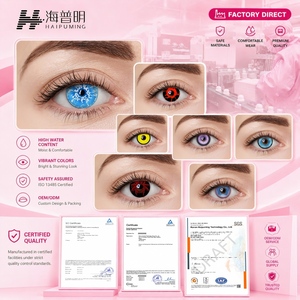
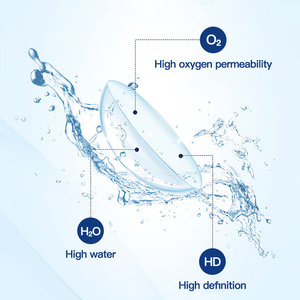
Engineered with semi-cast moulding systems, medical-grade color sandwiching techniques, and tailored hydration matrices suited for private label distributors across Nagoya and the Chubu region.
OEM vs. ODM Sourcing in Nagoya: Navigating Technical & Legal Frameworks
A comprehensive assessment for regional medical device marketing business holders (Type 1 & Type 2 MAH) across Central Japan.
Nagoya, as the central commercial hub of the Greater Chubu region, maintains a unique retail landscape for contact lenses. The dichotomy between Original Equipment Manufacturing (OEM) and Original Design Manufacturing (ODM) introduces substantial structural differences in intellectual property ownership, mold licensing, regulatory burden under Japan’s Pharmaceutical and Medical Devices Act (PMDA), and time-to-market variables. Understanding these engineering nuances is critical for local retailers and Japanese e-commerce brands looking to expand their footprint across Aichi Prefecture and the surrounding Tokai industrial belt.
| Evaluation Parameter | OEM (Original Equipment Manufacturer) | ODM (Original Design Manufacturer) |
|---|---|---|
| Optical Mold Ownership | Client proprietary; custom steel mold tooling financed and held exclusively by the buyer. | Manufacturer catalog; open or semi-exclusive rights using pre-engineered base curvatures. |
| Color Micro-Printing Tech | Bespoke dot-matrix formulation; bespoke pigment viscosity engineered to client pantone specs. | Factory-formulated iris patterns (1-tone to 3-tone blends) with pre-calibrated opacity ratios. |
| PMDA / Approval Pathways | Full dossier validation required; complete bio-compatibility testing and stability audits. | Leverages existing factory Master Files (FMA) for streamlined Foreign Manufacturer Accreditation. |
| Capital Investment (MOQ) | Higher initial capital expenditure for injection molds; higher batch volume requirements. | Lower entry barrier; suitable for regional beauty concept test launches and boutique optical lines. |
| Deployment Timeline | 6 to 12 months (inclusive of design iterations, tool casting, and hydration profile testing). | 6 to 10 weeks (from blister packaging artwork finalization to Nagoya port customs arrival). |
Localized Application Scenarios in Nagoya's Retail Ecosystem
Targeted distribution strategies calibrated for central Japan’s premier commercial districts and demographic epicenters.
Sakae & Meieki Commercial Hubs
Premium department stores, multi-level cosmetics emporiums, and specialty drugstores along Hirokoji-dori require highly natural, subtle circle lenses. Micro-sandwich pigment confinement ensures complete epithelial safety for daily office wearers demanding all-day moisture.
Osu Subculture & Cosplay Sub-Markets
Nagoya hosts the world-renowned World Cosplay Summit (WCS). Retailers in Osu shopping arcades require vibrant, high-opacity crazy and theatrical lenses (14.5mm yearly and daily disposable options) capable of completely covering deep dark irises without restricting pupil dilation.
Chubu Clinical & Optical Networks
Ophthalmic clinics and licensed contact lens dispensaries require clear refractive lenses with strict parameter consistency. Low center-thickness (0.08mm) combined with round-top bifocal engineering accommodates regional vision correction requirements.
Key Regulatory and Technological Trends Shaping Central Japan
Emerging manufacturing benchmarks driving competitiveness across the Tokai optical landscape through 2026.
Strict PMDA Micro-Encapsulation
Regulatory scrutiny on colored cosmetic lenses requires pigment encapsulation where ink layers are sealed inside the hydrogel matrix, guaranteeing zero epithelial friction.
Daily Disposable Transition
Consumer behavior across Aichi Prefecture is shifting rapidly from annual disposable formats to 1-Day blister units, driven by hygienic preference and zero-maintenance convenience.
Integrated Blue-Light Filtration
With Nagoya's significant technical workforce in aerospace and manufacturing, high-transmission clear and subtle cosmetic lenses increasingly integrate active UV400 and HEV blue-light shielding.
Sustainable Micro-Blister Tech
Eco-conscious Japanese consumers expect thinner foil laminates, recycled PP blister shells, and reduced saline waste per unit without compromising sterile barrier integrity.
Why Enterprise Brands Partner With Chroma Lens
We own the critical stages of lens synthesis, eliminating the supply vulnerabilities typical of trading intermediaries.
In-House Mold Engineering
We cut and mill our optical molds internally. This proprietary capability provides absolute control over base curve radius, sagittal depth, and tapered edge geometries for superior fitting comfort.
Proprietary Micro-Pigments
Formulated in our dedicated clean-lab, our biocompatible inks provide saturated opacity without leaching risks, verified under aggressive saline agitation tests.
Original Iris Artwork IP
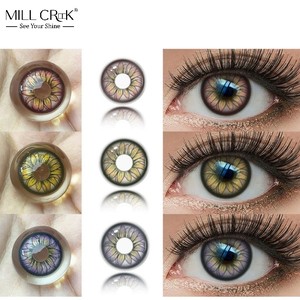
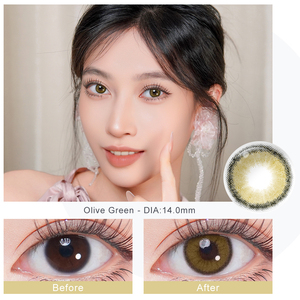
Avoid legal friction and generic designs. Our creative pattern studio drafts original raster dot networks that blend organically against Asian iris pigments for natural beauty enhancement.
Audit-Ready Compliance
Complete batch traceability, bio-compatibility testing data, and ISO 13485 cleanroom certifications ready to support your local MAH (Marketing Authorization Holder) filings.
Frequently Asked Questions by Nagoya Purchasing Directors
Direct technical answers addressing regulatory compliance, production runs, and supply security for Japanese importers.
What specific regulatory documentation does Chroma Lens supply for Japanese PMDA filing?
What is the practical difference in lead times between OEM bespoke molds and ODM catalog orders?
How does Chroma Lens guarantee that color pigments never make physical contact with ocular tissue?
Can we arrange sample shipments to Nagoya for optical fitting and laboratory evaluation before placing bulk orders?
What Minimum Order Quantities (MOQ) apply for customized blister packaging in the Japanese market?
Ready to Engineer Your Contact Lens Brand in Nagoya?
Initiate technical dialog directly with our engineering and regulatory affairs team. Receive custom mold parameter advice, physical samples, and compliance dossiers within 24 business hours.
Inquire Now