Catalog & Formulations
Export-Grade Contact Lens Portfolio Tailored for Latin America
Explore our certified, high-comfort soft contact lens solutions formulated for striking aesthetic outcomes across diverse iris colorations, featuring balanced hydration matrices and rigorous batch reproducibility.
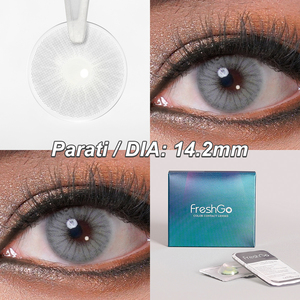
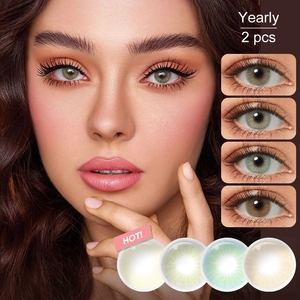
Freshgo Eye Lenses RIO Wholesale Natural Yearly Contacts
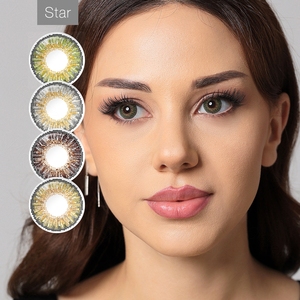
Magister 3-Tone Depth Optical Color Contact Lenses
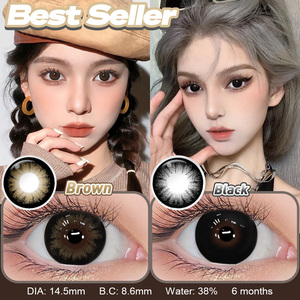
Custom 16mm Large Diameter Prescription Optical Lenses
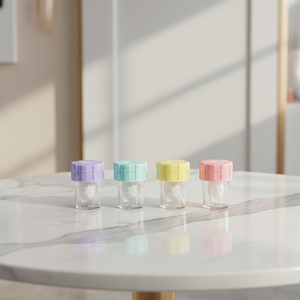
Automated Double-Sided Contact Lens Hygienic Cleaning Device
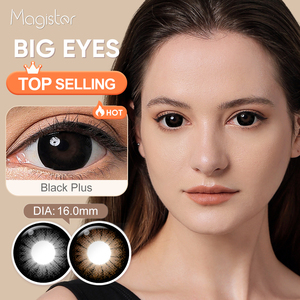
Magister Natural Warm Tone Brown Soft Cosmetic Contacts
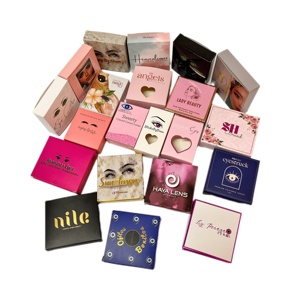
Custom OEM/ODM Sterile Blister & Retail Packaging Kits
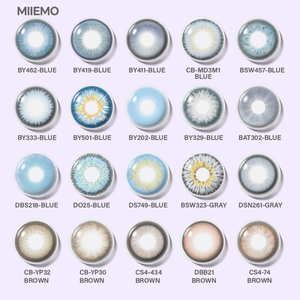
38% Water Content Controlled Hydration Semi-Annual Contacts
Market Architecture
Strategic Localization: The Argentine Contact Lens Ecosystem
Navigating the convergence of dermatological aesthetics, shifting retail dynamics, and medical device compliance in Buenos Aires, Córdoba, and Rosario.
⚙
ANMAT Regulatory Alignment
In the Argentine Republic, contact lenses fall under the jurisdiction of the National Administration of Drugs, Food and Medical Devices (ANMAT) as Class II / Class III medical devices (Disposición 2318/02). Sourcing directly from an OEM facility equipped with complete technical dossiers, Free Sale Certificates (FSC), ISO 13485:2016 certifications, and biocompatibility protocols drastically simplifies the process for your designated Technical Director (Director Técnico Farmacéutico / Bioquímico).
🌎
High-Pigment Opaque Realism
The Argentine demographic skews heavily toward dark brown and hazel natural eye colors (typical Fitzpatrick skin scales III & IV). Standard European translucent lenses frequently fail to mask dark irises. Chroma Lens utilizes high-density, sandwich-printed micro-dot matrix printing that neutralizes deep base pigments, offering vibrant honey, hazel, icy blue, and olive shades without creating an artificial, flat gaze.
🌡
Climatic Tear Film Stability
From the high humidity of the Buenos Aires urban corridor to the arid winds of Cuyo and the Andean Northwest, lens dehydration is a primary reason for customer discontinuation. Our 38% to 42% water content HEMA-based hydrogels prioritize moisture retention over environmental evaporation, minimizing end-of-day dryness for wearers in diverse microclimates.
The Evolution of Optical Retailing in Argentina: 2025–2028 Trends
The Argentine optical landscape is experiencing a definitive structural transformation. Traditionally restricted to traditional brick-and-mortar opticians (ópticas habilitadas), color lenses have crossed over into fashion-forward cosmetic retail, specialty salons, and hyper-segmented e-commerce portals operating across Buenos Aires and inland capitals. This convergence presents a lucrative opening for importers who can balance medical-grade product integrity with dynamic brand positioning.
First, cosmetic color contact lenses are no longer treated as pure medical prosthetics; they are viewed as high-frequency facial cosmetics. Influenced by trends across Latin America, young consumers routinely match their contact lens tint with cosmetic makeup palettes, theatrical cosplays, and formal social events. Private label brands that leverage bespoke carton packaging, localized Spanish insert leaflets, and curated social media micro-influencer campaigns are capturing market share from legacy multinational incumbents whose premium pricing structures have become unsustainable under local currency dynamics.
Second, economic realities in the Southern Cone have accelerated demand for durable, cost-effective replacement schedules. While North American and Western European markets prioritize daily disposables, Argentine wholesale distributors note massive volume loyalty toward quarterly (trimestral) and annual (anual) replacement cycles. The unit economics of yearly lenses allow distributors and retail opticians to maximize consumer affordability while preserving robust operating margins. Chroma Lens supports these commercial requirements with micro-engineered cast molding that maintains tensile strength, tear resistance, and optical centering throughout extended wearing intervals.
Comparative Engineering
Technical Specifications for Professional Importers
Verify critical manufacturing parameters against global pharmacopeia and Latin American optical trade standards.
| Specification Feature | Chroma Lens Manufacturing Standard | Importer Operational Value (Argentina) |
|---|---|---|
| Substrate Material | Poly-HEMA (2-Hydroxyethyl Methacrylate) & NVP Terpolymers | Exceptional dimensional stability, resistance to protein deposition, ideal for annual durability. |
| Equilibrium Water Content | 38.0% – 42.0% Optimized Range | Low dehydration curve; prevents the lens from leaching natural tear fluids in dry environments. |
| Base Curve (BC) / Diameter (DIA) | 8.50mm – 8.60mm / 14.0mm – 14.5mm (16.0mm Maxi) | Anatomically configured for average corneal sagittal depths of Latin American wearers. |
| Color Pigment Encapsulation | Multi-Layer Full Sandwich Embedding Tech | Pigments are entirely sealed between hydrogel layers; zero direct contact with cornea or conjunctiva. |
| Power Diopter Options | Plano (0.00) and -0.50D to -8.00D (0.25D / 0.50D Steps) | Allows optical chains to dispense corrective vision alongside cosmetic enhancements. |
| Documentation Dossier | ISO 13485:2016, Free Sales Certificate, CoA, MSDS | Immediate submission readiness for ANMAT registration dossiers under pharmaceutical sponsorship. |
Factory Capabilities
Integrated OEM/ODM Infrastructure: What Sets Us Apart
Unlike trading intermediaries, Chroma Lens controls the core variables that govern lens safety, edge comfort, and pigment aesthetics.
★
In-House Mold Nanotooling
Every curvature and edge profile begins in our proprietary tooling workshop. By generating our own optical molds, we guarantee edge thickness profiles that glide seamlessly across the sclera, preventing edge-lift irritation and conjunctival redness. We develop custom base curves and diameters for client-exclusive lens silhouettes without reliance on third-party mold cutters.
♦
Proprietary Biocompatible Inks
Color fidelity in colored lenses hinges on ink chemistry. Chroma Lens synthesizes in-house medical pigments formulated from non-toxic, micronized iron oxides and organic dyes. Our laboratory creates multi-tone color gradients that replicate the natural depth of human irises, achieving total opacity over dark brown eyes without degrading material oxygen permeability.
●
Comprehensive Private Labeling
We provide full-spectrum OEM execution tailored for Argentine commercial requirements: from sterile PP blister sealing and glass vial packaging to bilingual (Spanish/English) carton printing, tamper-evident outer wrappers, and GS1-compliant EAN-13 barcoding ready for national retail distribution.
B2B Procurement Intelligence
Frequently Asked Questions: Sourcing Contact Lenses for Argentina
Clear, direct guidance addressing logistical, regulatory, and commercial parameters for regional distributors.
❓ How do we navigate ANMAT compliance for importing bulk contact lenses?
In Argentina, cosmetic contact lenses (with or without dioptric power) are regulated medical devices. Importers must hold an operating license as an importing establishment (Habilitación de Empresa Distribuidora/Importadora de Productos Médicos) and designate a qualified Technical Director (Farmacéutico o Bioquímico). We provide the complete technical package: ISO 13485:2016 factory audit documentation, Certificate of Analysis (CoA) per production batch, materials biocompatibility validation (ISO 10993), and apostilled Free Sale Certificates (FSC) to facilitate your local registration filing.
❓ What are the Minimum Order Quantities (MOQ) for custom private-label branding?
Our OEM private-label services start at flexible thresholds to accommodate growing regional brands. For existing catalog patterns packed in custom branded boxes with localized Spanish instructions, MOQs typically start at 500 to 1,000 pairs across mixed shades. For bespoke iris pattern tooling or dedicated mold curvatures, MOQs are determined based on tooling iterations and raw polymer batch runs. Contact our account specialists for exact batch breakdowns.
❓ What replacement cycles and packaging formats yield the highest ROI in Argentina?
Historical purchasing trends across Latin America show that annual (12-month) and quarterly (3-month) replacement cycles offer the highest commercial turnover due to their favorable cost-per-wear ratio. Glass vials with sealed aluminum crimp caps remain highly demanded for clinical and optician distribution, while modern pre-printed multi-pack blister trays (polypropylene blister with printed foil lid) dominate e-commerce and retail cosmetic counters.
❓ How does your manufacturing maintain color visibility on dark brown irises?
The majority of wearers in the Southern Cone possess deep hazel or dark brown eyes. Generic cosmetic lenses frequently appear muted or muddy when worn over darker eye structures. Chroma Lens overcomes this with a calibrated 3-layer dot printing architecture: an opaque base under-layer that neutralizes underlying iris darkness, a chromatic mid-layer that injects the target shade (green, blue, honey, gray), and an organic radial limbal ring that provides photographic depth.
❓ What are standard lead times and shipping routes to Buenos Aires (EZE / Puerto de Buenos Aires)?
Production turnarounds for standard bulk production runs range from 20 to 30 business days following digital artwork approval and deposit confirmation. For air cargo (via Ezeiza International Airport - EZE), transit times typically span 5 to 8 business days utilizing DHL, FedEx, or dedicated air freight consolidators. For full container load (FCL) or LCL maritime shipments bound for Puerto de Buenos Aires, transit times from our departure ports generally average 35 to 45 days.
❓ Do you offer corrective prescription powers alongside plano (0.00) lenses?
Yes. Our cast molding infrastructure produces identical cosmetic patterns across both cosmetic plano (0.00 diopter) and corrective prescription ranges (-0.50D to -8.00D in precise increments). This allows our partners to service both cosmetic beauty salons and clinical optician practices using a unified product line.
Scale Your Contact Lens Brand in the Argentine Market
Partner with an integrated manufacturer possessing dedicated mold development, biocompatible dye technology, and end-to-end export documentation support.
Get a Quote