Recommended Color & Optical Formulations for Regional Portfolios
Explore our export-ready soft hydrogel platforms, custom 3-tone iris designs, and specialized cosmetic collections formulated for dense, dark melanin irises.
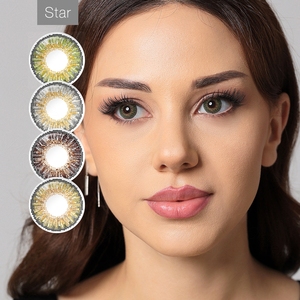
Technical Dynamics of Natural Green Lenses in West Africa
An engineering perspective on color opacification, ocular ergonomics, and high-temperature shelf stability across Sub-Saharan supply chains.
High-Melanin Iris Neutralization
African wearers inherently possess deep brown or dark black irises (Fitzpatrick ocular indices V-VI). Traditional translucent green inks fail to register, resulting in a dull or muddy visual output. Chroma Lens utilizes a multi-layer micro-dot matrix integrating an opaque micro-titanium base ring, an olive/emerald transition gradient, and an amber-flecked pupillary margin. This achieves high-definition natural chromatic shift without artificial pixelation.
Equatorial Desiccation Resistance
In hot, coastal cities like Accra and Sekondi-Takoradi, ambient temperatures hover above 30°C with high salinity and particulate dust. Lenses with overly high water content (>55%) often extract moisture from the wearer’s tear film, resulting in midday dry-eye sensation. Our HEMA-copolymer matrix maintains a calibrated 38% to 42% water balance, maximizing tear retention, reducing dehydration corneal stress, and extending comfortable wear beyond 10 hours.
Harmattan & Dust Ingress Protection
During the northeast trade wind (Harmattan) season, fine atmospheric dust increases the risk of microbial adhesion and contact lens-induced peripheral ulcers (CLPU). Our cast-molded edge contours undergo proprietary rounded-bead edge profiling, ensuring tear fluid circulates smoothly under the lens with every natural blink while resisting peripheral lipid and mucin deposition.
Localized Consumer Trends: The Rise of Natural Green in Ghana
How bridal aesthetics, creative industries, and e-commerce platforms in West Africa are creating lucrative retail channels for private-label distributors.
Traditional Weddings & Glamour Visuals
Ghanaian wedding celebrations, renowned for vibrant Kente fabrics and gold adornments, prioritize transformative yet sophisticated cosmetic looks. Natural green tones—specifically jade, moss, and warm hazel-green—create a striking yet harmonious contrast against melanin-rich skin and warm undertones. Bridal makeup artists in East Legon and Kumasi are consistently packaging lenses as bundled bridal glam sets.
Nollywood-Ghallywood & Content Creator Surge
Accra’s thriving film, creative music video, and TikTok/Instagram beauty influencer communities are fueling recurrent replenishment cycles. Content creators demand repeatable, camera-ready ocular definition that does not show unblended print dots in 4K resolution. Our proprietary semi-opaque sandwiching technique locks the pigmentation securely between clear polymer layers, guaranteeing zero color bleed on screen.
Social Commerce & Micro-Salon Retailing
In Makola Market, Kejetia Market, and across WhatsApp business storefronts, cosmetic lenses represent high-margin, lightweight inventory. With shipping costs per unit remaining negligible compared to bulky cosmetics, private-label green contact lenses offer African entrepreneurs 250% to 400% retail markups when supported by localized OEM packaging and sterile blister integrity.
Optical & Material Specifications: OEM/ODM Comparative Matrix
Data-driven formulation parameters engineered to withstand equatorial transit and humid storage conditions.
| Specification Feature | Standard Industrial Product | Chroma Lens Tropicalized Formulation | Buyer Advantage in Ghana |
|---|---|---|---|
| Color Encapsulation | Surface-printed pad inks | Full Sandwich Micro-Encapsulation | Zero Leaching 100% ocular tissue safety under FDA GH standards |
| Water Content Index | 55% - 58% (High-Hydration) | 38% - 42% (Low-Mid Equilibrium) | Resists dry-eye evaporation in warm tropical climates & AC salons |
| Base Curve (BC) | 8.5 mm (Standard Asian fit) | 8.6 mm (Universally Optimized) | Ideal centration without excessive limbal friction or tight lens syndrome |
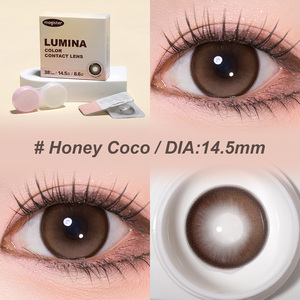
| Diameter (DIA) | 14.0 mm - 14.2 mm | 14.2 mm - 14.5 mm (Lumina Series) | Enhanced cosmetic enlargement with smooth transition onto deep sclera |
| Packaging Substrate | Standard glass vial / PP blister | Multi-barrier Medical Foil & Blister | Withstands high maritime humidity at Tema Port without seal breach |
Why Partner with Chroma Lens: The Enterprise Advantage
Direct factory engineering that removes middlemen, accelerates regulatory approvals, and unlocks private-label equity.
In-House Mold Engineering
Unlike repackaging brokers, Chroma Lens manufactures its own high-precision steel tooling and optical molds. We rapidly modify base curves, center thicknesses (0.07mm - 0.09mm), and sagittal depths to ensure every design aligns exactly with anatomical requisites, eliminating third-party retooling delays.
Proprietary Inks & Bio-Colorants
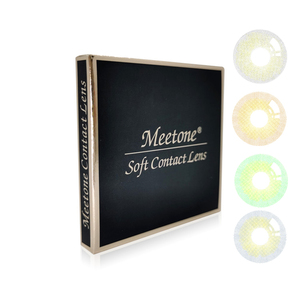
Our cleanroom chemical labs formulate in-house pigments certified under international biocompatibility criteria. Our natural green hues feature multi-tone layers—incorporating warm golden rings, deep olive limbal definitions, and delicate flecks that render convincingly realistic on deep-brown eyes.
Turnkey OEM Packaging & Labeling
Launching a competitive brand in Ghana requires compliant branding. We provide full-service box layout, English instructions for use (IFU), batch traceability printing, CE/ISO standard markings, and tamper-evident packaging customized for shelf presence in pharmacies, beauty parlors, and optical boutiques.
Sourcing FAQ: Answering B2B Importer Requirements in Ghana
Clear, transparent answers addressing maritime logistics, Ghana FDA compliance, minimum order quantities, and formulation stability.
We supply a complete regulatory dossier including ISO 13485 Medical Device Quality Management System certificates, CE Declaration of Conformity, Material Safety Data Sheets (MSDS), Certificate of Free Sale (CFS), and batch Certificate of Analysis (COA) specifying sterilization protocols and bioburden testing.
We engineer our natural green series (including Forest Green, Emerald, and Jade 3-Tone) specifically with a dual-layer high-opacity matrix. A semi-translucent golden inner coronet blends with the natural brown pupil, while a micro-pigmented green ring completely neutralizes the underlying dark iris, producing a vibrant, authentic green.
For sample validation and urgent private-label batches, express air freight via DHL, FedEx, or specialized air cargo delivers directly to Kotoka International Airport (ACC) within 5–8 business days. For bulk container shipments, maritime freight dispatches to the Port of Tema with estimated voyage times of 28–35 days.
Our ready-to-ship stock catalog has a flexible MOQ starting from just 50 to 100 pairs per color variant. For full private-label custom branding (custom box design, blister foil imprint, and unique brand names), our production minimums start at 500 pairs, allowing distributors to test their local market with minimal capital risk.
Yes. We accommodate cosmetic-only markets (plano 0.00 power) popular among salon and bridal shoppers, as well as vision-corrective powers ranging from -1.00 to -8.00 diopters in 0.25D/0.50D increments for optical stores and ophthalmic clinics requiring dual-purpose cosmetic vision lenses.
While daily disposables lead in European channels, the Ghanaian consumer strongly prefers 3-month, 6-month, and yearly disposable replacement modalities due to superior cost-per-wear economics. Our yearly and monthly poly-HEMA hydrogel formats undergo reinforced cross-linking to maintain tear-film lubricity over prolonged cycles.
Ready to Build Your Brand in the Growing West African Optical Market?
Connect directly with our international engineering and trade department to request physical samples, review complete ISO/CE compliance dossiers, or develop proprietary iris colorways tailor-made for your market.
Get Catalog